How Architects & Engineers Research Building Codes?
When architects and engineers say they are “researching code,” they are rarely doing a single task. They are navigating a complex decision-making process th..
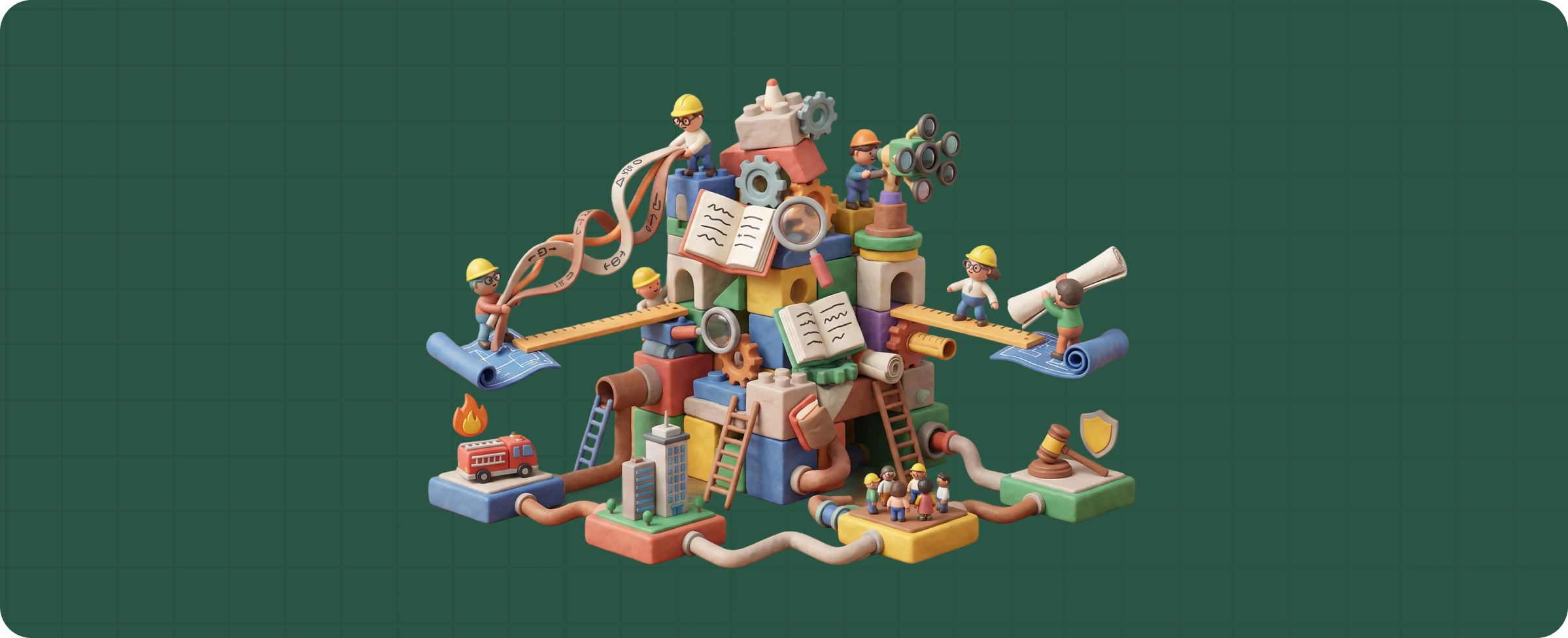
When architects and engineers say they are “researching code,” they are rarely doing a single task. They are navigating a complex decision-making process that involves identifying applicable regulations, interpreting legal language, resolving conflicts between multiple codes and standards, and translating those requirements into actionable design constraints.
This work is iterative, assumption-driven, and highly contextual. A single design question often expands into multiple sub-questions, each dependent on project attributes such as occupancy, construction type, height, area, fire protection systems, and jurisdictional amendments. The outcome is not just an answer, but a defensible interpretation that must withstand internal review and approval by authorities having jurisdiction (AHJs).
This article breaks down what code research actually looks like in practice - step by step - revealing why it is far more complex, risk-laden, and cognitively demanding than most people realize.
Identifying Which Building Codes and Editions Apply
The first step in any code research effort is determining which regulations govern the project. This is rarely as simple as selecting a single national model code.
Professionals must determine:
- The adopted building code and edition
- Whether state amendments modify the base code
- Whether local jurisdictions impose additional overlays
- Which referenced standards are enforceable
- Which energy, accessibility, fire, and specialty codes apply
This step alone requires familiarity with adoption cycles, local governance structures, and enforcement practices.
Section summary:
Code research begins with jurisdictional clarity, not code text.
Read more about Why Modern Code Compliance Is Harder Than Ever
Establishing Project Context Before Reading Code
Before any meaningful analysis can occur, architects and engineers must define the project attributes that drive applicability, including:
- Occupancy classification(s)
- Construction type
- Gross floor area and height
- Number of stories
- Fire protection systems
- Use separations and mixed-use conditions
Without this context, reading code sections is meaningless. Most requirements are conditional, and applicability depends entirely on these inputs.
Section summary:
Codes cannot be interpreted without first defining the building.
Navigating Conditional Language and Dependencies
What can you ask? (Sample questions)
- What building code edition does my state currently enforce?
- How do state-specific amendments modify the base IBC?
- What structural design loads apply in my jurisdiction?
- What energy code requirements apply to my building type?
Building codes are structured around conditional logic:
- “Where X applies…”
- “Except as permitted by…”
- “Unless otherwise provided in…”
A single requirement may depend on:
- Multiple upstream determinations
- Exceptions buried in other chapters
- Cross-references to different codes or standards
Professionals must mentally track these dependencies and ensure no condition is overlooked.
Section summary:
Code research is about tracing logic, not reading sequentially.
Resolving Exceptions, Alternatives, and Edge Cases
Many code provisions include:
- Explicit exceptions
- Alternate compliance paths
- Performance-based options
Determining whether an exception applies often requires:
- Careful interpretation of intent
- Comparison across multiple sections
- Evaluation of risk and AHJ acceptance
This is where experience plays a significant role - but also where inconsistency can emerge across teams and projects.
Section summary:
Exceptions are where most interpretations diverge.
Cross-Referencing Multiple Codes and Standards
Rarely does a compliance question involve a single document. Architects and engineers routinely cross-reference:
- Building codes
- Fire codes
- Accessibility standards
- Energy codes
- Referenced technical standards
Each document may define terms differently or impose overlapping requirements, requiring reconciliation rather than blind adoption.
Section summary:
Compliance exists at the intersection of multiple documents.
Read more about Where Traditional Code Research Breaks Down
Translating Legal Language into Design Requirements
Code language is written for enforcement, not design. Professionals must translate abstract requirements into:
- Dimensional constraints
- System specifications
- Spatial relationships
- Performance criteria
This translation step is critical - and often undocumented - yet it directly informs drawings, details, and specifications.
Section summary:
Design decisions are interpretations made tangible.
Documenting Interpretations and Assumptions
Effective code research produces not just conclusions, but documentation:
- Assumptions made
- Logic followed
- Sections relied upon
- Exceptions invoked
This documentation supports:
- Internal review
- Coordination across disciplines
- Responses to AHJ comments
- Future reference during construction
Without it, teams often repeat work or struggle to defend decisions.
Section summary:
Undocumented reasoning is a liability.
Read more about Why Building Code Research Is High-Liability Work
Communicating Code Decisions Across Teams
Code research rarely stays with one person. Findings must be communicated to:
- Project teams
- Consultants
- Leadership
- Contractors
- Inspectors
Miscommunication can lead to incorrect assumptions propagating through design and construction.
Section summary:
Compliance is a team sport.
Iterating as the Design Evolves
As designs change, earlier interpretations must be revisited:
- Program changes
- System substitutions
- Area increases
- Late-stage value engineering
This iterative nature makes code research a living process, not a static deliverable.
Section summary:
Every design change reopens compliance questions.
Read more about when Building Code Research Happens Across the Design Lifecycle
Frequently Asked Questions (FAQs)
Is code research mostly done by junior staff?
Junior staff often perform initial research, but interpretation and validation typically involve senior oversight.
Why does a simple code question become complex?
Because most requirements depend on multiple project attributes and conditions.
Do architects and engineers interpret codes differently?
Yes. Interpretation often varies based on experience, risk tolerance, and past AHJ interactions.
Why are exceptions so risky?
Because they are easy to misapply and often scrutinized during review.
Is documenting code research required?
Not always formally - but it is essential for risk management and continuity.
How often do code interpretations change during a project?
Frequently, especially as design decisions evolve.
Why is cross-referencing codes so difficult?
Because codes are written independently and often assume different scopes and definitions.
Can experience alone ensure correct interpretation?
Experience helps, but it cannot replace structured reasoning and verification.
Related Building Code Resources
- Building CodesWhat Are the Key Aspects to Consider When Analyzing Building Codes?
- Building CodesDigital Code Libraries & Search Tools: What They Fix and What They Don’t
- Building CodesWhere Traditional Building Code Research Breaks Down
- Building CodesThe Hidden Costs of Manual Building Code Research
- Building CodesTraditional Building Code Research Methods
MeltPlan
A curated stream of preconstruction intelligence, estimating innovation, takeoff breakthroughs, workflow advancements, and expert perspectives—powered by the AI and technology shaping the future of construction.
Visit SiteDon't miss what's shaping AEC
The latest on preconstruction, codes, AEC news & trends — so you're always in the know.