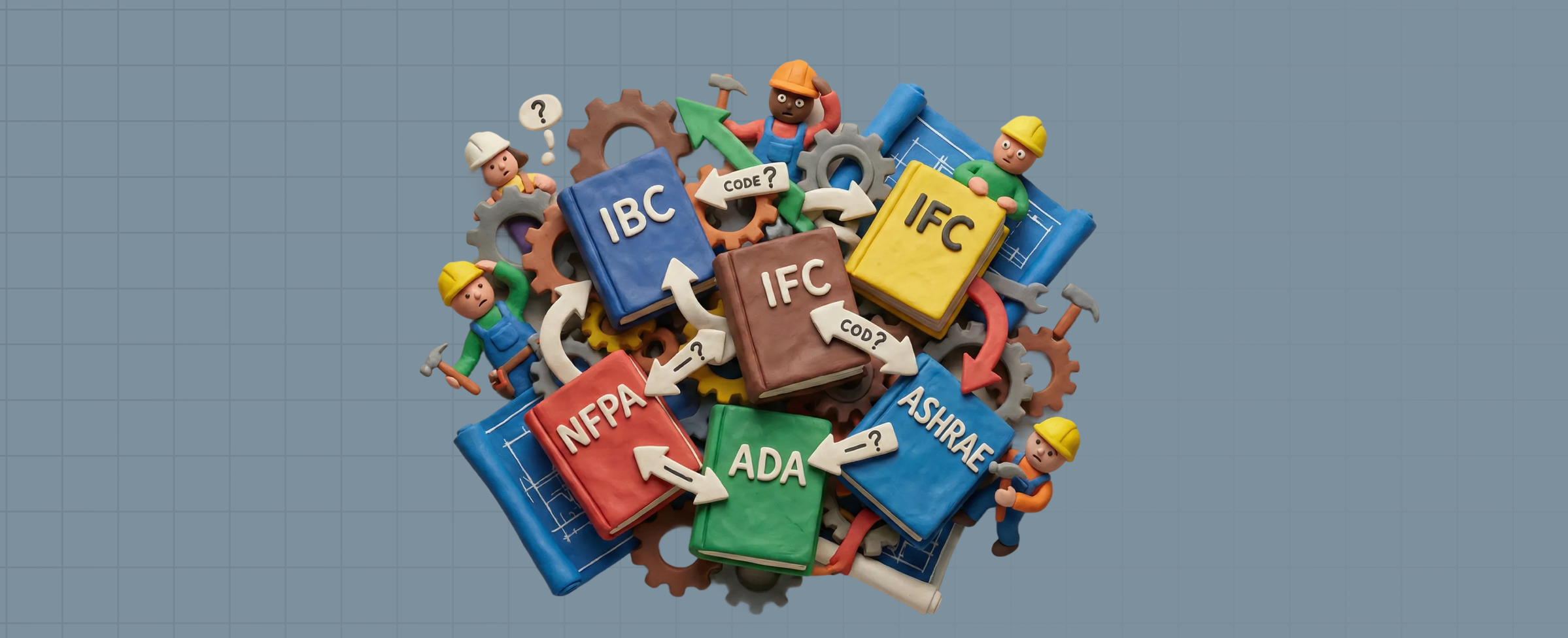
How Can I Stay Updated With the Latest Building Code Regulations?
Staying updated with the latest building code regulations is challenging because U.S. codes are decentralized, frequently amended, and adopted differently acros..
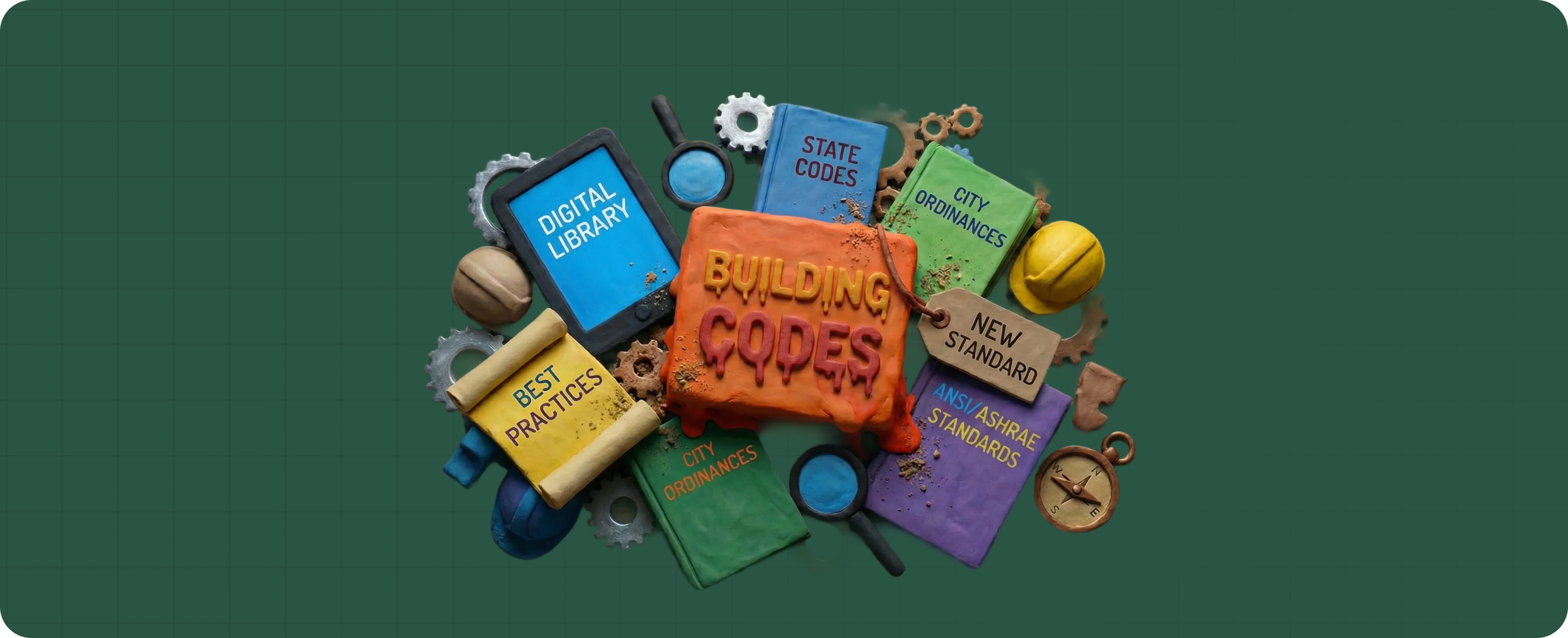
Staying updated with the latest building code regulations is challenging because U.S. codes are decentralized, frequently amended, and adopted differently across every state, county, and city. Model codes (IBC, IFC, IEBC), NFPA standards, ASHRAE updates, energy codes, accessibility rules, and local amendments all evolve on separate timelines—leaving professionals to track dozens of moving pieces across multiple jurisdictions.
For decades, the only reliable method for staying updated was a manual, highly fragmented system. Professionals had to:
- Monitor state adoption schedules
- Follow local AHJ bulletins
- Subscribe to ICC/NFPA/ASHRAE alerts
- Attend code update seminars
- Maintain internal documentation and update logs
This traditional approach worked, but it was slow, uncentralized, and inconsistent.
The Industry Shift: From Manual Tracking to Centralized Digital Code Libraries
Over the past few years, the building industry has experienced a major shift. Technology companies began building centralized digital libraries, consolidating what used to be scattered across hundreds of state websites, municipal PDFs, and paywalled standards.
UpCodes Was One of the First to Revolutionize Online Code Access
UpCodes brought together:
- State-adopted codes
- Local amendments
- Model I-Codes
- Energy codes
- Some referenced standards
- Interactive cross-referencing
- Assemblies, diagrams, and a product library
It became one of the earliest platforms to make code access modern, searchable, and user-friendly.
Expanded Landscape of Online Code & Standards Libraries
Today, several digital solutions help professionals stay updated—each with different strengths.
ICC Digital Codes (International Code Council)
- The official library for all I-Codes
- Includes model codes, global adoptions, custom codes, and supplements
- Offers full version control, search, and international coverage
- Ideal for verifying official model text
UpCodes
- Aggregates model + adopted codes
- Links amendments directly
- Offers advanced search, UI, diagrams, assemblies
- Provides a helpful overview of adoptions and some standards
MADCAD (Massive Cloud Reference Library)
https://www.madcad.com/content/
- One of the largest digital code/standard repositories
- Includes hundreds of thousands of titles
- Covers structural, MEP, fire, environmental, sustainability, and more
- Great for multidisciplinary teams needing broad standards access
Free Public Code Collections
Some websites provide free access to select codes, including:
- Accessibility standards
- Safety standards
- Certain NFPA-related documents
- ArchToolbox-curated collections
These are useful for quick, general lookups.
Where Melt Code Sits — and Why It’s Becoming the New Standard
Melt Code is the first AI-powered platform built specifically for code research, compliance design, and multi-code interpretation.
But beyond search, Melt Code is building:
The Most Comprehensive and Fastest-Updating Code Library in the U.S.
- State codes
- County codes (Soon)
- City/local jurisdiction codes (Soon)
- Referenced standards across NFPA, ASHRAE, ANSI, UL, ASTM, ACI, AISC, and more
- Amendments and errata
- Adoption histories
- Full jurisdiction filters
- Accessible for free
- Desktop + mobile optimized
Unlike static libraries, Melt Code is a construction-aware AI—meaning updates aren’t just posted; they are integrated into reasoning so professionals get accurate, amendment-aware answers.
It is also searchable by:
- Jurisdiction
- Adoption year
- Publisher
- Code domain (building, fire, electrical, mechanical, plumbing, energy, accessibility, etc.)
This makes Melt Code one of the only platforms capable of unifying codes + standards + jurisdictional intelligence in a single environment.
Fastest & Reliable Code Update Blog in the Industry
https://www.meltplan.com/categories/code-updates
Melt Code runs a dedicated blog that covers:
- State adoption cycles
- Local updates
- Model code revisions
- Deep dives on new editions
Notably, Melt Code already published one of the most comprehensive breakdowns of the 2025 California Building Code.
Please Note: The code library is very soon going to be publicly accessible, free forever to everyone as it should be.
Why Digital Libraries Are Now the Best Way to Stay Updated
What can you ask? (Sample questions)
- What building code edition does my state currently enforce?
- How do state-specific amendments modify the base IBC?
- What structural design loads apply in my jurisdiction?
- What energy code requirements apply to my building type?
While traditional methods are still important (AHJ bulletins, adoption schedules, and seminars), digital libraries have become the new normal because they:
- Consolidate everything in one place
- Notify users about changes
- Provide rapid updates
- Are searchable and mobile-friendly
- Reduce manual research time
- Reduce risk of missing amendments
In short: What used to take hours now takes minutes.
Other Ways to Stay Updated
Building codes in the U.S. form a decentralized ecosystem. Model codes (IBC, IFC, IEBC, IMC, IPC, NEC), NFPA standards, ASHRAE standards, energy codes, accessibility rules, and local amendments all update independently and at different cadences. Your local AHJ may adopt a new cycle next week - with no email blast, no announcement, and no unified database.
So, the real challenge is not knowing the code - it’s keeping up with it.
This article outlines the most effective ways professionals stay updated and maintain compliance in a constantly evolving code environment.
1. Follow State and Local Adoption Cycles
Each state - and often each city - chooses its own adoption timeline. To stay current:
1.1 Monitor State Building Standards Commissions
Every state publishes adoption updates.
Examples:
- California BSC (Title 24 adoptions)
- Florida Building Commission
- Texas Department of Licensing and Regulation=
- NYC DOB (unique NYC code updates)
These agencies publish:
- Notices of adoption
- Effective dates
- Amendment packages
- Public hearing minutes
- Administrative bulletins
1.2 Track City & County Amendments
Local jurisdictions often adopt:
- stricter fire codes
- accessibility overlays
- mechanical/energy modifications
- administrative rules
- fire marshal bulletins
But they rarely announce updates publicly.
Best practices:
- Bookmark city building department websites
- Sign up for newsletters where available
- Attend local code meetings
- Regularly download amendment packets to check for version changes
2. Follow Code Publisher Updates (ICC, NFPA, ASHRAE, ANSI)
2.1 ICC (International Code Council)
Subscribe to:
- ICC “news & updates”
- Code development hearing results
- Model code cycle announcements
The ICC releases new editions every three years, but errata and addenda appear throughout the cycle.
2.2 NFPA (NFPA 13, 72, 101, 70 NEC, etc.)
NFPA updates annually.
Stay updated through:
- NFPA subscription notifications
- NEC cycle announcements
- Technical committee reports
2.3 ASHRAE (62.1, 90.1, 55)
ASHRAE standards evolve quickly - sometimes multiple addenda in a year.
Sign up for direct alerts from ASHRAE.
2.4 ANSI A117.1 (Accessibility)
The updates are slower but impactful - especially around clearances and accessible route requirements.
3. Use Digital Code Libraries (UpCodes and Melt Code)
Digital platforms are becoming the fastest, most reliable way to track updates.
3.1 UpCodes
UpCodes provides:
- A large library of model codes
- State/local amendments
- Adoption timelines
- Some referenced material integrations
Because of its wide reach, it’s a helpful source for tracking state-level changes quickly.
3.2 Melt Code – The New Standard for Accuracy, Depth & Jurisdictional Coverage
Melt Code offers:
- A rapidly expanding library of building codes and referenced standards
- Deep jurisdiction-level intelligence
- Amendment awareness
- Fast updates across model codes, energy codes, accessibility codes, and NFPA/ASHRAE references
- Soon: full local jurisdiction coverage, including city and county amendments
What makes Melt Code different is that it is built as a construction-aware AI system, meaning updates are integrated into the reasoning engine - not just listed as documents.
3.3 Melt Code Blog – Fastest Source for Code Change Coverage
Melt Code maintains a dedicated building code update blog that is uniquely fast and accurate.
It covers:
- State code updates
- Adoption timelines
- Local jurisdiction changes
- Major model code cycle revisions
- Deep breakdowns of new code editions
4. Follow AHJ Bulletins and Fire Marshal Notices
AHJs (building officials, fire marshals, environmental departments, utility authorities) publish critical updates such as:
- New interpretations
- Updated plan review criteria
- Fire department access rules
- ERRC/ERRCS radio coverage requirements
- Sprinkler/water supply standards
- Local accessibility interpretations
- Smoke control protocols
The challenge: these are rarely centralized.
Strategies:
- Build a directory of AHJ websites relevant to your practice
- Check for monthly bulletins
- Save PDFs with timestamps
- Establish relationships with plan reviewers and fire marshals
5. Professional Organizations and Industry Groups
These groups track updates before most jurisdictions formally adopt codes.
5.1 AIA (Architects)
- Local AIA chapters provide code seminars
- They track statewide adoption cycles
5.2 ASPE (Plumbing Engineers), ASHRAE (Mechanical), IAEI (Electrical), SFPE (Fire)
Each organization distributes:
- Code updates
- Interpretation notes
- TAC (Technical Advisory Committee) summaries
5.3 ICC Chapters
Local ICC chapters maintain:
- Code update meetings
- Regional adoption information
- Interpretation Q&A sessions
6. Continuing Education, Webinars, and Code Update Courses
Every code cycle brings hundreds of CE opportunities.
Look for:
- ICC-certified update courses
- NFPA training programs
- AIA/Engineer boards' CE webinars
- Fire marshal seminars
- Local jurisdiction workshops
- Manufacturer training on UL assemblies, fire dampers, ADA devices, etc.
These offer early signals of upcoming changes.
7. Internal Firm Processes & Project Memory Systems
Most firms rely on ad hoc knowledge.
To stay updated internally:
7.1 Create a Centralized Code Repository
Include:
- State adoption tables
- Local amendments
- AHJ preferences
- Past project interpretations
- Emails from plan reviewers
7.2 Maintain a Code Update Log
Track when corrections or plan review comments align with new interpretations.
7.3 Establish Cross-Discipline Coordination Meetings
Architects, engineers, and contractors should surface updates at least quarterly.
8. Watch for Code Adoption Signals During Permitting & Inspections
Many updates show up first through:
- Plan review comment patterns
- Inspector requests
- AHJ informal statements
- Permit application checklists
- New plan review templates
- Updated correction sheets
By staying alert to these early signals, teams can anticipate broader code shifts.
9. Subscribe to High-Quality Code Intelligence Blogs and Newsletters
Some blogs break down code updates faster and more clearly than government sources.
Top examples:
- Melt Code Blog (fastest updates)
- ICC News
- NFPA Newsletters
- ASHRAE Journal updates
- State code commission meeting minutes
Melt Code Blog is currently the fastest source for clear, expert analysis of upcoming code cycles - especially building, fire, accessibility, and energy updates.
Conclusion: Staying Updated Requires a Multi-Channel Strategy
Because building codes change independently across jurisdictions, you must use a layered approach:
- Monitor state adoption
- Track local amendments
- Follow AHJ bulletins
- Subscribe to ICC/NFPA/ASHRAE newsletters
- Use digital libraries (UpCodes & Melt Code)
- Follow Melt Code’s blog for rapid updates
- Maintain internal knowledge systems
- Coordinate across your team regularly
Those who stay ahead of updates reduce project risk, prevent rework, avoid inspection failures, and deliver compliant designs with confidence.
FAQs
1. Why is it so difficult to stay updated with building code changes?
Because the U.S. has no centralized code repository—model codes, state adoptions, local amendments, and referenced standards all update independently and inconsistently.
2. How often do building codes update?
Model codes update every 3 years; NFPA and ASHRAE often update yearly; local jurisdictions can update anytime without notice.
3. What’s the best way to track state or local code adoption?
Monitor your state building standards commission, city/county building department websites, and fire marshal bulletins—these are the first places updates appear.
4. Do digital code libraries help?
Yes. Tools like UpCodes and Melt Code make it far easier to track updates, view adopted code cycles, and access accurate, current code content.
5. Why is Melt Code particularly useful for staying updated?
Melt Code offers a rapidly growing library of codes and standards, deep jurisdiction-specific intelligence, and the fastest code update blog covering changes across major U.S. jurisdictions—including California’s 2025 code cycle.
6. How can I keep my team consistently updated?
Create a centralized internal code repository, maintain update logs, coordinate regularly with engineers and contractors, and follow reliable update sources like ICC, NFPA, ASHRAE, and Melt Code’s blog.
7. What happens if I miss a code update?
Missing updates can lead to permitting delays, redesigns, failed inspections, construction rework, schedule impacts, and costly change orders.
8. Where can I read the latest summary of the 2025 California Building Code changes?
You can find a comprehensive breakdown of CBC 2025 changes here
References
Knowledge used in this article is based on:
- International Building Code (IBC)
- International Fire Code (IFC)
- International Mechanical/Plumbing/Existing Building Codes (IMC, IPC, IEBC)
- NEC (NFPA 70)
- NFPA 13, NFPA 72, NFPA 101
- ASHRAE 62.1, 90.1, 55
- ADA Standards, ANSI A117.1
- State adoption agencies (California BSC, NYC DOB, Florida Building Commission, etc.)
- AHJ bulletins across major U.S. jurisdictions
- Industry best practices across architecture, engineering, construction, and inspection
- Melt Code’s library, update engine, and code intelligence blog
- Melt Code’s coverage of the 2025 California Building Code updates
Related Building Code Resources
- Building CodesWhat Are the Key Aspects to Consider When Analyzing Building Codes?
- Overview GuideBIM Construction Software: The Complete Guide for Architects and Engineers
- Overview GuideBuilding Permit Drawings Software: The Complete Guide for Architects and Designers
- Building CodesThe Best 3D Rendering Software for Architects in 2026: A Workflow-First Comparison
- Building CodesBest AI to Generate Floor Plans: A Professional Comparison for Architects and Designers
MeltPlan
A curated stream of preconstruction intelligence, estimating innovation, takeoff breakthroughs, workflow advancements, and expert perspectives—powered by the AI and technology shaping the future of construction.
Visit SiteDon't miss what's shaping AEC
The latest on preconstruction, codes, AEC news & trends — so you're always in the know.