What are the Key changes in Chapter 10 Means of Egress of CBC 2025?
Chapter 10 contains major revisions affecting nearly every component of the means-of-egress system: This chapter impacts every project type — residential, com..
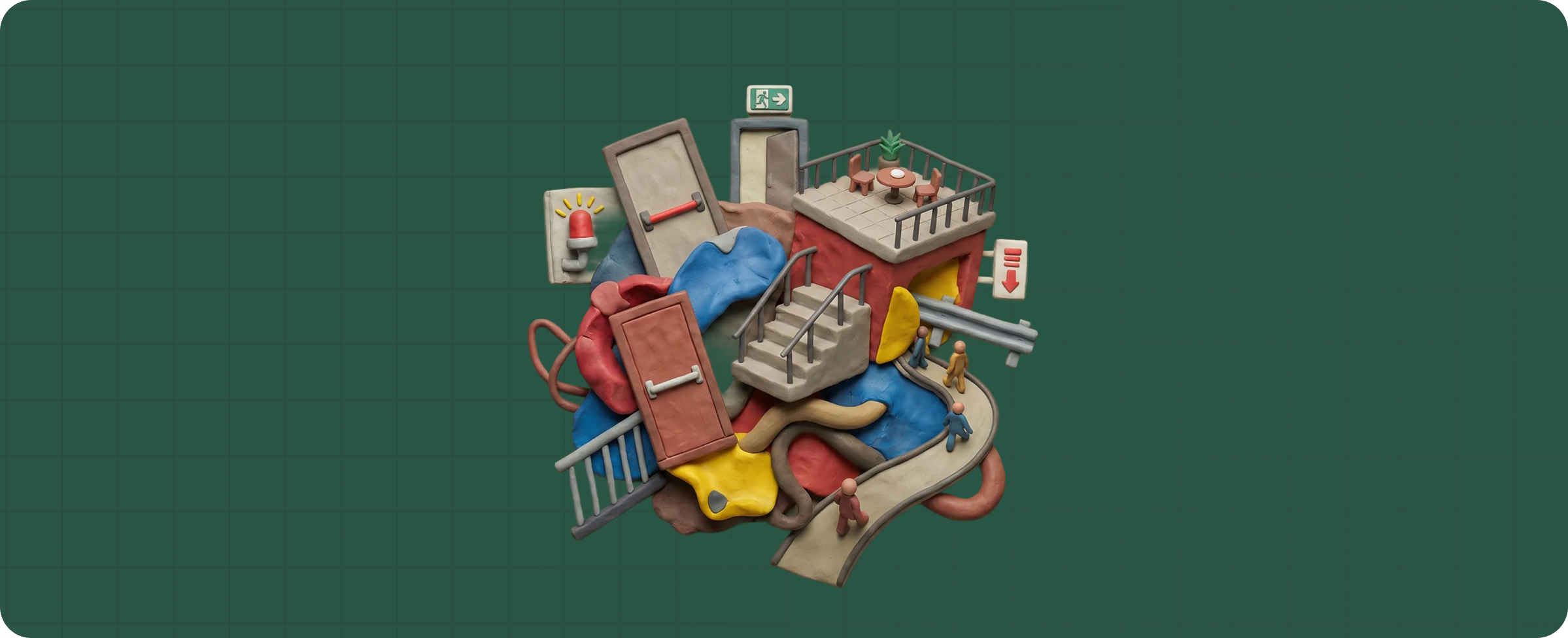
Chapter 10 contains major revisions affecting nearly every component of the means-of-egress system:
1. Door Hardware & Security Revisions
- New definitions for bolts and latching mechanisms (Chapter 2) translate into strict rules for manual bolts, constant latching bolts, and flush bolts.
- Certain exceptions were removed; others added.
- New allowances for security-only locks above standard mounting height.
2. Stairway Door Unlocking Requirements Updated
- Revised conditions for stair re-entry, signaling from fire command center, unlocking on fire alarm, or unlocking on power loss.
3. Occupant Loads Updated
- IT equipment rooms (data rooms) now have their own occupant load factor.
4. Egress from Refrigeration Machinery Rooms
- New allowances for alternate exit access devices.
5. Guards & Handrails Expanded
- New exceptions for occupiable roofs; updated clearance allowances; exterior-side handrail positioning.
6. New communication system standards
- Two-way communication systems must now comply with UL 2525 and NFPA 72.
7. Emergency Illumination Requirements
- Expanded to include new areas in Group I-2.
8. New limitations and exceptions for door sizes and hardware
- Several exceptions removed, replaced, or reorganized.
9. New rules for occupiable roofs
- Added to exit tables
- New guard and exit arrangement rules
- Stairways from occupiable roofs may pass through more than one story under specific conditions
10. Assembly Rooms & Bleachers
- New dead-end aisle limits
- Updated exit marking and path requirements for assembly seating
This chapter impacts every project type — residential, commercial, healthcare, education, industrial, institutional, and assembly occupancies.
1. Occupant Load, Exit Access, & Exiting Fundamentals
| Section | Topic | Description | Impact |
|---|---|---|---|
| Table 1004.5 | Occupant Load Factor | Adds IT equipment facilities with OLF of 300 gross. | Critical for data centers; reduces required exits. |
| 1006.2.2.2 | Refrigeration Machinery Rooms | Allows exit access via fixed ladder or alternating tread device; sets travel limits; allows egress through adjacent rooms. | Greater flexibility for industrial refrigeration rooms. |
| 1006.3.2 | Occupiable Roofs | Exception: exit access stairways may pass through >1 story for smoke-protected assembly seating. | Helpful for stadiums & rooftop venues. |
| Tables 1006.3.3 & 1006.3.4(1)(2) | Minimum Number of Exits | Occupiable roofs added to exit tables. | Clear requirements for rooftop amenities. |
2. Means of Egress Illumination
| Section | Description | Impact |
|---|---|---|
| 1008.2 (Exceptions) | Self-storage units ≤400 sf with exterior access exempt from illumination. | Reduces unnecessary lighting. |
| 1008.3 | Emergency illumination expanded; includes Group I-2 exit discharge. | Improves safety in hospitals. |
3. Accessible Means of Egress
What can you ask? (Sample questions)
- When does the 2025 CBC take effect and what editions does it adopt?
- What are the key California amendments to the IBC in CBC 2025?
- How do Title 24 energy requirements change in 2025?
- What accessibility changes are in Chapter 11B of CBC 2025?
| Section | Description | Impact |
|---|---|---|
| 1009.2.2 | Maneuvering clearances revised (expected errata with Ch. 11B). | Requires AHJ verification. |
| 1009.8.1 | Two-way communication must meet UL 2525 & NFPA 72; cannot call 911 directly. | Higher reliability of emergency comms. |
| 1009.11 | Instructions required at all two-way communication stations. | Improves usability. |
4. Doors, Hardware & Security Devices
| Section | Topic | Description | Impact |
|---|---|---|---|
| 1010.1.1 | Door Size Exceptions | Removes power-operated & freezer exceptions; adds shower door exception. | Affects retail, kitchens, gyms. |
| 1010.1.2 | Door Types | Exception 8 expanded for certain R-1 units. | More flexibility for hotels. |
| 1010.2.1 | Unlatching | Manual bolts restricted; constant-latching bolts allowed. | Major hardware rule changes. |
| 1010.2.3 | Hardware Height | Security-only locks may be high-mounted. | Supports anti-intrusion measures. |
| 1010.2.4 | Locks & Latches | Reformatted; new exceptions for inactive leaf bolts & R-unit deadbolts. | Rewriting of hardware schedules required. |
| Table 1010.2.4 | Bolt Locations | New table defining allowed bolt types by location. | Critical for submittals. |
| 1010.2.6 Exception 3 | Stairway Doors | Doors must unlock via FCC signal, fire alarm, or power loss. | Strengthens stair re-entry safety. |
| 1010.2.14 | Elevator Lobby Access Doors | Allows electronically controlled doors. | Supports secure elevator lobbies. |
| 1010.4 | Gates | Removes exception for >4 ft leaf on stadium gates. | Improves assembly egress safety. |
5. Stair Geometry, Handrails, Guards
| Section | Description | Impact | |
|---|---|---|---|
| 1011.5.2 Exception 3 | Riser/tread exception not allowed for accessible dwelling units. | Ensures accessibility compliance. | |
| 1013.5.1 | Photoluminescent signs must have charging illumination. | Improves visibility. | |
| 1014.3 | Handrails must be within 6" of edge when on exterior side. | Clarifies placement. | |
| 1014.8 | New exceptions for handrail clearance (curved rails, flanges). | Supports architectural designs. | |
| 1015.2 | Guards | New exceptions for occupiable roofs. | Major flexibility for rooftop decks. |
| 1015.8 | Window Openings | Reformatted; no change. | Clarity improvement. |
6. Travel Distance, Corridors, Passageways
| Section | Description | Impact |
|---|---|---|
| 1017.2.3 | Group H-5 travel distances increased. | More flexibility for hazardous manufacturing. |
| Table 1020.2 | Corridor ratings reorganized, especially Group E. | Improves consistency across occupancy groups. |
7. Interior Exit Stairways, Ramps & Exterior Walls
This is an important and complex update.
| Section | Description | Impact |
|---|---|---|
| 1023.7 | New rules for exterior walls adjacent to exit stairways; special roof exceptions. | Affects stair tower location & fire-resistance design. |
8. Exit Passageways
| Section | Description | Impact |
|---|---|---|
| 1024.6 | Exception allows structural beams/joists to penetrate passageway ceilings. | Simplifies structural coordination. |
9. Areas of Refuge & Two-Way Communications
| Section | Description | Impact |
|---|---|---|
| 1026.6 | If not located in elevator landing or area of refuge, system must be added to approved public area; exempt in I-2/I-3. | Ensures emergency communication availability. |
10. Assembly Seating, Courts, Dead-End Aisles
| Section | Description | Impact |
|---|---|---|
| 1029.3 Exception 3 | No protection required if egress court has two unobstructed paths. | Major simplification for outdoor egress. |
| 1030.9.5 Exception 2 | Dead-end aisles max 20 ft allowed when serving <50 seats. | More flexible theater/stadium layouts. |
Expert Commentary — Why Chapter 10 is Critical for Designers
1. Door Hardware Rules Have Been Overhauled
The combined effect of:
- New definitions in Chapter 2
- Rewritten Section 1010.2.x
- Removal/addition of exceptions means every architect must redo their standard door schedule templates.
2. Stair Re-Entry (1010.2.6)
CA now has one of the most explicit and strict re-entry unlocking requirement sets in the U.S., mirroring high-rise safety best practices.
3. Occupiable Roofs Are Now a Full Egress Category
Rooftop amenities are no longer a loophole — exit counts, travel distance, guards, and door hardware all now apply.
4. Handrail & Guard Changes Matter for Designs That Push the Envelope
Many contemporary designs (open stairs, sculptural rails) now have more flexibility.
5. Assembly Seating Relief Helps Real Projects
The new dead-end aisle rules make stadiums, arenas, and lecture halls easier to lay out.
6. Refrigeration Rooms
Large industrial refrigeration facilities (food processing, warehouses) now have clearer egress rules.
FAQs
1. What are the biggest means-of-egress changes in the 2025 CBC?
CBC 2025 includes major updates to door hardware rules, stair re-entry unlocking, occupiable roof egress, emergency lighting, communication systems, guardrails/handrails, and exit requirements for assembly seating and refrigeration rooms.
2. How did door hardware rules change in CBC 2025?
CBC 2025 rewrites nearly the entire Section 1010.2:
- Manual bolts are largely prohibited
- Constant-latching bolts are now allowed
- Inactive leaf bolt rules restructured
- Security-only locks may now be mounted above normal height
- Multiple exceptions were removed or reorganized
This requires redesigning most commercial hardware schedules.
3. What are the new stair re-entry requirements?
Stair doors must now unlock by any of the following:
- Signal from Fire Command Center (FCC)
- Activation of the building fire alarm
- Loss of power
This significantly strengthens high-rise re-entry safety.
4. Were occupant load factors updated?
Yes. IT equipment rooms have a new occupant load factor of 300 gross, reducing exit and egress requirements for data centers and computer rooms.
5. What changed for occupiable roofs in CBC 2025?
Occupiable roofs are now fully integrated into all egress tables. Key updates include:
- Added to exit-count tables
- New guard requirements
- New exceptions for stairways passing through multiple stories
- New exit arrangement rules
Rooftop amenities now require the same rigor as interior assembly spaces.
6. How did refrigeration machinery room egress change?
Refrigeration rooms now allow:
- Exit access via fixed ladders
- Alternating tread devices
- Egress through adjacent refrigeration rooms
This is a major flexibility improvement for industrial and cold-storage facilities.
7. What are the new emergency illumination requirements?
Emergency lighting is expanded to include additional exit discharge areas, especially in Group I-2 (hospitals). Section 1008.3 is fully reformatted.
8. What are the new requirements for two-way communication systems?
Two-way systems in areas of refuge must now comply with:
- UL 2525
- NFPA 72
Systems cannot route directly to 911 and must include on-site instructions for use.
9. Did accessible egress maneuvering clearances change?
Yes, Section 1009.2.2 was revised, though CBC notes errata due to conflicts with Chapter 11B. Designers should confirm interpretations with local AHJs.
10. What changed for handrails and guards?
Key updates include:
- New handrail lateral location rules for outward-facing walking surfaces
- New clearance exceptions for curved rails
- New guard exceptions for occupiable roofs
- Reorganized window-opening protection rules
These changes increase flexibility for modern stair and roof deck designs.
11. Did door size exceptions change?
Yes. CBC 2025 removes several long-standing exceptions:
- Power-operated door exception removed
- Walk-in freezer exception removed
Adds a new exception for certain shower doors.
12. What’s new for electronically controlled doors?
New allowances allow electronically controlled doors in elevator lobbies while maintaining life-safety constraints on locking, latching, and fail-safe operation.
13. Are there new rules for gates?
Yes. The exception allowing stadium fences or wall leaves >4 ft wide is deleted. This tightens egress consistency for stadiums and outdoor assembly spaces.
14. Did travel distance rules change?
Yes. Group H-5 occupancies are now allowed increased travel distances under updated protection criteria.
15. What changes were made to interior exit stairways and exterior walls?
Section 1023.7 clarifies fire-resistance continuity for exterior walls adjacent to exit stairs/ramps, including rules for adjacent roofs or penthouses—critical for stair tower placement.
16. Did exit passageway penetration rules change?
Yes. A new exception allows certain structural beams/joists to penetrate the ceiling of exit passageways, easing structural coordination conflicts.
17. What changed for egress courts?
New exception:
If an egress court has two unobstructed paths to the public way, no wall or opening protection is required.
This dramatically simplifies outdoor exit geometry.
18. What changed for assembly seating (theaters, stadiums, arenas)?
The dead-end aisle limit is now:
- 20 ft (previously tied to 16 rows)
- Allowed when serving <50 seats
This provides much more layout flexibility in assembly venues.
19. How do these egress changes affect building security strategies?
CBC now allows:
- High-mounted security locks
- More controlled stair re-entry logic
- Electrified and monitored elevator lobby doors
All must still ensure rapid emergency egress and fire department access.
20. Which project types are most impacted by CBC 2025 Chapter 10?
Every building type is affected, but the biggest impacts fall on:
- High-rise & mixed-use buildings
- Healthcare (I-2)
- Assembly venues (theaters, stadiums)
- Data centers
- Industrial refrigeration facilities
- Multifamily with occupiable roofs
Any project involving complex door hardware, roof amenities, or controlled circulation must reevaluate design assumptions.
References
Related Building Code Resources
- Building CodesWhat are the Key changes in Chapter 14 Exterior Walls of CBC 2025?
- Building CodesWhat are the Key changes in Chapter 11B Accessibility to Public Buildings & Public Housing of CBC 2025?
- Fire & Life SafetyWhat are the key Changes in Chapter 9 Fire Protection Systems California Building Code 2025?
- Building CodesWhat are the key changes in Chapter 5 General Building Heights & Areas of CBC 2025?
- Building CodesWhat are the key changes in Chapter 4 Special Detailed Requirements Based On Occupancy & Use of CBC 2025?
MeltPlan
A curated stream of preconstruction intelligence, estimating innovation, takeoff breakthroughs, workflow advancements, and expert perspectives—powered by the AI and technology shaping the future of construction.
Visit SiteDon't miss what's shaping AEC
The latest on preconstruction, codes, AEC news & trends — so you're always in the know.