What are the key changes in Chapter 2 Definitions of CBC 2025?
Chapter 2 sees one of the largest expansions of new definitions, especially around: These definitions drive major downstream effects across fire protection, con..
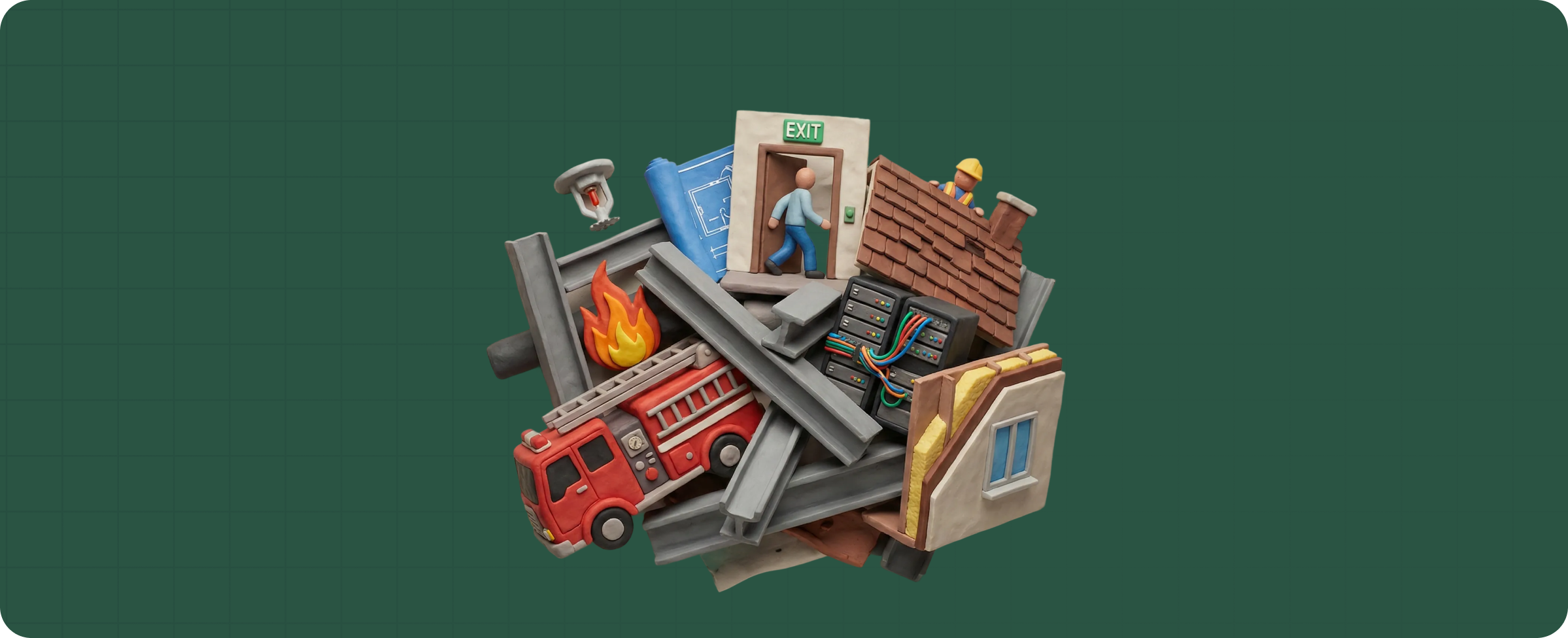
Chapter 2 sees one of the largest expansions of new definitions, especially around:
- Lithium-ion battery hazards
- Roof slope terminology
- IT spaces (Computer Room vs. Data Center)
- Temporary structures, peer review
- Fire extinguishing systems
- Modern cladding materials (IMP, insulated vinyl siding)
- Occupiable roofs
- Metal building systems
These definitions drive major downstream effects across fire protection, construction types, and building envelope chapters.
Full Detailed Table of All Changes - Chapter 2
| Definition | Topic | Description | Impact |
|---|---|---|---|
| Automatic Flush Bolt / Constant Latching Bolt / Dead Bolt / Manual Bolt | Door hardware | New definitions coordinated with major egress hardware revisions in Chapter 10. | Enables enforcement of new egress hardware rules. |
| Automatic Sprinkler System | Fire Protection | Simplified definition. | Better alignment with NFPA usage. |
| Basic Wind Speed (V) | Structural | New definition referencing Chapter 16. | Harmonizes wind design terminology. |
| Building-Integrated Photovoltaic (BIPV) | Exterior Wall Systems | New definition as part of new exterior wall/BIPV rules. | Establishes basis for BIPV fire & weather protection requirements. |
| Computer Room | IT Equipment Rooms | New definition: rooms housing ITE ≤10kW & ≤20 W/ft². | Differentiates from Data Centers for fire protection & egress. |
| Continuity Head-of-Wall System | Fire-resistance | New definition addressing fire barrier/roof intersection protection. | Important for perimeter fire containment. |
| Cripple Wall Clear Height | Seismic | New definition. | Clarifies structural framing conditions. |
| Data Center | IT Equipment | ITE >10kW & >20 W/ft². | Controls sprinkler, fire alarm, smoke detection triggers. |
| Ground Snow Load | Climatic | New definitions. | Clarifies load determination. |
| Insulated Metal Panel (IMP) | Exterior Walls | New definition. | Supports large envelope changes in Chapter 14. |
| Insulated Vinyl Siding | Exterior Finish | New definition. | Required for new siding installation rules. |
| Hybrid Fire Extinguishing System | Fire Protection | New definition. | Supports new NFPA 770 requirements. |
| Information Technology Equipment (ITE) | IT Spaces | New definition. | Consistent terminology. |
| Low-slope / Steep-slope Roofs | Roofing | Steep-slope ≥2:12; low-slope <2:12. | Clarifies roofing design requirements. |
| Metal Building System | Structural | Definition for prefabricated metal buildings. | Impacts fire rating continuity requirements. |
| Occupiable Roof | Occupancy | New definition. | Influences egress, guardrails, and roof enclosures. |
| Peer Review | Administration | New definition. | Supports AHJ peer review authority in Ch.1. |
| Public-Occupancy Temporary Structure | Temporary Buildings | Applies to ≤1-year use. | Helps classify special event structures. |
| Responsive Vapor Retarder | Envelope | New definition for moisture/WRB requirements. | Connected to revised vapor retarder tables in Ch. 14. |
| Service Life | Temporary Structures | New definition requiring cumulative 10-year limit. | Implements lifecycle cap for temporary public structures. |
| Smoke Protective Curtain Assembly for Hoistway | Vertical openings | New definition. | Ties into Chapter 7 and 30 requirements. |
| Temporary Event / Temporary Structure | Temporary Use | New definitions. | Supports changes in Ch. 1 and Ch. 4. |
| Townhouse Unit | Residential | Must extend from foundation to roof and have yards/public way on two sides. | Important for R-classification and standpipe exceptions. |
FAQs
1. Why did CBC 2025 add so many new definitions in Chapter 2?
Because modern construction practices, materials, and technology have evolved rapidly. The 2025 update aligns the code with current industry realities—from lithium-ion battery hazards and photovoltaic systems to new envelope materials, data centers, and temporary structures.
2. Do these definition changes affect actual design requirements?
Yes. Definitions are no longer just vocabulary—they determine when and how specific chapters apply. Many fire protection, egress, envelope, and structural requirements now hinge on whether a space or material matches these new definitions.
3. What’s the significance of the new IT space definitions (Computer Room, Data Center, ITE)?
These definitions separate low-power IT rooms from high-capacity data centers. The distinction controls sprinklers, smoke detection, suppression systems, and egress requirements, especially for buildings with significant digital infrastructure.
4. Why are roof slope definitions important (low-slope vs. steep-slope)?
Roof slope now formally determines:
- roofing system classification
- drainage and overflow design
- fire ratings
- weatherproofing and WRB requirements
This eliminates ambiguity in Chapters 7, 9, 14, and 15.
5. How do new definitions impact exterior wall and cladding systems?
Definitions for Insulated Metal Panels (IMP), Insulated Vinyl Siding, and BIPV ensure proper fire testing, WRB performance, installation standards, and envelope continuity. These changes coordinate major upgrades in Chapter 14.
6. Why are temporary structure definitions expanded?
CBC now distinguishes between Temporary Structures, Public-Occupancy Temporary Structures, Temporary Events, and Service Life. This gives AHJs clearer authority to regulate pop-ups, events, festival structures, and long-term “temporary” installations.
7. What does the new “Occupiable Roof” definition change?
It determines which roofs require:
- guardrails
- emergency egress routes
- occupant load calculations
- fire protection requirements
Any roof intended for human presence must now meet expanded criteria.
8. How does the “Metal Building System” definition affect structural design?
It formally recognizes pre-engineered metal buildings and ties them to new requirements for:
- fire-resistance continuity
- structural performance
- wall/roof interface detailing
This impacts both compliance and documentation.
9. Why is “Peer Review” now defined?
To support Chapter 1’s granting of authority to AHJs to mandate third-party review for complex or high-risk buildings. The definition ensures consistency in how peer review is interpreted, performed, and enforced.
10. What’s the impact of definitions related to lithium-ion hazards?
They establish baseline terminology for high-risk battery storage and charging environments. This affects fire-resistance ratings, ventilation, detection, and separation requirements in multiple chapters.
11. How will these new definitions affect plan checks and inspections?
Expect more code officials to ask:
- “Is this space a Data Center or Computer Room?”
- “Does this roof qualify as occupiable?”
- “Does this cladding meet the IMP definition?”
- “Is peer review required for this system?”
These definitions now control the triggers for compliance pathways.
12. Do these changes influence how Melt Code interprets CBC 2025?
Yes. Definitions determine reasoning logic. Melt Code will use the updated definitions to interpret occupancies, envelope systems, fire protection triggers, IT room classifications, and temporary structure rules with higher accuracy and jurisdiction-specific clarity.
References
What can you ask? (Sample questions)
- When does the 2025 CBC take effect and what editions does it adopt?
- What are the key California amendments to the IBC in CBC 2025?
- How do Title 24 energy requirements change in 2025?
- What accessibility changes are in Chapter 11B of CBC 2025?
Related Building Code Resources
- Building CodesWhat are the Key changes in Chapter 14 Exterior Walls of CBC 2025?
- Building CodesWhat are the Key changes in Chapter 11B Accessibility to Public Buildings & Public Housing of CBC 2025?
- Fire & Life SafetyWhat are the Key changes in Chapter 10 Means of Egress of CBC 2025?
- Fire & Life SafetyWhat are the key Changes in Chapter 9 Fire Protection Systems California Building Code 2025?
- Building CodesWhat are the key changes in Chapter 5 General Building Heights & Areas of CBC 2025?
MeltPlan
A curated stream of preconstruction intelligence, estimating innovation, takeoff breakthroughs, workflow advancements, and expert perspectives—powered by the AI and technology shaping the future of construction.
Visit SiteDon't miss what's shaping AEC
The latest on preconstruction, codes, AEC news & trends — so you're always in the know.