The Digital Blueprint: How Technology is Revolutionizing Building Code Compliance
Technology is fundamentally revolutionizing building code compliance by transforming it from a reactive, paper-based process into a proactive, integrated, and d..
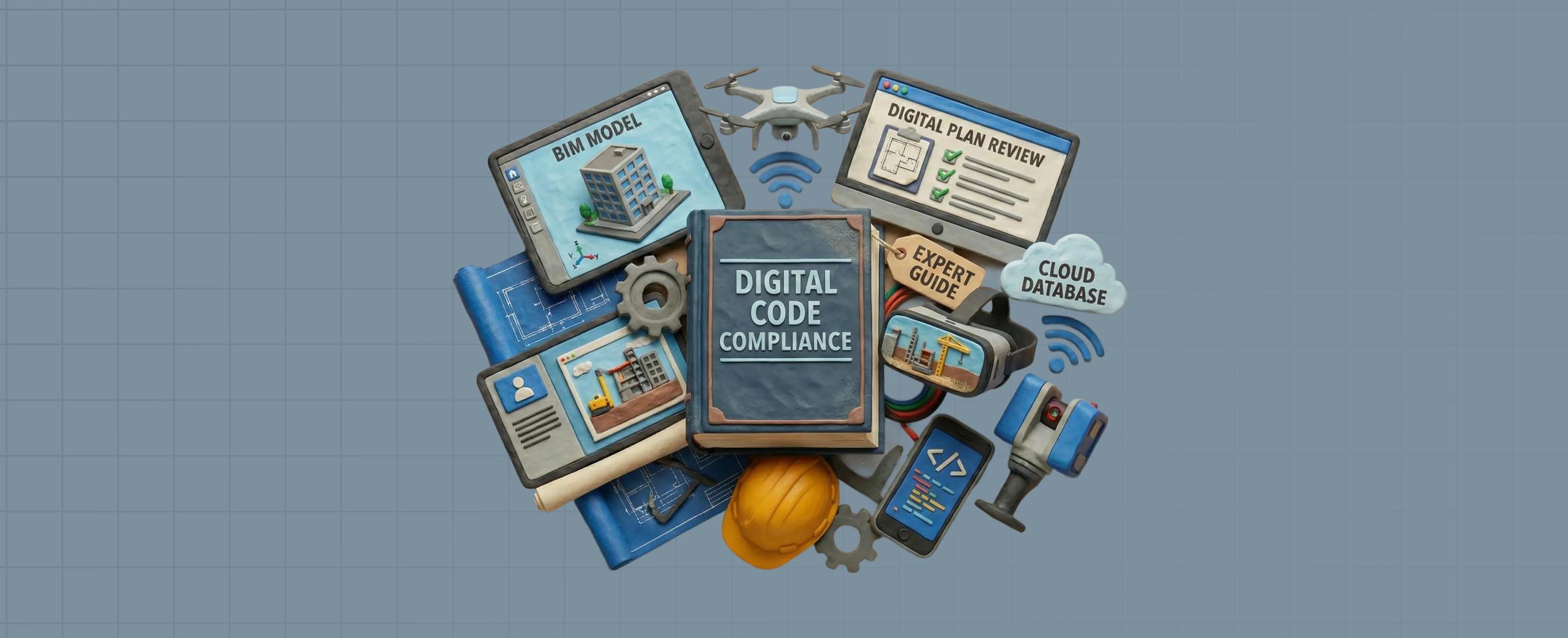
Technology is fundamentally revolutionizing building code compliance by transforming it from a reactive, paper-based process into a proactive, integrated, and data-driven discipline. This digital shift directly addresses the long-standing bottlenecks, errors, and delays inherent in the traditional compliance workflow, which has long been a source of frustration, budget overruns, and project setbacks for design and construction professionals.
The core of this revolution lies in moving away from the inefficiencies of the conventional "red pen" approach, a system historically plagued by:
- Lengthy and Unpredictable Review Cycles: The standard "drop-off and wait" model for plan review can add weeks or months to a project timeline, as paper plans sit in queues for manual, sheet-by-sheet inspection.
- Human Error and Inconsistency: Manual checks are prone to mistakes, oversights, and subjective interpretations of complex code, leading to red-lined drawings and costly stop-work orders discovered late in the process.
- Siloed Communication: A lack of real-time connection between design teams and Authorities Having Jurisdiction (AHJs) creates a frustrating cycle of feedback and revision, hindering collaboration and slowing progress.
In response, a new digital paradigm is emerging, driven by key technologies that streamline and integrate the compliance process from the very beginning of a project. This new approach is defined by:
- Intelligent 3D Models (BIM): Building Information Modeling and other smart design tools can now run automated code-checking routines, identifying potential violations and conflicts before a design is ever finalized or submitted, effectively preventing errors before they are drawn.
- Cloud-Based Collaboration Platforms: These platforms create a single source of truth, connecting designers, engineers, and AHJs in a shared digital environment. This allows for real-time communication, transparent tracking of comments and revisions, and simultaneous reviews, drastically reducing the traditional wait times.
Ultimately, this technological evolution is shifting code compliance from a punitive final hurdle to a collaborative and continuous part of the design and construction lifecycle. It promises a future with fewer errors, faster approvals, and more predictable project outcomes, allowing professionals to focus on building safely and efficiently rather than navigating a gauntlet of paperwork.
This article explores the key technologies streamlining code compliance today, examines their real-world impact on project workflows, and provides actionable insights for design and construction professionals looking to navigate this new digital landscape.
Beyond the Red Pen: The Inefficiencies of Traditional Code Compliance
To appreciate the revolution, we must first acknowledge the challenges of the status quo. The conventional, paper-based workflow is fraught with inherent bottlenecks that every architect, engineer, and contractor knows intimately.
- Lengthy Review Cycles: The "drop-off and wait" model can add weeks or even months to a project schedule. Plans sit in a queue, are manually reviewed sheet by sheet, and comments are compiled before being sent back—often leading to multiple rounds of revisions.
- Coordination Errors: In a siloed environment, an architect's egress plan might conflict with an MEP engineer's ductwork layout. These clashes, often missed on 2D drawings, become costly code violations during construction, resulting in RFIs, change orders, and on-site rework.
- Documentation Nightmares: Managing countless drawing sets, resubmittals, and comment-response letters is a monumental administrative burden. Version control is a constant struggle, and ensuring the field team is working from the latest approved set is a significant risk.
- Subjective Interpretations: A reviewer's interpretation of a nuanced code section can vary. Without a transparent, collaborative platform, resolving these differences often involves a frustrating back-and-forth of emails and phone calls, lacking a clear audit trail.
These inefficiencies don't just delay projects; they introduce risk, inflate costs, and strain relationships between project teams and the AHJs responsible for ensuring public safety.
BIM as the Foundation: More Than Just a 3D Model
Building Information Modeling (BIM) is the cornerstone of the modern compliance workflow. While many see BIM as a 3D visualization tool, its true power lies in the "I"—the information. A well-constructed model is a data-rich digital twin of the building, where every element (walls, doors, pipes, beams) contains embedded data about its properties, materials, and relationship to other objects.
This data-centric approach unlocks powerful new capabilities for code compliance.
Automated and Semi-Automated Code Checking
The holy grail for many has been the concept of fully automated code checking, and while we're not entirely there yet, rule-based model checking is a mature and powerful reality. Software like Solibri, Navisworks, and various BIM add-ins can run a model against a predefined set of logical rules based on code requirements.
Real-World Scenario: Egress Analysis
Consider a multi-story office building modeled in Revit. Instead of manually tracing egress paths with a scale and highlighter, a designer can run an automated check. The software can:
- Calculate travel distances: Instantly measure the path from the most remote point in a suite to the nearest exit.
- Verify door and corridor widths: Flag any door or hallway that doesn't meet the minimum clear width required by the International Building Code (IBC) for the calculated occupant load.
- Identify dead-end corridors: Automatically detect and measure any corridor that exceeds the maximum allowable length without a second means of egress.
Catching a dead-end corridor that is 5 feet too long in the design development phase is a simple fix. Finding it during a framing inspection is a costly and schedule-destroying problem.
Clash Detection for Proactive Violation Prevention
Beyond explicit rule-checking, BIM excels at interdisciplinary coordination. By federating models from all disciplines (architectural, structural, MEP, fire protection), teams can run "clash detection" routines. While often used to find construction conflicts (e.g., a duct hitting a beam), this process is also a powerful code compliance tool.
For example, a clash detection report can flag:
- A plumbing pipe penetrating a fire-rated shaft wall without the required fire-stopping detail.
- An electrical panel located in a space that violates NEC clearance requirements.
- A structural beam obstructing the required headroom in an accessible route.
These are all code violations that are far easier and cheaper to resolve in a digital model than with a jackhammer on site.
The Shift to Digital Plan Review Platforms
What can you ask? (Sample questions)
- What building code edition does my state currently enforce?
- How do state-specific amendments modify the base IBC?
- What structural design loads apply in my jurisdiction?
- What energy code requirements apply to my building type?
While BIM transforms how designs are created, digital plan review (DPR) platforms are revolutionizing how they are submitted, reviewed, and approved. AHJs across the country are rapidly abandoning their physical front counters in favor of cloud-based systems. Platforms like Bluebeam Studio, e-PlanREVIEW, OpenGov, and Avolve are becoming the new standard.
This shift creates a more transparent, efficient, and collaborative ecosystem for everyone involved.
Benefits for Design Teams and AHJs
| Feature | Traditional Paper Process | Digital Plan Review Process |
| Submission | Physical drop-off during business hours; printing and shipping costs. | 24/7 online upload from anywhere; no printing costs. |
| Communication | Static red-lined markups; follow-up via phone/email. | Dynamic, collaborative commenting directly on plans; centralized communication log. |
| Version Control | Manual tracking of revised sheets; risk of using outdated plans. | Automated versioning; clear “current set” for all stakeholders. |
| Transparency | Opaque process; difficult to know review status. | Real-time dashboard showing review progress and which department is reviewing. |
| Turnaround Time | Weeks or months, with significant “dead time” in queues. | Simultaneous reviews by different departments (zoning, fire, building) dramatically reduce cycle times. |
Real-World Scenario: A Digital Permit Submittal
An architect uploads a consolidated PDF drawing set to the city's online portal. The system automatically distributes the relevant sheets to the building, fire, and public works departments.
- The fire marshal reviews the life safety plans and adds a digital comment: "Sprinkler head coverage is insufficient in Storage Room 101 per NFPA 13." The architect receives an instant email notification.
- Simultaneously, the building plan reviewer flags a missing guardrail detail on the mezzanine.
- The architect's team addresses the comments directly in their design software, exports the revised sheets, and uploads them to the portal. The system automatically "slipsheets" the new drawings into the set, preserving the comment history.
- The reviewers are notified, they quickly verify the corrections, and the permit is digitally stamped and issued.
The entire process takes days instead of weeks, all communication is logged, and there is a clear, auditable record of every decision.
On the Horizon: AI, Drones, and the Future of Compliance
The innovation isn't stopping with BIM and DPR. Emerging technologies are poised to bring even greater intelligence and efficiency to the process.
AI and Machine Learning in Code Interpretation
The next frontier is moving beyond simple, prescriptive rule-based checks (e.g., "corridor width must be >= 44 inches") to interpreting more complex, performance-based code sections. AI and Natural Language Processing (NLP) are being developed to "read" building codes and apply their intent to a BIM model, potentially offering guidance on ambiguous or multi-faceted requirements.
Drones and Reality Capture for Inspections
The compliance lifecycle extends into construction. Drones and LiDAR scanning are creating hyper-accurate "as-built" models of projects under construction. This allows for:
- Virtual Inspections: An inspector could virtually "walk" through a site from their desk, comparing the scanned data of the in-progress work against the approved BIM model.
- Automated Verification: Software can automatically compare the as-built scan to the approved design, flagging deviations in rebar placement, anchor bolt locations, or MEP rough-in before concrete is poured or walls are closed up.
Making the Transition: A Practical Framework for Adoption
Embracing these technologies requires more than just buying software. It demands a shift in mindset and process.
Common Pitfalls to Avoid
- "Garbage In, Garbage Out": An automated code check is only as good as the model it's analyzing. Inaccurate or low-detail models will produce useless results.
- Technology as a Silver Bullet: Software augments, but does not replace, professional expertise. A deep understanding of code intent is still essential to interpret results and handle complex scenarios.
- Ignoring the AHJ's Capabilities: Before investing heavily in a BIM-centric workflow, engage your local AHJ. Understand their submission requirements, the platforms they use, and their level of digital maturity.
Best Practices for a Successful Digital Workflow
- Start with a Strong Foundation: Develop and enforce rigorous BIM modeling standards within your firm. A well-structured BIM Execution Plan (BEP) is non-negotiable.
- Engage the AHJ Early: Have a pre-submittal meeting to discuss the digital review process. A 15-minute conversation can save weeks of frustration.
- Invest in Training: Ensure your team is proficient not only in design software but also in the collaboration platforms used for review.
- Focus on Data, Not Just Geometry: Train modelers to input correct data into BIM elements (e.g., fire ratings for walls, flow rates for plumbing fixtures) to enable powerful automated checks.
- Pilot and Scale: Start with a small, internal pilot project to refine your digital workflow before rolling it out on a high-stakes commission.
Conclusion: Building a Smarter, Safer Future
The integration of technology into building code compliance is more than a trend; it's an essential evolution. By leveraging BIM, digital plan review platforms, and emerging AI tools, we are moving from a world of reactive enforcement to one of proactive assurance.
For architects and engineers, this means spending less time on tedious manual checks and more time on high-value design. For contractors, it means fewer on-site surprises and a more predictable construction process. And for AHJs and the public they serve, it means a more efficient, transparent, and reliable system for ensuring the safety and resilience of our built environment. The red pen is finally being retired, replaced by a digital blueprint for a smarter, safer future.
Related Building Code Resources
- Building CodesWhat is a Certificate of Occupancy? The Final Step in Proving Code Compliance
- Building CodesPerformance-Based vs. Prescriptive Codes: Choosing the Right Path for Your Project
- Building CodesBalancing Past and Present: A Guide to Code Compliance for Historic Renovations and Existing Buildings
- Building CodesThe Role of a Building Inspector: What They Look For and How to Prepare for Inspection Day
- Building CodesTop 10 Building Code Violations Found During Inspections (And How to Avoid Them)
MeltPlan
A curated stream of preconstruction intelligence, estimating innovation, takeoff breakthroughs, workflow advancements, and expert perspectives—powered by the AI and technology shaping the future of construction.
Visit SiteDon't miss what's shaping AEC
The latest on preconstruction, codes, AEC news & trends — so you're always in the know.