The Role of a Building Inspector: What They Look For and How to Prepare for Inspection Day
A building inspector’s role is not to be an adversary in a "gotcha" game, but to act as a crucial partner in risk management and quality assurance. Their prim..
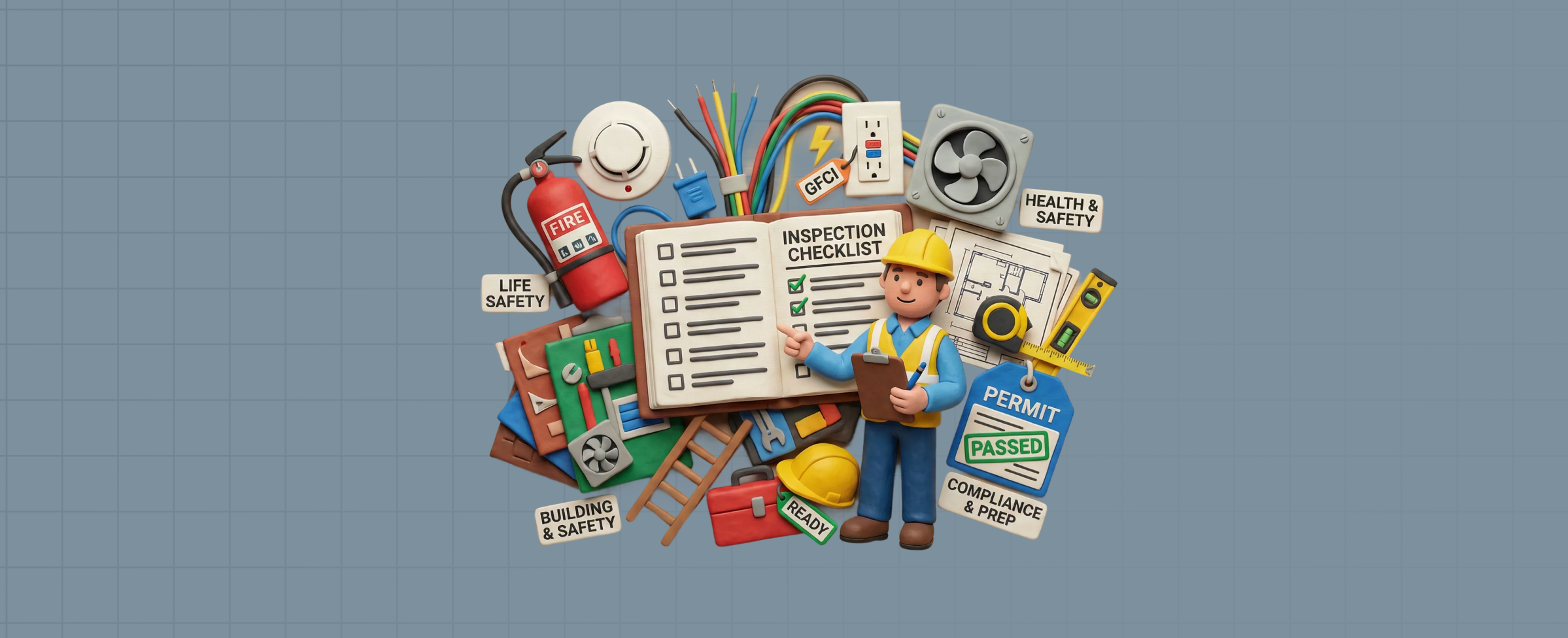
A building inspector’s role is not to be an adversary in a "gotcha" game, but to act as a crucial partner in risk management and quality assurance. Their primary mandate is to serve as an independent, on-the-ground representative of the Authority Having Jurisdiction (AHJ) and verify that a building meets the minimum legal standards for life safety, structural integrity, and public welfare. Successful project teams understand that the inspection is a predictable process of verification, not a subjective judgment of their work. This is achieved by comparing the constructed reality against three sources of truth: the adopted building code, the approved construction documents, and manufacturer's installation instructions.
To ensure a smooth inspection, it is essential to know precisely what inspectors focus on. Their priorities can be broken down into three fundamental categories:
- Life Safety: This is the absolute highest priority. Inspectors will meticulously check all elements related to occupant safety in an emergency.
- Egress: Clear, properly-sized, and unobstructed paths of travel to an exit, including correct door swings, panic hardware, and illuminated exit signage.
- Fire-Rated Assemblies: Verification that firewalls, floor/ceiling assemblies, and other fire-rated separations are built exactly as specified, including the correct type of drywall, sealed penetrations (firestopping), and proper joint taping.
- Fire Protection Systems: Ensuring fire sprinklers, alarms, and smoke detection systems are installed according to the approved plans and that all required pressure and functional tests have been completed and documented.
- Structural Integrity: The inspector verifies that the building’s structural "skeleton" is sound and built according to the engineered plans to withstand all expected loads.
- Foundation & Concrete: Correct placement and sizing of rebar, proper anchor bolt installation, and verification of concrete strength.
- Framing: Confirming the use of correct lumber grades and sizes, adherence to fastener schedules (nailing patterns), and the proper installation of all structural connectors like joist hangers and hurricane ties.
- Load Paths: A critical check to ensure that loads are transferred correctly from the roof down to the foundation without any weak points, such as improperly cut joists or missing headers.
- System Compliance: This covers the proper and safe installation of all critical building systems, often referred to as MEP (Mechanical, Electrical, and Plumbing), as well as energy and accessibility requirements.
- MEP Systems: Correct plumbing slope and venting, electrical wire gauge and breaker sizing, GFCI/AFCI protection, proper grounding, HVAC duct sealing, and required clearances for combustion appliances.
- Energy & Accessibility: Verification of required insulation levels (R-values), proper air sealing, and compliance with accessibility standards like the ADA (e.g., ramp slopes, door clearances, grab bar placement).
Preparation is the key to transforming inspection day from a point of anxiety into a predictable project milestone. The most effective framework involves conducting a rigorous pre-inspection walk-through using the approved plans as a checklist, treating it as an internal audit to catch issues early. It is also vital to have all documentation organized and ready on-site, including the permit, stamped plans, special inspection reports, and engineering letters. Finally, on inspection day, ensure the site is clean, safe, and easily accessible, and communicate professionally with the inspector by answering questions directly, taking notes on any corrections, and avoiding on-the-spot arguments. By following this approach, a passed inspection becomes more than just a green tag—it is a validation of a safe, compliant, and quality-built project.
This article will demystify the role of the building inspector, pull back the curtain on what they are really looking for, and provide a battle-tested framework for turning inspection day into a smooth and predictable step toward project completion.
Beyond the Clipboard: Understanding the Inspector's True Role
Before we dive into checklists and preparation tactics, it's critical to understand the inspector's mindset. They are the on-the-ground representatives of the Authority Having Jurisdiction (AHJ)—the city, county, or state entity that issues permits and enforces the building code.
Their job is not to interpret the architect's design intent or to appreciate the contractor's craftsmanship. Their job is to perform a direct comparison between the constructed reality and three primary sources of truth:
- The Adopted Building Code: The set of rules (e.g., the International Building Code, National Electrical Code) legally adopted by the jurisdiction.
- The Approved Construction Documents: The stamped set of plans and specifications that the AHJ reviewed and permitted.
- Manufacturer's Installation Instructions: For many products—from fire-rated doors to waterproofing membranes—the manufacturer's instructions are incorporated into the code by reference. An "improper installation" is a code violation.
An experienced inspector has seen hundreds, if not thousands, of projects. They develop a keen eye for common failure points and shortcuts. They aren't just looking at a single stud or anchor bolt; they are assessing patterns, understanding load paths, and visualizing how a building will perform under stress, especially in a fire or seismic event. Shifting your perspective from "passing the test" to "collaborating on safety" is the first and most important step toward success.
The Anatomy of an Inspection: What Are They Really Looking For?
While every jurisdiction has its nuances, inspectors across the country focus on a consistent set of critical areas tied directly to safety and building performance. Let's break down what they look for at key stages.
Foundational Compliance: The "Big Three"
Before an inspector even looks at the physical work, they are mentally checking three things. A failure here is an immediate red flag.
- Code Version Adherence: Are you building to the 2021 IBC when the city has only adopted the 2018 version? This fundamental error can have cascading consequences, and it's a non-starter.
- Conformance with Approved Plans: The most common source of a failed inspection is a field change that was never documented or approved. If the plans show a 2-hour fire-rated wall but the contractor built a 1-hour wall to save money or space, the inspection will fail. The inspector works from the approved plans, period.
- On-Site Documentation: The approved plans, permit card, and any relevant engineering letters or submittals must be on-site and readily available. Fumbling for paperwork signals disorganization and immediately puts an inspector on high alert.
Key Inspection Milestones and Common Failure Points
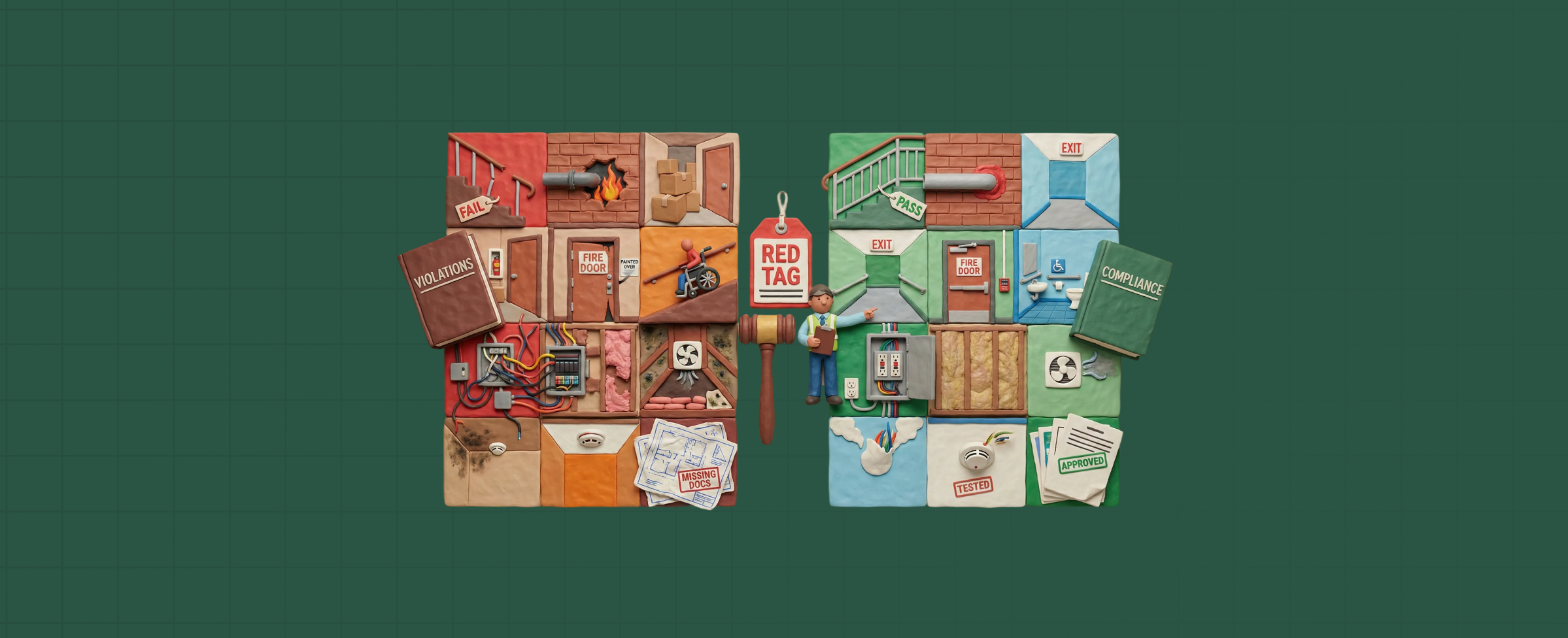
Construction is phased, and so are inspections. While the exact sequence varies, here are the major inspections and the most common items that lead to a "Red Tag" (a notice of rejection or correction).
| Inspection Phase | Key Items Inspectors Check | Common Failure Points |
|---|---|---|
| Footing & Foundation | Rebar size, spacing, grade, and clearance (cover). Foundation dimensions and depth. Vapor barrier installation and taping. Anchor bolt placement and embedment. | Incorrect rebar clearance (too close to the edge of the concrete), missing rebar, anchor bolts misaligned with wall locations. |
| Framing (Rough-in) | Load-bearing walls, headers, and beams correctly sized and supported. Shear wall nailing patterns and hold-downs. Fireblocking and draftstopping in concealed spaces. Joist hangers installed with the correct fasteners. | Missing fireblocking between floors or in soffits. Using nails instead of specified structural screws for hangers. Over-notching or boring holes in structural members for MEP runs. |
| MEP Rough-in | Plumbing: Proper slope for drain lines, pressure tests on supply lines, nail plates protecting pipes. Electrical: Correct wire gauge, box fill, grounding, GFCI/AFCI protection. Mechanical: Duct sealing, combustion air, condensate lines. | Electrical boxes unsecured or overcrowded. Drain lines with improper slope (“bellies”). Unprotected Romex wire running across the face of studs. |
| Insulation & Air Barrier | Correct R-value installed per plans. Complete coverage with no gaps or compression. Air barrier continuity at wall, floor, and ceiling transitions. | Compressed insulation (especially around wiring), gaps in the thermal envelope, unsealed penetrations in the air barrier. |
| Fire-Rated Assemblies | Correct gypsum type, stud depth/gauge, and fastener schedule per UL design. Proper joint treatment. All penetrations sealed with listed firestopping systems. | Using generic caulk instead of rated firestopping. Back-to-back electrical boxes in rated walls without protection. Incorrect joint tape or compound. |
| Final Inspection | Clear and lit egress paths. Handrail and guardrail height and spacing. Smoke and CO alarm operation. Final grading and drainage. Address numbers posted and required reports submitted. | Non-graspable or improperly sized handrails. Egress window sills too high. Site grading that directs water toward the foundation. |
A Proactive Framework for Inspection Success
What can you ask? (Sample questions)
- What building code edition does my state currently enforce?
- How do state-specific amendments modify the base IBC?
- What structural design loads apply in my jurisdiction?
- What energy code requirements apply to my building type?
Passing an inspection doesn't start on the morning of the appointment. It starts in pre-construction and is woven into the daily fabric of the project.
H3: Pre-Construction: Setting the Stage
- Hold a Pre-Construction Meeting: If the project is complex, invite the building department's plan reviewer and the lead inspector to a meeting with the architect, engineer, and contractor. Clarifying complex code interpretations before a shovel hits the ground can save tens of thousands of dollars.
- Scrutinize Local Amendments: Never assume the standard IBC or NEC is the final word. Most jurisdictions have a list of local amendments. These often cover regionally specific requirements like frost depth, seismic detailing, or wildfire-resistant materials.
- Thorough Drawing Coordination: Ensure the architectural, structural, and MEP plans are fully coordinated. A classic failure is a large duct designed to run through a structural beam specified on another drawing set. The inspector will flag the resulting unapproved structural modification.
H3: During Construction: The Superintendent's Pre-Inspection Checklist
The site superintendent is the linchpin of inspection success. The day before the inspector is scheduled, they (or a delegate) should perform their own "mock inspection."
- [ ] Documentation Ready: Is the permit card posted? Is a clean, current set of approved plans available? Are manufacturer spec sheets for key items (like fire caulk or windows) in a binder?
- [ ] Safe & Clear Access: Is there a safe path for the inspector to walk? Is the specific area to be inspected clear of debris, stored materials, and trip hazards? Is a sturdy ladder available? Don't make the inspector feel unsafe or inconvenienced.
- [ ] Match the Plans: Walk the area with the approved plans in hand. Does the shear wall nailing match the schedule? Is the fireblocking installed where the details show it? Verify everything.
- [ ] Check the Obvious: Are all the smoke detectors in place for the final? Are all the nail plates on for the rough-in? Hitting the easy, obvious items shows diligence.
- [ ] Light It Up: Ensure the area has adequate lighting. An inspector can't approve what they can't see.
H3: On Inspection Day: Professionalism and Communication
How you manage the inspection itself matters.
- Be Ready and On Time: Have someone (usually the superintendent) ready to meet the inspector at the scheduled time.
- Designate a Single Point of Contact: Avoid having multiple subcontractors trying to talk to the inspector at once. Funnel all communication through one knowledgeable person.
- Listen, Don't Argue: If the inspector finds an issue, listen carefully to understand the specific code citation and the nature of the concern. Take detailed notes. Arguing on the spot, especially without the codebook in hand, is rarely productive.
- Ask for Clarification: It is perfectly acceptable to ask, "Can you show me that section in the code so my team and I can understand it better for the correction?" This shows a commitment to compliance, not combativeness.
- Document Everything: After the inspection, immediately document the results. If corrections are required, list them, assign responsibility, and set a deadline for the re-inspection.
The Human Element: Building a Relationship with Your Inspector
Inspectors are people. They have good days and bad days, and they deal with a wide spectrum of contractors. The teams that build a reputation for quality, organization, and honesty find their inspections go much more smoothly over time.
This doesn't mean becoming friends or seeking special treatment. It means building professional trust. When you call ahead to ask a question about a tricky detail before you build it, you are demonstrating proactive compliance. When your sites are consistently clean and your paperwork is always in order, you signal that you are a professional who takes the code seriously.
Real-World Scenario: On a multi-family project, a contractor encountered an unusual condition where a plumbing stack had to penetrate a complex, fire-rated floor-ceiling assembly. Instead of guessing, the superintendent called the inspector, explained the situation, and emailed him the proposed detail using a listed firestopping product. The inspector provided feedback over the phone, the contractor built it correctly the first time, and the rough-in inspection passed without comment. That 15-minute phone call saved a minimum of two days of rework and re-inspection delays.
Conclusion: Key Takeaways for a Smoother Process
Navigating the building inspection process is a non-negotiable skill for any successful construction professional. By shifting your mindset and adopting a proactive approach, you can transform it from a source of stress into a valuable quality control checkpoint.
- Respect the Role: The inspector is your partner in ensuring public safety, not your adversary. Their authority comes from the legally adopted code.
- Preparation is Everything: The work to pass an inspection happens long before the inspector arrives. It starts with coordinated plans and continues with daily quality control.
- Documentation is King: The approved plans are the contract between you and the AHJ. Build what was approved, and have the documentation on-site to prove it.
- Communicate Proactively: Don't wait for a failure to have a conversation. Engage your inspector on complex issues before they are built to get alignment and avoid rework.
- Professionalism Builds Trust: A clean site, clear communication, and a non-confrontational attitude go a long way in building the professional trust that facilitates smoother, more efficient projects.
Related Building Code Resources
- Building CodesWhat is a Certificate of Occupancy? The Final Step in Proving Code Compliance
- Building CodesPerformance-Based vs. Prescriptive Codes: Choosing the Right Path for Your Project
- Building CodesThe Digital Blueprint: How Technology is Revolutionizing Building Code Compliance
- Building CodesBalancing Past and Present: A Guide to Code Compliance for Historic Renovations and Existing Buildings
- Building CodesTop 10 Building Code Violations Found During Inspections (And How to Avoid Them)
MeltPlan
A curated stream of preconstruction intelligence, estimating innovation, takeoff breakthroughs, workflow advancements, and expert perspectives—powered by the AI and technology shaping the future of construction.
Visit SiteDon't miss what's shaping AEC
The latest on preconstruction, codes, AEC news & trends — so you're always in the know.