What Are Common Challenges Faced During Building Code Compliance?
Building code compliance in the United States is difficult because the system is fragmented, multi-layered, constantly evolving, and highly interpretive, requir..
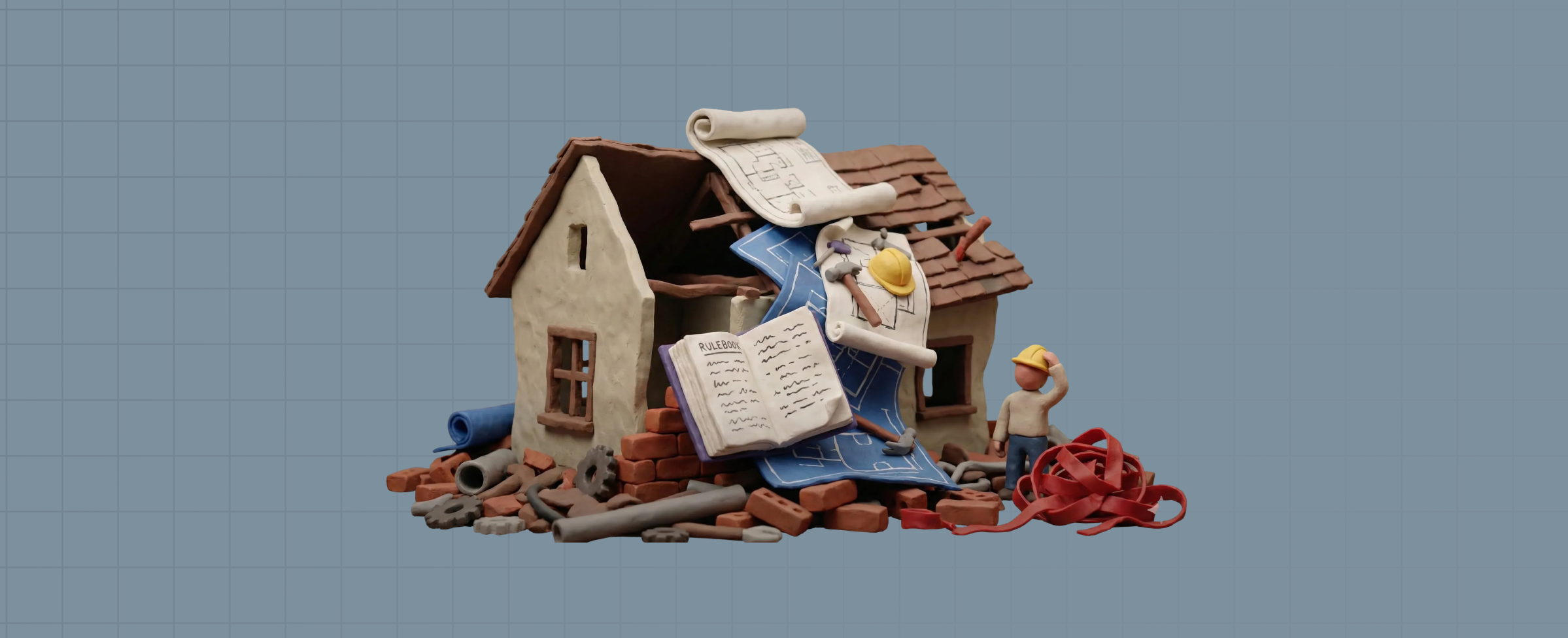
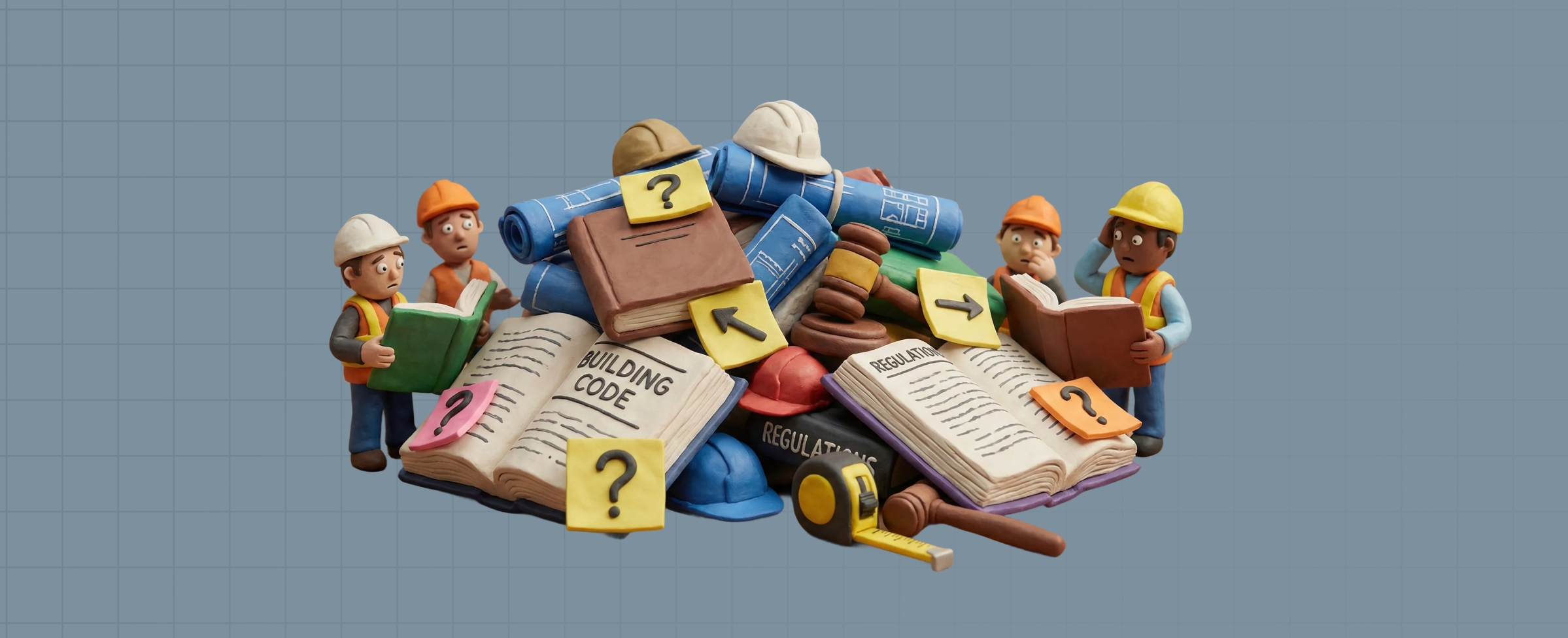
Building code compliance in the United States is difficult because the system is fragmented, multi-layered, constantly evolving, and highly interpretive, requiring professionals to stitch together information from dozens of disparate sources. A single compliance question may involve 4–8 different codes, multiple amendments, referenced standards, and local enforcement policies - and even then, answers often differ depending on the Authority Having Jurisdiction (AHJ). This complexity creates cognitive overload and makes even straightforward code decisions error-prone.
Professionals face challenges across five core dimensions:
1. Fragmented and Conflicting Codes Across Jurisdictions
The U.S. has no national building code. Every state, county, and city adopts different code editions with their own amendments - some strict, some outdated, some contradictory. Designers often spend hours just determining which code actually applies, which amendment prevails, and which edition is current. Conflicts between IBC, NFPA, ADA, ANSI A117.1, IECC, WUI rules, and local fire marshal requirements are common.
2. Multi-Code Dependency and Hidden Interactions
Most code questions aren’t isolated - they span architectural, mechanical, electrical, plumbing, life-safety, fire protection, accessibility, energy, and zoning requirements. Missed cross-links (such as egress requirements triggered by HVAC equipment, or fire-rated walls compromised by electrical clearances) are a leading cause of rework, RFIs, and plan-review failures.
3. Knowledge Gaps Across Experience Levels
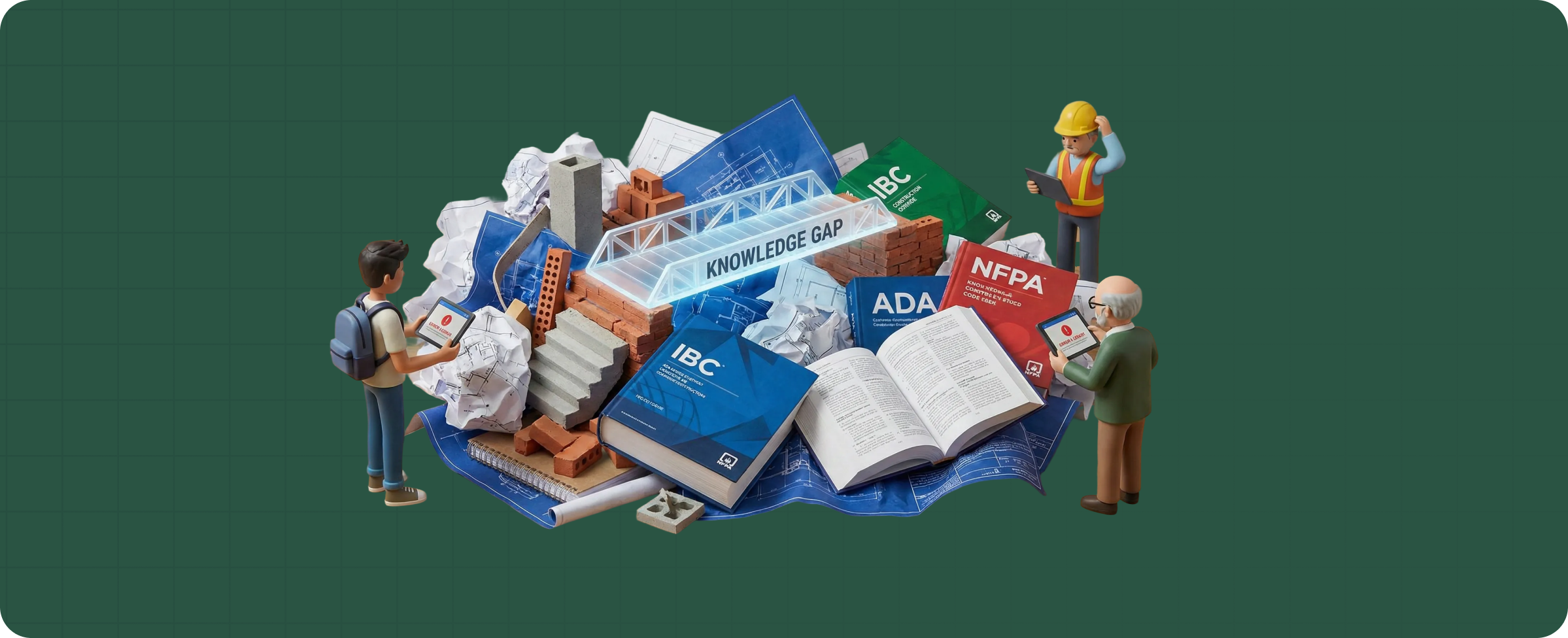
Juniors struggle with dense code language, exceptions, and amendment navigation. Mid-level staff become bottlenecks because they must review every question, while senior staff carry the burden of high-level reasoning, interpretation, and liability. Much of the firm’s code knowledge lives in tribal memory, not in standardized systems.
4. Access Issues: Local Amendments, Referenced Standards & Update Cycles
Local amendments are scattered across PDFs, bulletins, and hard-to-find documents. Referenced standards (NFPA, ASHRAE, ANSI, UL, ASTM) are paywalled and update independently. States lag behind ICC cycles by 6–12 years, while cities adopt updates unpredictably. Many teams unknowingly use outdated or incorrect editions.
5. Interpretation Variability Across Stakeholders and AHJs
Codes allow judgment and equivalency, so interpretations vary widely between designers, engineers, contractors, plan reviewers, fire marshals, and field inspectors. Drawings that pass plan check may still fail inspection. AHJ personalities, precedents, and local priorities (life safety, accessibility, wildfire risk) heavily influence enforcement.
6. Slow, Manual, and Non-Standardized Research Workflows
Most firms rely on PDF searches, bookmarks, email threads, and institutional knowledge. There is no shared project memory, no standardized reasoning logs, and no centralized interpretation database. Each project essentially restarts code research from zero, creating inconsistent outcomes and wasted time.
7. Coordination Breakdowns Across Architecture, Structure, and MEP
Many compliance failures occur not in the code text, but in coordination: penetrations through fire-rated walls, door swings into egress paths, equipment blocking accessibility clearances, mismatched shaft sizes, NEC room-size violations, sprinkler-lighting conflicts, and more. These failures often trace back to multi-code triggers that weren’t communicated between disciplines.
8. AHJ Complexity and Unwritten Policies
Jurisdictions enforce formal codes plus additional layers - administrative bulletins, fire department memos, legacy precedents, and unpublished requirements. Even perfectly compliant drawings may be rejected if they conflict with AHJ expectations or historical interpretations.
9. Poor Documentation, Traceability, and Code Reasoning Records
Most firms lack a structured way to record how decisions were made. Code reasoning lives in emails, Slack, memory, or markups. This leads to repeated research, inconsistent interpretations, weak handoffs, and heightened liability.
10. Field Execution Issues and Inspection Failures
Construction crews frequently misapply code intent, leading to incorrect ADA clearances, unsealed penetrations, damaged rated assemblies, improper mounting heights, and product substitutions. These failures cause inspection delays, costly rework, and occupancy setbacks.
11. High Liability, High Stakes, and Organizational Fear
Building codes are tied directly to life safety. A single error may trigger lawsuits, insurance claims, delays, or loss of licensure. This creates a culture of fear where teams double- and triple-check work - often manually - slowing down the process and increasing pressure on senior staff.
Why Do Building Codes Vary So Much Across the United States?
The U.S. code ecosystem is not unified
Unlike countries with national building codes, the U.S. maintains a decentralized system where jurisdictions pick and amend model codes independently.
Multiple layers of adoption
A project may be governed by:
- State building code
- County amendments
- City amendments
- Fire marshal amendments
- Special district overlays
- Referenced standards with separate editions
Conflicts between code layers
Common conflicts:
- State code vs. local fire marshal
- Local accessibility amendments vs. ANSI vs. ADA
- State energy code vs. IECC vs. ASHRAE
How this impacts compliance
Professionals waste hours determining:
- “Which code actually applies?”
- “Which amendment overrides which?”
- “What edition is current?”
Read here for a detailed breakdown on why Building Codes Vary So Much Across the United States
How Multi-Code Dependency and Hidden Interactions make code compliance challenging?
Single questions often span 4–8 codes
Example: corridor fire ratings require referencing:
- IBC
- IFC
- NFPA 101
- Local amendments
- Accessibility clearance requirements
- MEP and structural implications
Errors happen due to overlooked cross-links
Especially with:
- Egress calculations
- Fire separations
- Occupancy classifications
- Mechanical and electrical system triggers
- Fire alarm + sprinkler interfacing
- Energy compliance affecting systems design
Why this creates cognitive overload
Codes weren’t written for machine-like precision; they rely on interpretation, context, and professional judgment.
Knowledge Gaps Across Junior, Mid-Level, and Senior Staff
What can you ask? (Sample questions)
- What building code edition does my state currently enforce?
- How do state-specific amendments modify the base IBC?
- What structural design loads apply in my jurisdiction?
- What energy code requirements apply to my building type?
Juniors struggle with
- Dense legal language
- Navigating PDFs and code hierarchies
- Understanding exceptions and footnotes
- Missing amendment references
- Fear of making compliance mistakes
Mid-level staff become bottlenecks
- Must review every junior’s research
- Constant interruption from questions
- Cross-checking multiple codebooks manually
- Pressure to deliver clear, fast answers
Senior staff carry enormous risk
- Tribal knowledge trapped in a few experts
- High liability exposure
- Limited time to mentor
- Fatigue from constant code judgments
Read here for a detailed breakdown on Why Building Codes Are Hard to Learn – And Harder to Teach
Access Issues: Local Amendments, Referenced Standards & Updates
Local amendments are scattered
Many jurisdictions provide:
- Outdated PDF addendums
- Hard-to-find revisions
- Inconsistent documentation formats
- Policies that never reach print
Referenced standards create another layer
E.g., NFPA, ASHRAE, UL, ANSI, ASTM. These are often paywalled and updated asynchronously.
Codes update on different cycles
- ICC codes: 3-year cycle
- States: usually 6–12 years behind
- Cities: random updates
- Referenced standards: independent cycles
Design teams constantly worry: “Am I using the right edition?”
Read here for a detailed breakdown on Why Is It So Hard to Access the Right Building Codes?
Interpretation Variability Between Stakeholders
Designers vs. engineers vs. contractors
Each discipline has different perspectives and risk tolerance.
AHJ variability
Different reviewers interpret codes differently:
- One fire marshal may require sprinklers; another may not
- One plan reviewer rejects corridors; another approves them
Field inspectors vs. plan reviewers
Drawings may pass permitting but fail inspections.
This leads to
- Rework
- Change orders
- Delays
- Conflicting instructions
- Appeals or alternate method submissions
Read here for a detailed breakdown on Why Do Building Code Interpretations Differ So Much?
Slow, Manual, and Non-Standardized Code Research Workflows
Typical workflow today
- Open PDF codes
- Keyword search
- Jump between chapters
- Cross-reference standards
- Email seniors
- Chase down local amendments
No project memory
Each project = starting from scratch.
Firm-wide knowledge loss
When experts leave, the firm loses:
- Interpretations
- Checklists
- Lessons learned
- Past projects’ code reasoning
Read here for a detailed breakdown on Why Code Research Takes Forever (And How It Actually Happens)?
Coordination Breakdowns Across Architecture, Structure, and MEP
Common breakdowns:
- Fire-rated walls broken by MEP penetrations
- Egress doors swinging into clearances
- Equipment obstructing accessible paths
- Sprinkler/lighting interferences
- Shaft sizes not matching mechanical needs
- Electrical room sizes violating NEC
- Structural shear walls conflicting with openings needed for egress
Read here for a detailed breakdown on The Top Code-Related Coordination Failures in Building Design
AHJ (Authority Having Jurisdiction) Complexity
Different AHJs enforce different priorities
- Life safety
- Fire code strictness
- Accessibility emphasis
- Political or community concerns
Policy documents beyond codes
- Administrative bulletins
- Fire department memos
- Supplemental checklists
- Unpublished precedents
Why even perfect drawings get rejected
Because AHJs interpret code, not just apply it.
Documentation, Traceability, and Lack of Code Reasoning Records
Teams rarely document interpretations
Most code decisions are in:
- Emails
- Slack
- Sticky notes
- Memory
- Redlines
- PDF markups
Impact
- No audit trail
- Poor handoffs
- Repeated research
- Inconsistent compliance
- Legal vulnerability
Read here for a detailed breakdown on Why Code Documentation Matters – and How Firms Fail at It
Field Execution Challenges & Inspection Failures
Typical failures
- Firestopping violations
- Incorrect ADA clearances
- Wrong mounting heights
- Damaged rated assemblies
- Unapproved substitutions
- Incorrectly installed fire alarm devices
- MEP penetrations not sealed
- Improper egress signage
These issues delay occupancy and trigger costly rework.
Read here for a detailed breakdown on The Most Common Code Violations Found During Construction
Risk, Liability, and High-Stakes Decision Making
Compliance = liability
Errors can lead to:
- Injury or life-safety events
- Insurance claims
- Lawsuits
- License risk
- Reputational damage
Firms face pressure
Everyone - from juniors to principals - fears making the wrong call.
Read here for a detailed breakdown on How Code Compliance Risk Impacts Projects & Firms
Role-by-Role Breakdown of Challenges
Architects
- Fragmented code research
- Egress planning
- Accessibility
- Fire separation logic
Engineers
- Specialty standards (NFPA 13, NEC, ASHRAE)
- Coordination with architecture
- Equipment sizing impacts
GCs/Subs
- Field interpretation
- Material substitutions
- Maintaining rated assemblies
Inspectors
- Inconsistent plans
- Missing documentation
- Contractor errors
Owners
- Delays
- Extra cost due to code-driven redesign
- Confusion around local approvals
FAQs
1. What causes most building code compliance failures?
Most failures stem from multi-code conflicts, local amendments that were missed, incorrect interpretations, and coordination gaps between disciplines.
Common root causes include:
- Applying the wrong edition of a code (e.g., using 2021 IBC when the city is on 2018 IBC + amendments).
- Missing local fire marshal or accessibility amendments.
- Misinterpreting exceptions, definitions, or applicability thresholds.
- Poor mapping between architectural intent and engineering system triggers.
- Incorrect field installation (firestopping, clearances, equipment locations).
- AHJ interpretation differences that weren’t anticipated.
Most failures begin during early schematic design, but they reveal themselves during plan review, inspections, or closeout - when they’re most expensive to fix.
2. Who is responsible for building code compliance?
Responsibility is shared across the entire project team, even though architects typically coordinate compliance.
Breakdown:
- Architects: Lead overall code strategy, occupancy, egress, accessibility, fire separations.
- Engineers: Ensure MEP/FP systems meet NFPA, ASHRAE, NEC, IPC, IMC requirements.
- Contractors & subs: Install systems per code, maintain rated assemblies, ensure field accuracy.
- Inspectors: Verify compliance in the field; interpret and enforce the codes for the jurisdiction.
- Owners: Provide accurate project info (use, occupancy, intent) that affects code applicability.
Liability varies, but everyone contributes to compliance - errors in any discipline can trigger major failures.
3. Why do different AHJs interpret the same code differently?
Because building codes are interpretive, not purely prescriptive. Codes include “intent,” “equivalency,” and “judgment” language. AHJs differ based on:
- Local enforcement culture (strict vs. flexible).
- Past precedent within the jurisdiction.
- Life-safety priorities of the fire marshal vs. building department.
- Local political pressures (affordability, wildfires, flood risk, community concerns).
- Individual reviewer’s knowledge, experience, and risk tolerance.
Even with identical code text, two cities - or two reviewers within one city - may ask for different things.
4. Why is accessibility so hard to comply with?
Because designers must reconcile three overlapping sources:
- ADA – Federal civil rights law (cannot be waived).
- ANSI A117.1 – Model accessibility standard adopted via IBC.
- Local amendments – Cities and states often add stricter requirements.
Challenges include:
- Conflicts between ADA and ANSI provisions.
- Undefined precedence (ADA vs. state vs. local).
- Tight dimensional tolerances (e.g., ½" can cause a failure).
- In-the-field conditions (e.g., uneven slab, shifting thresholds).
- Custom details requiring exact clearances and mounting heights.
Accessibility is one of the highest-liability areas in design - and one of the most commonly cited during inspections.
5. What is the biggest challenge for architects?
For architects, the primary challenge is multi-code reasoning - not just finding text, but reconciling:
- Occupancy classifications
- Mixed-use conditions
- Construction type limitations
- Egress, fire ratings, and protection strategies
- Accessibility dimensional logic
- Energy triggers
- Wildland/urban interface rules
- Local fire marshal modifications
Architects must integrate structural, mechanical, electrical, fire protection, and site regulations into a coherent compliance strategy - often under time pressure and with incomplete information.
6. What is the most overlooked area of compliance?
Documenting code reasoning and interpretation decisions.
Most research happens through:
- Emails
- Slack messages
- PDF highlights
- Verbal discussions
- Redlines
- Memory
Very few firms maintain:
- Centralized interpretation logs
- Project-specific compliance narratives
- Versioned and vetted checklists
- Amendment-driven reasoning chains
Without documentation, teams:
- Redo research
- Lose institutional knowledge
- Struggle to defend decisions
- Face greater liability exposure
7. How do local amendments complicate compliance?
Local amendments are:
- Difficult to find
- Poorly organized
- Published separately from base codes
- Sometimes out-of-date or contradictory
A jurisdiction may adopt:
- State code
- Local construction code
- Fire code supplements
- Administrative bulletins
- Planning/zoning overlays
Missing a single amendment can invalidate an entire strategy (e.g., corridor ratings, sprinklers, egress width factors).
8. Why is coordinating between architects and engineers so difficult?
Because each discipline uses different codes, and their decisions change each other's requirements.
Examples:
- MEP penetrations compromise fire ratings that architects set.
- Mechanical equipment sizing affects egress widths.
- Electrical clearances conflict with accessibility clearances.
- Structural wall locations impact exiting and fire compartments.
Most coordination failures stem from poor alignment between discipline assumptions and code triggers.
9. What are the most common issues found during inspections?
The highest-frequency field failures include:
- Unsealed MEP penetrations
- Improperly installed firestopping
- Incorrect accessibility slopes and clearances
- Wrong mounting heights (signs, dispensers, alarm devices)
- Damaged or cut fire-rated assemblies
- Substituted products without approvals
- Incorrect egress signage or lighting
These issues often arise because field crews lack visibility into the design’s code logic.
10. Why do juniors struggle so much with code research?
Because code research requires:
- Deep understanding of multiple codes
- Ability to navigate cross-references
- Awareness of amendments
- Judgment on applicability and exceptions
- Experience interpreting ambiguous language
The skill is typically learned over years, not weeks - and most juniors fear making a mistake that impacts life safety or permitting outcomes.
11. How do code updates impact ongoing projects?
Updates can affect:
- Drawings already submitted
- Systems already designed
- Details coordinated across disciplines
- Products selected
Unexpected updates (e.g., city adopting new accessibility amendments mid-project) can force redesigns or require alternate method applications.
12. What role do referenced standards play in compliance?
Referenced standards (NFPA, ASHRAE, ANSI, ASTM, UL) often override or extend the base code.
Challenges:
- They’re paywalled
- They update on their own schedules
- Designers often don’t know which edition is actually adopted
- AHJs may enforce older or newer versions inconsistently
A single question (e.g., corridor fire alarm device spacing) may require reading IBC + IFC + NFPA 72 + local amendments.
13. Why is building code research so time-consuming?
Because professionals must:
- Jump across multiple PDFs
- Search ambiguous keywords
- Cross-check exceptions
- Compare editions
- Validate against local amendments
- Email seniors for interpretation
- Document findings
Most firms lack standardized research workflows or centralized knowledge systems, so each designer effectively “starts from scratch.”
14. What makes building codes especially difficult for AI tools?
AI struggles because:
- Codes require reasoning, not keyword matching
- Logic spans multiple documents
- Amendments override base text
- Exceptions and definitions control applicability
- Interpretation requires project context
- Jurisdictions apply codes differently
AI that only performs “search” produces shallow, incomplete, or incorrect answers - leading to mistrust among professionals.
15. How does poor documentation increase liability?
When reasoning is not documented, firms can’t prove:
- Why a decision was made
- What assumptions were used
- Whether research included amendments
- Whether the correct edition was applied
In disputes or lawsuits, undocumented decisions are viewed as uninformed decisions, increasing the firm’s exposure.
16. What single change would most improve code compliance?
Standardized, project-aware, centralized code reasoning systems that:
- Capture decisions
- Track citations
- Integrate amendments
- Maintain project memory
- Connect multi-code logic
This reduces rework, improves accuracy, and preserves institutional knowledge across the firm.
Related Building Code Resources
- Building CodesWhat Are the Key Aspects to Consider When Analyzing Building Codes?
- Building CodesDigital Code Libraries & Search Tools: What They Fix and What They Don’t
- Building CodesWhere Traditional Building Code Research Breaks Down
- Building CodesThe Hidden Costs of Manual Building Code Research
- Building CodesTraditional Building Code Research Methods
MeltPlan
A curated stream of preconstruction intelligence, estimating innovation, takeoff breakthroughs, workflow advancements, and expert perspectives—powered by the AI and technology shaping the future of construction.
Visit SiteDon't miss what's shaping AEC
The latest on preconstruction, codes, AEC news & trends — so you're always in the know.