What Are the Most Common Building Code Violations Found During Construction (and Why Do They Happen)?
The most common building code violations found during construction involve firestopping failures, breaches of fire-rated assemblies, accessibility (ADA/ANSI) mi..
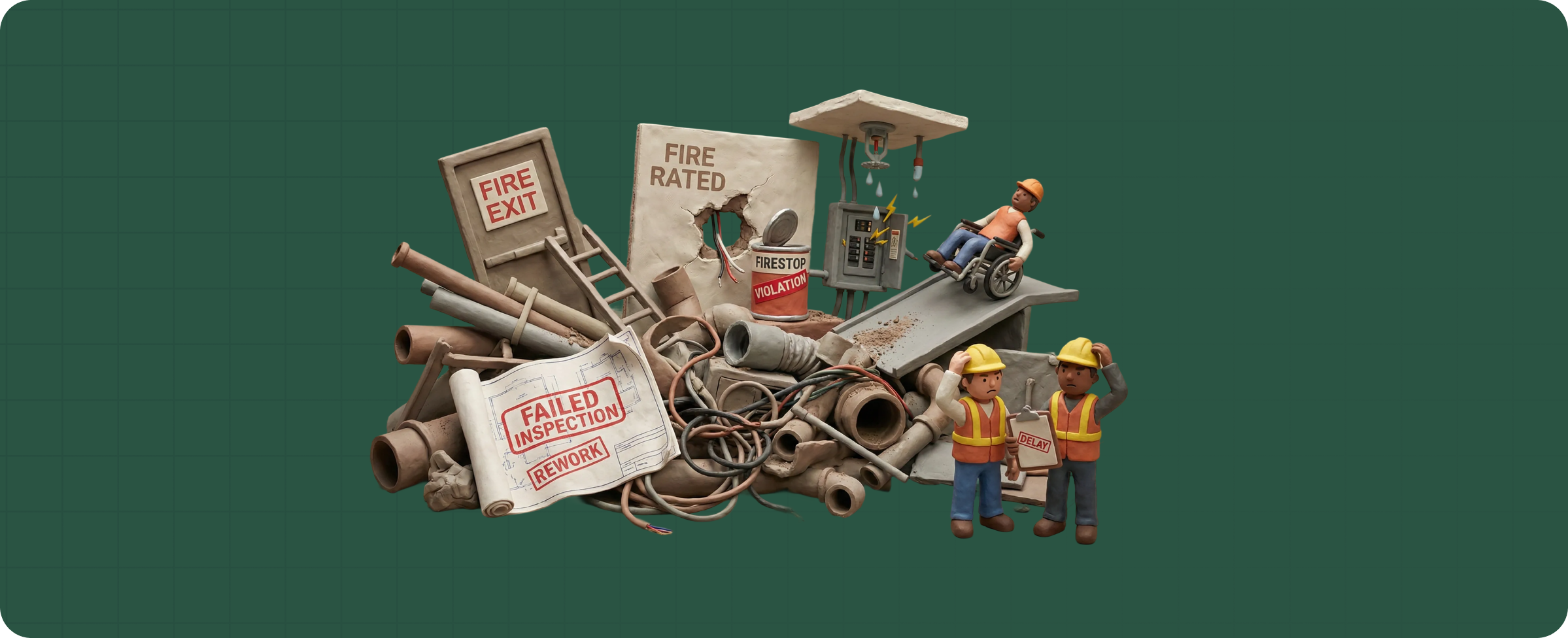
The most common building code violations found during construction involve firestopping failures, breaches of fire-rated assemblies, accessibility (ADA/ANSI) mistakes, egress noncompliance, MEP conflicts with life-safety systems, sprinkler and fire alarm issues, and deviations from approved permit drawings. These issues arise because construction introduces real-world constraints that differ from design assumptions, and multiple trades work independently in a fast-paced environment with limited coordination.
Firestopping is the number one source of failed inspections due to missing materials, wrong UL assemblies, improper penetrations, and field routing that breaks rated walls and shafts. Fire-rated wall/ceiling assembly violations occur when gypsum layers, penetrations, dampers, or fireproofing are installed incorrectly. Accessibility failures are widespread because mounting heights, clearances, slopes, and restroom configurations are extremely precise and easily disrupted by field tolerances or late-stage accessory installations.
Egress violations stem from misaligned exit signage, incorrect hardware, stair geometry errors, corridor obstructions, and improper exit discharge conditions. Fire protection issues include sprinkler obstructions, incorrect spacing, improper strobe/pull station heights, and missing labeling. Mechanical and electrical systems often fail compliance due to insufficient ventilation, clearance violations, smoke control miscoordination, blocked electrical panels, and grounding/bonding issues. Plumbing failures often involve incorrect venting, inaccessible cleanouts, or improper drain slopes.
Many violations stem from deeper systemic causes: drawings may lack critical detail such as UL assemblies, clearances, or coordination notes; trades operate independently and optimize for their own scope; inspectors enforce based on field conditions rather than design intent; and contractor improvisation or value engineering leads to deviations from approved documents. Tight construction schedules amplify these issues, and code interpretation differences between plan reviewers and inspectors add another layer of variability.
Ultimately, construction-phase code failures occur because design, MEP, fire protection, and field installation must all align perfectly - but the construction environment makes that extremely challenging. Without deep coordination, continuous verification, and a strong understanding of code-critical details, violations become inevitable and often costly.
Introduction: Why Construction Is Where Code Compliance Often Breaks Down
Even if drawings are perfect and code research is thorough, field conditions always introduce uncertainty.
On-site constraints, trade sequencing, missing information, rushed installations, and changing interpretations all contribute to violations.
The majority of code failures discovered during inspections fall into predictable categories. Understanding them helps design teams, contractors, and inspectors prevent delays, rework, change orders, and occupancy hold-ups.
Below is the definitive breakdown of the most common construction-phase code violations - and why they happen.
1. Firestopping Violations (The #1 Cause of Inspection Failure)
Firestopping failures are the most widespread - and most costly - construction violations.
1.1 Missing or incorrect firestopping around penetrations
Common causes:
- trades cutting openings not planned in CDs
- incorrectly installed firestop materials
- wrong UL assemblies
- use of unlisted products
- gaps, oversized holes, or incomplete coverage
1.2 Rated assemblies broken by MEP routing
Examples:
- ductwork not fire-dampered
- pipes cutting through rated corridors
- cable trays breaching shafts
- plumbing stacks breaking rated walls
Firestopping must match the rated assembly AND product listing, not just “fill the hole.”
1.3 Improper fire caulk selection
Contractors often use:
- wrong fire caulk (acrylic vs. silicone)
- wrong hourly rating
- products not tested for the joint type
1.4 Incorrect or missing head-of-wall and joint systems
Head-of-wall joints must match UL systems - often overlooked.
2. Violations of Fire-Rated Wall and Ceiling Assemblies
2.1 Gypsum layers not installed per rated assembly
Typical errors:
- missing layers
- incorrect screw spacing
- using wrong gypsum board type
- failing to stagger seams as required
2.2 Penetrations through shaft walls
Shafts require strict continuity.
Common violations:
- duct penetrations without dampers
- missing fire barriers
- improper enclosure heights
2.3 Incomplete fireproofing of structural members
Spray fire-resistant material (SFRM) often:
- thin in certain areas
- fails bonding
- is removed during MEP installation
- is applied in inconsistent thickness
3. Accessibility (ADA/ANSI) Violations
What can you ask? (Sample questions)
- What building code edition does my state currently enforce?
- How do state-specific amendments modify the base IBC?
- What structural design loads apply in my jurisdiction?
- What energy code requirements apply to my building type?
Accessibility issues are among the most common inspection failures.
3.1 Incorrect mounting heights
Common failures:
- switches
- thermostats
- sink controls
- paper towel dispensers
- grab bars
3.2 Incorrect door clearances
Door clearance violations occur because:
- MEP equipment intrudes
- walls shift during construction
- wrong hardware installed
- floor slopes change door swing behavior
3.3 Improper restroom layouts
Contractors often fail:
- knee/toe clearances
- turning radius
- fixture spacing
- centerline distances
3.4 Slopes exceeding 2% on accessible routes
Even slight field variations create non-compliant slopes, especially:
- at entrances
- at sidewalks
- in lobbies
- near curb ramps
3.5 Bathroom accessories violating clear floor area
Accessories often installed after finishes → blocking clearances.
4. Egress Violations
4.1 Exit sign placement errors
- not visible from required angles
- not located at decision points
- obscured by fixtures or architectural elements
4.2 Door hardware issues
- improper latching
- non-compliant panic hardware
- wrong swing direction
- barriers obstructing clear width
4.3 Stair violations
- riser/tread inconsistencies
- wrong handrail height
- missing extensions
- inadequate guardrails
- inconsistent nosing
4.4 Exit discharge problems
- blocked exit paths
- insufficient lighting
- incorrect grade changes
- missing signage
5. Sprinkler & Fire Alarm Violations
5.1 Sprinkler obstructions
NFPA 13 violations include:
- lights too close to heads
- soffits blocking spray patterns
- beams causing shadowing
- decorative features obstructing coverage
5.2 Incorrect sprinkler spacing
Spacing calculations ignored or altered on site.
5.3 Fire alarm devices at wrong heights
NFPA 72 + ADA conflicts often cause:
- incorrect pull station heights
- improperly spaced strobes
- horn/strobe candela issues
5.4 Missing equipment labeling
AHJs often flag:
- panel labeling
- circuit identification
- fire pump signage
6. Mechanical System Violations
6.1 Inadequate ventilation
ASHRAE 62.1 requirements not met due to:
- incorrect duct sizing
- insufficient outdoor air
- wrong control sequences
6.2 Improper equipment clearances
Contractors often violate:
- IMC clearance requirements
- manufacturer access requirements
- NEC electrical clearance at mechanical equipment
6.3 Improper smoke control installation
IFC + mechanical + fire alarm coordination often fails.
7. Electrical Code Violations
7.1 Violations of NEC working clearances
Panels blocked by:
- plumbing
- ducts
- architectural features
- storage
Clearances require strict adherence.
7.2 Incorrect emergency lighting installation
Inadequate lighting levels
Misaligned battery backup coverage
Fixtures improperly wired
7.3 Grounding & bonding issues
Often overlooked in multi-trade environments.
8. Plumbing & Sanitary Violations
8.1 Improper venting
Vents often routed incorrectly due to field constraints.
8.2 Cleanouts installed in inaccessible locations
Violates IPC requirements.
8.3 Incorrect slopes for drains
Even slight deviations cause inspection failures.
9. Deviations From Approved Drawings
9.1 Field changes made without coordination
Trades adjust routing on site:
- to avoid conflicts
- to save time
- to reduce material costs
These changes often break code assumptions.
9.2 Value engineering compromises compliance
Substituting:
- thinner walls
- cheaper rated assemblies
- different HVAC equipment
- alternative electrical gear
…may break code requirements.
9.3 Shop drawings not aligned with CD intent
Contractors design details that violate code logic.
9.4 Contractor misinterpretation of code requirements
Especially in accessibility and fire protection.
10. Why These Violations Happen (The Root Causes)
10.1 Plans don’t show enough detail
Most drawings:
- don’t specify UL systems
- don’t show clearance diagrams
- rely on notes
- leave coordination to contractor
This leads to inconsistent interpretation.
10.2 Trades work independently
Each trade optimizes for its own scope - not for compliance of the whole building.
10.3 Code interpretations differ between plan reviewers and inspectors
Inspectors focus on:
- real-world installation
- safety
- exact measurements
…not drawing intent.
10.4 Field conditions force improvisation
Unforeseen obstacles → non-compliant routing.
10.5 Lack of coordination between teams
Architects, engineers, fire protection, and contractors rarely coordinate deeply enough during early design.
10.6 Construction schedules compress quality
Rushed work = frequent code mistakes.
FAQs
1. What is the most common building code violation during construction?
Firestopping failures - especially improper penetrations through rated walls, ceilings, and shafts - are the most common cause of inspection failure.
2. Why are ADA/ANSI accessibility violations so frequent?
Field conditions shift dimensions, accessories are installed late, and the required clearances are extremely precise - making even small deviations noncompliant.
3. Why do sprinkler and fire alarm issues show up in inspections?
Because architectural elements, lighting, HVAC routing, and ceiling layouts often obstruct NFPA-required spacing or mounting heights, and late coordination is insufficient.
4. Why do inspectors reject installations that match the approved drawings?
Inspections are based on actual field conditions and safety, not design intent - so if installation differs, creates risk, or violates code in reality, inspectors can override drawings.
5. Why do deviations from approved drawings cause so many violations?
Trades frequently improvise routing, value engineer materials, or resolve clashes on site without coordinated redesign - breaking code assumptions embedded in the original documents.
6. What’s the root cause of most construction-phase violations?
Lack of detailed coordination across architecture, MEP, fire protection, and contractors - combined with unclear details, rushed schedules, and inconsistent interpretation across inspectors.
References
ICC Codes, NFPA 13/72/101/70, IMC/IP, ASHRAE 62.1/90.1, ADA Standards, ANSI A117.1, field inspection logs, contractor QA/QC workflows, and decades of experience across U.S. construction.
Related Building Code Resources
- Building CodesWhat Are the Key Aspects to Consider When Analyzing Building Codes?
- Building CodesDigital Code Libraries & Search Tools: What They Fix and What They Don’t
- Building CodesWhere Traditional Building Code Research Breaks Down
- Building CodesThe Hidden Costs of Manual Building Code Research
- Building CodesTraditional Building Code Research Methods
MeltPlan
A curated stream of preconstruction intelligence, estimating innovation, takeoff breakthroughs, workflow advancements, and expert perspectives—powered by the AI and technology shaping the future of construction.
Visit SiteDon't miss what's shaping AEC
The latest on preconstruction, codes, AEC news & trends — so you're always in the know.
You may also want to read
← Previous Post
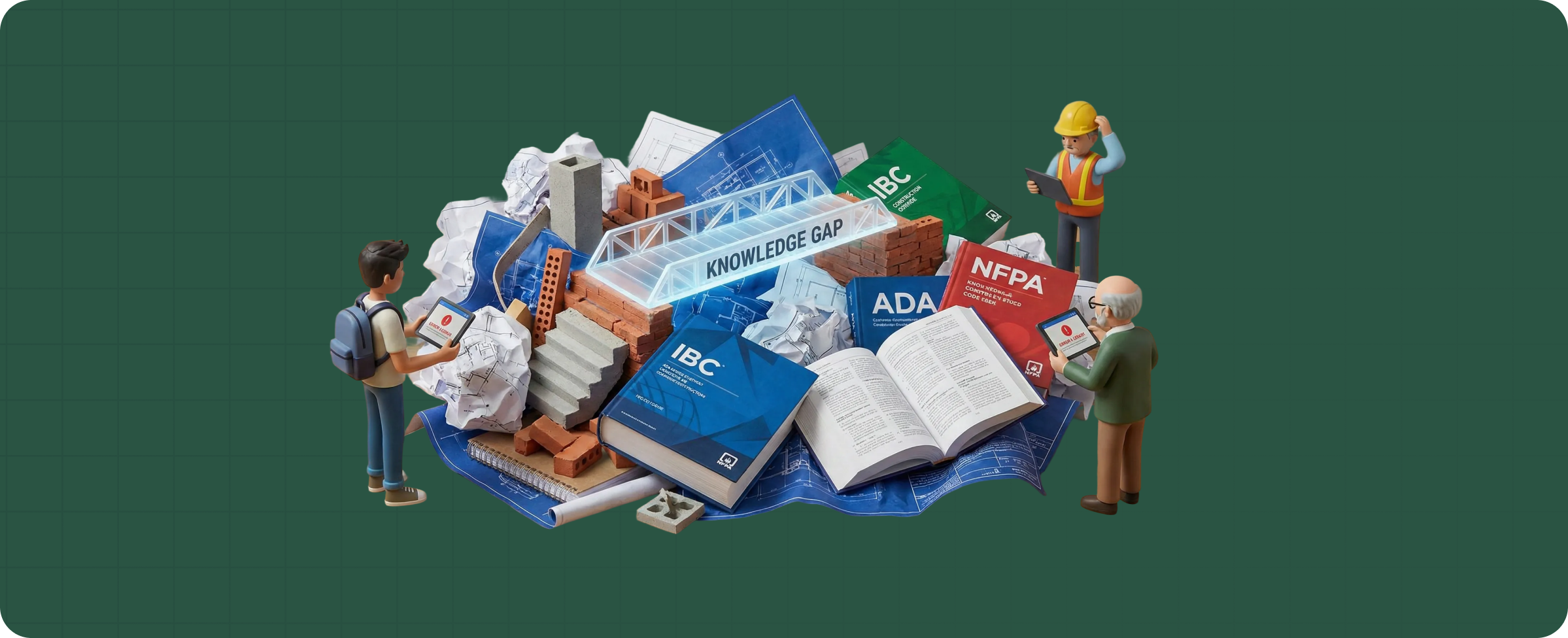
Why Are Building Codes So Hard to Learn (and Why Do Knowledge Gaps Persist Across Junior, Mid-Level, and Senior Professionals)?
Next Post →