What Code Compliance Challenges Do Different Professionals Face? (Architects, Engineers, Contractors, Inspectors, Owners)
Different professionals face different building code challenges because each group interacts with the code through a unique lens - conceptual design, technical ..

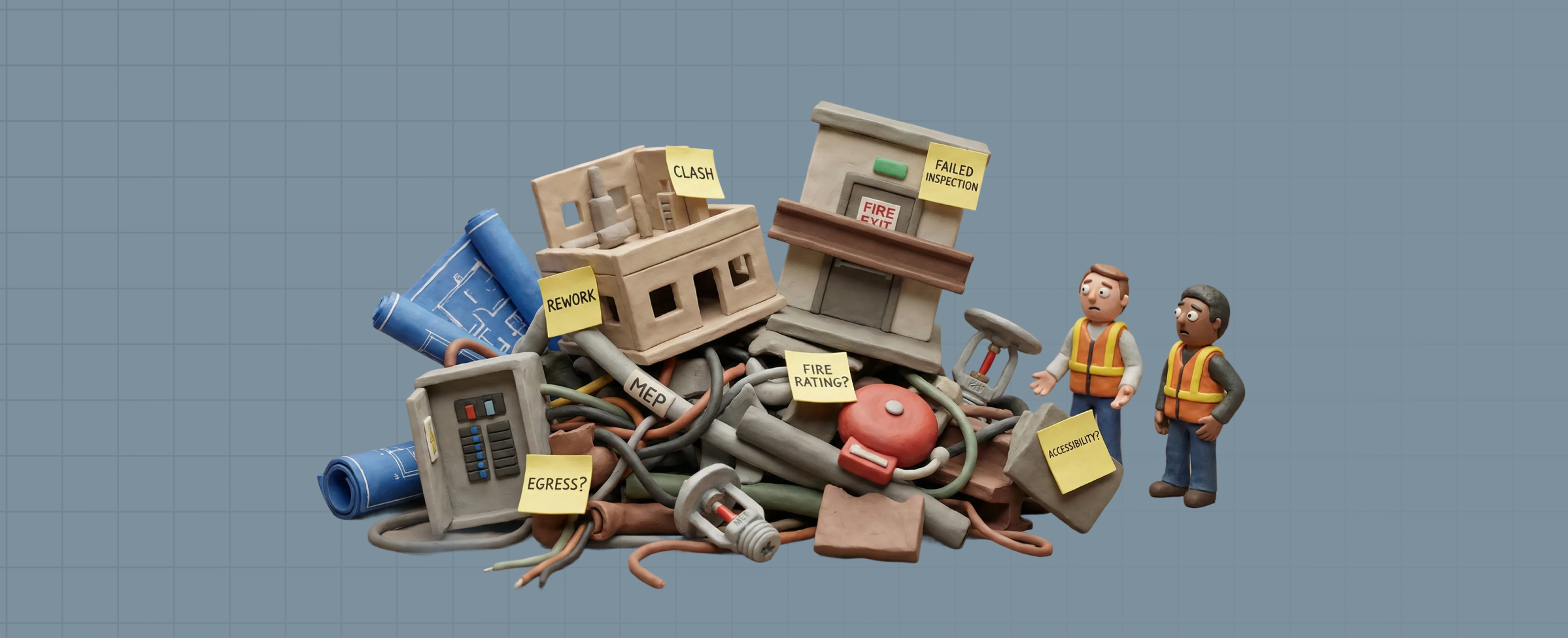
Different professionals face different building code challenges because each group interacts with the code through a unique lens - conceptual design, technical design, field installation, enforcement, or project risk. Architects face the broadest range of challenges, as they must integrate multiple codes (IBC, IFC, IEBC, ADA, ANSI, energy codes, and local amendments) into spatial and life-safety design decisions. Their biggest pain points involve egress design, accessibility, mixed-use classification, coordinating fire-rated assemblies with MEP systems, and tracking jurisdiction-specific amendments.
Engineers struggle with highly specialized, technical code requirements that differ across disciplines. Mechanical engineers must reconcile IMC, ASHRAE, and energy code requirements, especially for ventilation, clearances, and fire/smoke control. Electrical engineers follow NEC and NFPA 70/72 rules for clearances, emergency lighting, fire alarm systems, and equipment coordination. Plumbing engineers must meet complex venting, fixture count, and ADA requirements, while structural engineers manage detailed seismic, fireproofing, and material-specific standards. Each must coordinate tightly with architectural layouts to ensure code compliance.
Contractors encounter compliance issues during construction, where drawings often lack detail, trades work independently, and real-world conditions force improvisation. They struggle with UL assemblies, firestopping, mechanical/electrical clearances, accessibility dimensions, and resolving field conflicts. These problems often lead to inspection failures because installations deviate from design assumptions or are misaligned with code requirements.
Inspectors face the opposite challenge - they are responsible for verifying that complicated, multi-disciplinary installations actually comply with the code, even when drawings are incomplete, routing changes occur in the field, or interpretations differ between plan reviewers and field inspectors. They must enforce under tight timelines and high public safety responsibility, often managing conflicting expectations.
Owners and developers face code challenges indirectly but significantly. Permitting delays, redesigns, and construction-phase violations impact schedules, budgets, pro formas, tenant commitments, and financing. They often struggle to understand why different AHJs interpret requirements differently or why code-driven design changes suddenly affect cost and delivery.
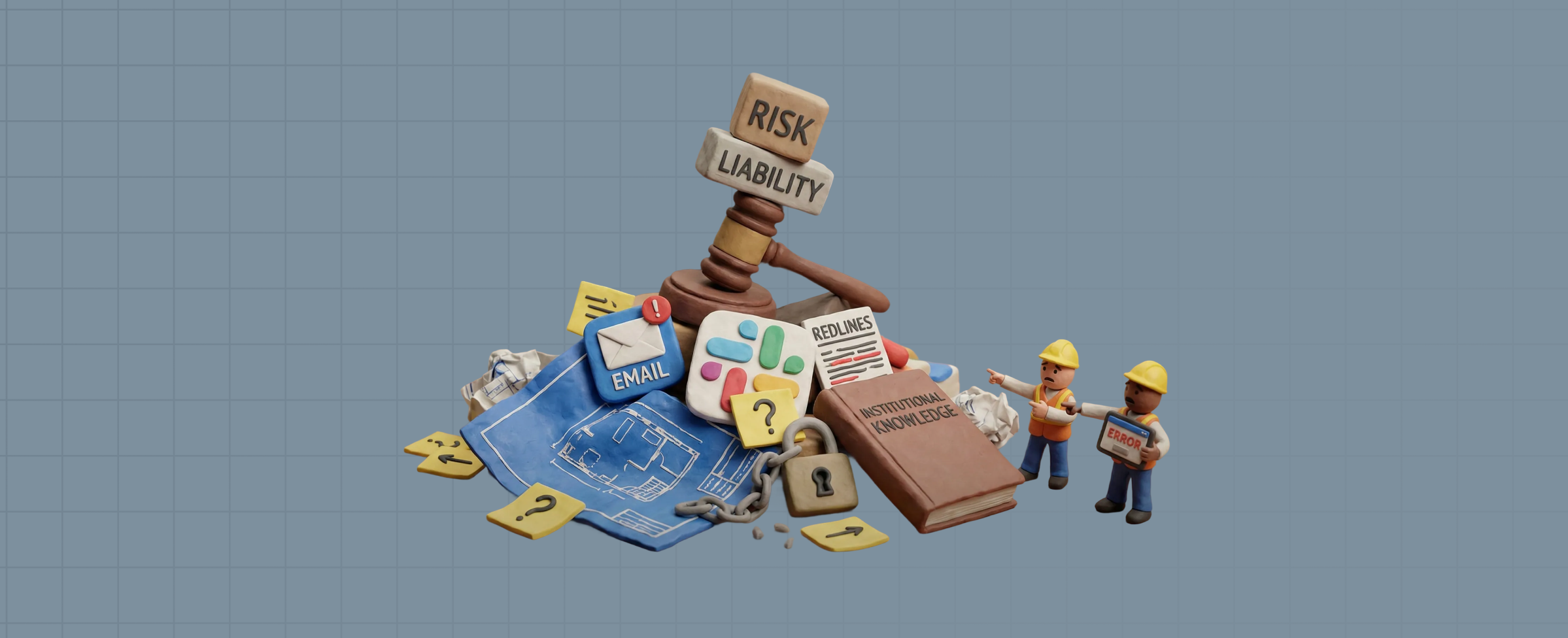
These challenges persist because the U.S. code ecosystem is fragmented across jurisdictions; different roles use entirely different sections of the code; interpretations vary widely across AHJs; documentation is scattered or inconsistent; and code research itself is slow, manual, and non-standardized. Each discipline faces its own version of complexity, but all are impacted by the same underlying system.
Introduction: The Code Affects Everyone - But Not Equally
Although the building code is one rulebook, every professional engages with it differently:
- Architects → conceptual, spatial, and multi-code reasoning
- Engineers → deep technical compliance
- Contractors → real-world implementation
- Inspectors → enforcement and verification
- Owners → risk, schedule, and cost
Each group experiences distinct challenges, tied directly to their role, risk profile, and workflow.
This article outlines the toughest code compliance issues for each discipline - and why these challenges persist across the U.S. construction ecosystem.
1. Code Compliance Challenges for Architects
Architects experience the widest breadth of code issues.
1.1 Multi-Code Coordination Complexity
Architects must integrate:
- IBC
- IFC
- IEBC
- ADA
- ANSI A117.1
- local amendments
- energy codes
- referenced standards
Each affects spatial layout.
1.2 Egress Complexity
Architects struggle with:
- occupancy classification
- occupant loads
- exit width sizing
- travel distance limitations
- exit discharge
- stairs, corridors, doors
- mixed-use separation
One mistake cascades across the entire building.
1.3 Accessibility Is Extremely Detailed
Clearances, turning radii, reach ranges - precision is critical.
Small field changes → major violations.
1.4 Fire-Rated Assembly Integration
Architects must design rated:
- walls
- corridors
- shafts
- floors and ceilings
while coordinating with MEP penetrations and structural elements.
1.5 Local Amendments Are Hard to Track
Architects are typically responsible for compliance with:
- municipal code changes
- fire marshal bulletins
- administrative provisions
- local interpretations
All vary by jurisdiction.
2. Code Compliance Challenges for Engineers
2.1 Mechanical Engineers (IMC, ASHRAE, IECC)
Challenges include:
- outdoor air calculations
- energy code conflicts
- duct routing through rated assemblies
- fire/smoke damper requirements
- mechanical room clearance
2.2 Electrical Engineers (NEC, NFPA 70, NFPA 72)
Difficult areas:
- panel clearance rules
- emergency lighting
- fire alarm zoning
- penetration rules
- egress lighting continuity
2.3 Plumbing Engineers (IPC & UPC)
Common issues:
- venting requirements
- fixture count calculations
- cleanout placement
- ADA-compliant fixture design
2.4 Fire Protection Engineers (NFPA 13, IFC)
Pain points:
- sprinkler spacing
- obstruction rules
- water supply sizing
- FDC placement
- coordination with architectural features
2.5 Structural Engineers (IBC, ASCE, ACI, AISC)
Challenges include:
- overstrength requirements
- seismic detailing rules
- diaphragm and shear wall continuity
- fireproofing integration
Each engineering discipline must reconcile multiple standards, many of which conflict with architectural layout.
3. Code Compliance Challenges for Contractors (GCs & Subs)
What can you ask? (Sample questions)
- What building code edition does my state currently enforce?
- How do state-specific amendments modify the base IBC?
- What structural design loads apply in my jurisdiction?
- What energy code requirements apply to my building type?
Contractors face challenges during construction, not design.
3.1 Incomplete or ambiguous construction documents
Most drawings lack detailed:
- UL assemblies
- firestopping systems
- accessibility dimensions
- mechanical clearances
- electrical grounding diagrams
Contractors must interpret - often incorrectly.
3.2 Coordination Between Trades
Clashes arise when:
- HVAC ductwork breaks rated walls
- plumbing stacks penetrate shafts
- conduit blocks clearances
- sprinkler piping conflicts with lighting
GCs manage the fallout.
3.3 Field Conditions Differ From Drawings
Unexpected:
- beams
- existing utilities
- misaligned walls
- slope variations
Lead to code violations if not handled correctly.
3.4 Inspectors Enforce Strictly
GCs must satisfy inspectors on:
- firestopping
- ADA layout
- MEP clearances
- emergency egress
- device mounting heights
Many violations occur due to minor deviations.
3.5 Documentation Requirements
Contractors must produce:
- submittals
- shop drawings
- cut sheets
- product listings
- inspection reports
- testing documentation
These requirements are often overwhelming.
4. Code Compliance Challenges for Inspectors
Inspectors face their own complexity.
4.1 Drawings Are Often Not Code-Complete
Inspectors frequently see:
- missing annotations
- inadequate detailing
- unclear fire ratings
- vague accessibility layouts
- uncoordinated MEP routing
4.2 Field Conditions Don’t Match Approved Drawings
Frequent issues:
- trades reroute systems
- installations deviate
- VE substitutions occur
- clearances are obstructed
Inspectors must enforce real-world compliance.
4.3 They Manage Conflicting Interpretations
Inspectors deal with:
- past AHJ precedents
- plan reviewer comments
- code text contradictions
- ambiguous language
4.4 Inspectors Carry Public Safety Risk
They must err on the side of caution - leading to stricter enforcement.
4.5 Volume of Projects
Inspectors review:
- multiple trades
- multiple code sections
- multiple building types
Under time pressure.
5. Code Compliance Challenges for Owners & Developers
Owners are affected indirectly but significantly.
5.1 Permitting Delays
Code deficiencies →
- slow approvals
- repeated rounds of corrections
These delays affect revenue and financing.
5.2 Budget Impacts
Non-compliance leads to:
- redesign
- change orders
- contingency drawdowns
5.3 Inconsistent AHJ Enforcement
Different plan reviewers or inspectors → different requirements.
5.4 Understanding Code Requirements
Owners struggle to understand:
- why costs change
- why layouts shift
- why AHJs reject drawings
Everything appears arbitrary without technical context.
5.5 Schedule Impacts
Code-driven delays push:
- construction schedules
- tenant move-ins
- project milestones
This threatens business models.
6. Why These Role-Based Challenges Persist
6.1 Fragmented code ecosystem
Multiple codes, standards, and local amendments.
6.2 Different roles use different sections of the code
Architects use Chapter 5 & 10
Engineers use specialty codes
Inspectors use IFC
Contractors rely on manufacturer instructions
6.3 Interpretation varies across AHJs
No consistency.
6.4 Documentation is weak across the industry
Critical decisions lost in emails and memory.
6.5 Code research is slow, manual, and non-standardized
Every firm and every person researches differently.
FAQs
1. Why do different professionals struggle with different parts of the code?
Because architects, engineers, contractors, inspectors, and owners each engage with the code in different ways - conceptual planning, technical detailing, field installation, enforcement, and project risk - requiring different types of knowledge and decision-making.
2. Why are architects especially burdened by code compliance?
They must coordinate more codes than any other role - egress, accessibility, fire ratings, mixed occupancies, energy, and local amendments - all while shaping the spatial design of the building.
3. Why do engineers face so many specialty code challenges?
Each engineering discipline follows its own deep, technical codes (NEC, IMC, ASHRAE, NFPA, IPC, ASCE), and these often conflict with each other or with architectural constraints.
4. Why do contractors encounter so many code violations during construction?
Because drawings often lack the detail needed for compliant installation, field conditions differ from design, trades work independently, and inspectors enforce based on real-world conditions - not design intent.
5. Why do inspectors sometimes interpret requirements differently than design teams?
They must evaluate actual installations under safety-first principles, manage conflicting interpretations, and enforce codes within the specifics of field conditions and local AHJ policy.
6. Why are owners impacted by code issues if they don’t work with the code directly?
Code deficiencies influence permitting timelines, construction schedules, costs, redesigns, and occupancy approvals - directly affecting project delivery, revenue, and risk.
7. What underlying factor causes challenges across all roles?
A fragmented, multi-jurisdictional code ecosystem combined with inconsistent documentation, varying AHJ interpretations, and manual, non-standardized code research processes.
References
ICC Codes (IBC/IFC/IEBC), NFPA Standards (13, 72, 101, 70), IMC/IP/UPC, ASHRAE 62.1/90.1, ADA Standards, ANSI A117.1, state/local amendments, contractor field reports, inspection practices, and decades of AEC industry experience.
Related Building Code Resources
- Building CodesWhat Are the Key Aspects to Consider When Analyzing Building Codes?
- Building CodesDigital Code Libraries & Search Tools: What They Fix and What They Don’t
- Building CodesWhere Traditional Building Code Research Breaks Down
- Building CodesThe Hidden Costs of Manual Building Code Research
- Building CodesTraditional Building Code Research Methods
MeltPlan
A curated stream of preconstruction intelligence, estimating innovation, takeoff breakthroughs, workflow advancements, and expert perspectives—powered by the AI and technology shaping the future of construction.
Visit SiteDon't miss what's shaping AEC
The latest on preconstruction, codes, AEC news & trends — so you're always in the know.