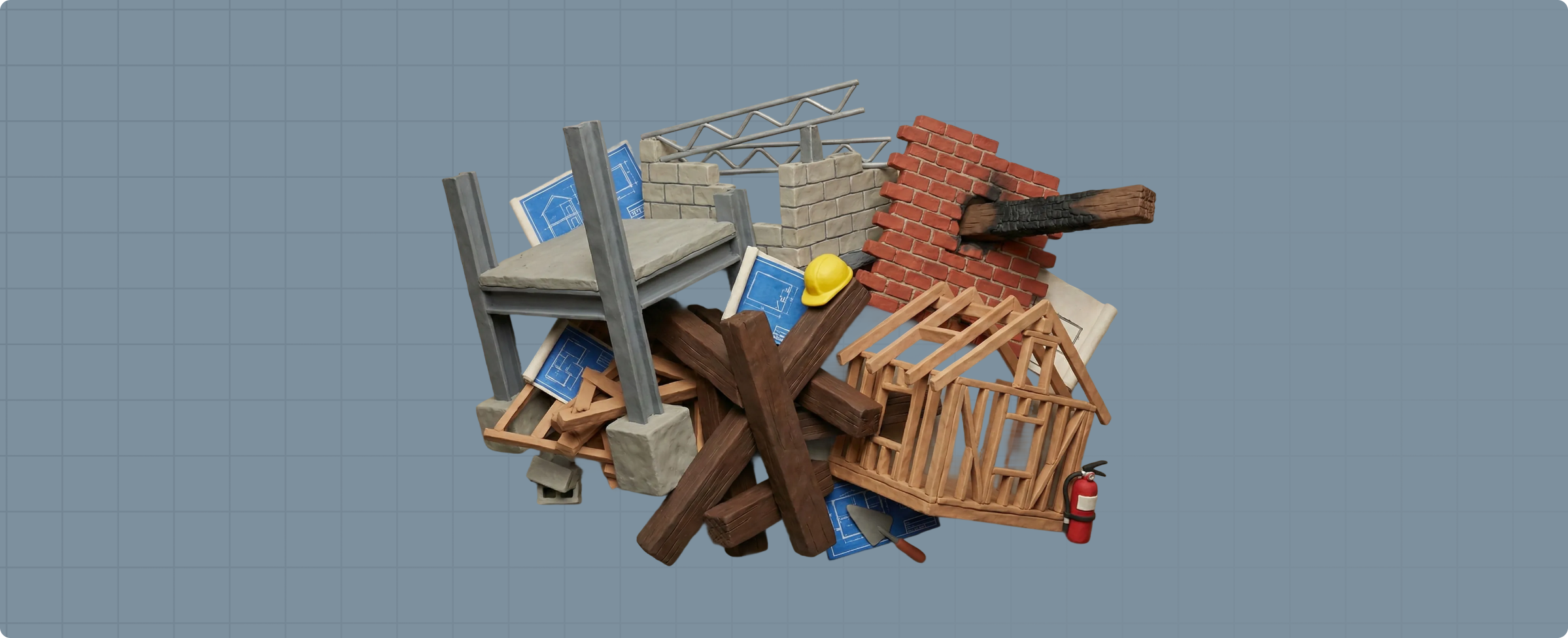
What is the most cost-effective construction type for my project?
The choice of construction type is one of the most critical and cost-defining decisions in any building project. Governed by Chapter 6 of the International Buil..
The choice of construction type is one of the most critical and cost-defining decisions in any building project. Governed by Chapter 6 of the International Building Code (IBC), the construction type dictates a building's maximum size, the fire-resistance of its materials, and ultimately, its overall cost. While lower-numbered types like Type I-A offer the highest level of fire safety, they come at a premium. Conversely, types like V-B are the least expensive but are severely limited in scale.
The most cost-effective construction type is not always the cheapest. It's the one that most efficiently meets the project's specific height, area, and occupancy goals while balancing material costs, labor, and long-term performance.
Key Takeaways on Construction Types & Cost:
- Type V (A & B): Combustible (Wood-Frame)
- V-B: The absolute cheapest construction type, with no required fire ratings. Best for single-family homes and small accessory structures.
- V-A: "Protected" wood-frame, requiring 1-hour fire ratings. The workhorse for small to medium-sized buildings, including many 3-4 story apartment buildings.
- Type III (A & B): Ordinary Construction
- Features non-combustible exterior walls (e.g., masonry) with a combustible (wood) interior structure.
- A cost-effective middle ground that offers more allowable area than Type V, making it popular for mid-rise "5-over-1" style apartment buildings.
- Type II (A & B): Non-Combustible
- II-B: Unprotected, non-combustible construction (e.g., exposed steel frame). Extremely common for large, single-story industrial and retail buildings where unlimited area is desired. Cost-effective because fire protection on steel is not required.
- II-A: Protected, non-combustible, requiring 1-hour ratings. A step up in cost from II-B.
- Type I (A & B): Fire-Resistive
- The most robust and expensive type, using non-combustible materials like concrete and protected steel with the highest fire-resistance ratings. Required for high-rises, hospitals, and other critical facilities.
- Type IV: Heavy Timber (HT)
- Uses large-dimension solid or mass timber elements. The material's mass provides inherent fire resistance. It is a specialty type often chosen for its aesthetic and sustainable qualities, with costs that can vary significantly.
| Construction Type | Relative Material & Labor Cost | Inherent Fire Resistance | Common Materials | Typical Use Case |
| Type I (A & B) | Highest | Highest (2–3 hours) | Concrete, Protected Steel | High-rise buildings, hospitals |
| Type II (A & B) | High | High to Moderate (0–1 hour) | Steel, Concrete, Masonry | Schools, offices, warehouses |
| Type III (A & B) | Moderate | Moderate (0–2 hours) | Masonry or concrete exterior walls with wood interior | Mid-rise residential, retail buildings |
| Type IV (Heavy Timber) | High (Specialty) | High (Inherent) | Heavy or mass timber | Boutique offices, assembly spaces |
| Type V (A & B) | Lowest | Lowest (0–1 hour) | Light wood-frame construction | Single-family homes, small apartments |
Why This Topic Is Critical for Project Success
Selecting a construction type is a foundational decision made during schematic design that has cascading effects throughout the entire project. This choice, defined in IBC Chapter 6, directly interacts with IBC Chapter 5 to set the absolute limits on a building's allowable height and floor area based on its occupancy group.
This decision impacts nearly every aspect of design and permitting:
- Structural Design: It dictates the primary building materials (e.g., wood, steel, or concrete) and the required fire-resistance ratings for columns, beams, and floor/roof assemblies as prescribed in IBC Table 601.
- Architectural Detailing: Wall, floor, and roof assemblies must be detailed to achieve the specified fire-resistance ratings, often referencing tested assemblies from UL or the Gypsum Association.
- MEP Coordination: The choice affects how mechanical, electrical, and plumbing systems penetrate rated assemblies, requiring specific firestopping systems per IBC Chapter 7.
- Cost & Feasibility: A premature or incorrect selection can lead to costly redesigns. For example, realizing a building needs to be one story taller may force a change from Type V-A (wood) to Type III-A (masonry/wood) or II-A (steel), fundamentally altering the project's structure and budget.
Understanding the strategic trade-offs between construction cost and code-allowed size is essential for delivering a project that is both compliant and economically viable.
What is the most cost-effective construction type for a 4-story, R-2 occupancy building with an NFPA 13 sprinkler system to maximize the allowable floor area under the current IBC?
The most cost-effective construction type for a 4-story, sprinklered R-2 (apartment/condo) building is typically Type V-A. However, if maximizing the floor area is the primary goal, upgrading to Type III-A offers a significantly larger allowable area for a moderate increase in cost.
Here's a detailed comparison based on the 2024 International Building Code (IBC):
- Height Feasibility:
- Type V-A: Per IBC Table 504.4, a Group R-2 occupancy is permitted to be a maximum of 4 stories and 50 feet high. This perfectly matches the project requirement.
- Type III-A: Per IBC Table 504.4, a Group R-2 is permitted to be a maximum of 5 stories and 65 feet high. This also works.
- Allowable Area Analysis (Maximization): The allowable area is determined by IBC Section 506. For a multi-story building with an NFPA 13 sprinkler system, the total allowable building area is the allowable area per story multiplied by the number of stories, where the area per story cannot be exceeded.
- Type V-A (Wood-Frame, 1-Hour Protected):
- Base Allowable Area (Table 506.2): 12,000 sq. ft.
- Sprinkler Increase (§506.3): The factor is 3 for a multi-story building.
- Allowable Area per Story (Aa) = 12,000 sq. ft. x 3 = 36,000 sq. ft.
- Note: This calculation assumes no frontage increase. With frontage, the area could be even larger.
- Type III-A (Non-Combustible Exterior/Wood Interior, 1-Hour Protected):
- Base Allowable Area (Table 506.2): 24,000 sq. ft.
- Sprinkler Increase (§506.3): The factor is 3 for a multi-story building.
- Allowable Area per Story (Aa) = 24,000 sq. ft. x 3 = 72,000 sq. ft.
- Type V-A (Wood-Frame, 1-Hour Protected):
Conclusion & Cost-Effectiveness:
- For pure cost efficiency on smaller floor plates (<36,000 sq. ft.), Type V-A is the winner. It allows for all-wood construction, which is generally faster and cheaper.
- To maximize floor area, Type III-A is the superior choice. It provides double the allowable area per floor compared to Type V-A. The added cost comes from constructing the exterior load-bearing walls with non-combustible materials like concrete masonry units (CMU) or cold-formed steel framing, which must also achieve a 2-hour fire-resistance rating per IBC Table 601.
For most developers looking to maximize rentable square footage on a 4-story project, the additional investment in Type III-A construction is often justified by the massive increase in buildable area.
My project is currently designed as Type V-A, but we need one additional story. What are the major structural, material, and fire-resistive assembly changes required to upgrade the classification to Type III-A to achieve the necessary height?
To add a fifth story to an R-2 occupancy building designed as Type V-A, you must upgrade the entire building's classification to at least Type III-A. This is a significant change, as IBC Table 504.4 limits Type V-A R-2 occupancies to four stories, while Type III-A is permitted five stories. The upgrade requires fundamental changes to the building's structural system and materials to meet the more stringent fire-resistive requirements of Type III-A.
The primary changes are dictated by IBC Table 601 (Fire-Resistance Rating Requirements for Building Elements):
- Exterior Load-Bearing Walls:
- From (V-A): Combustible light-wood framing with a 1-hour fire-resistance rating.
- To (III-A): Must be constructed of non-combustible materials (e.g., CMU, concrete, or steel framing with non-combustible sheathing) and must have a 2-hour fire-resistance rating. This is the most significant structural and material change.
- Primary Structural Frame (Interior):
- From (V-A): Interior load-bearing elements (walls, columns, beams) required a 1-hour rating.
- To (III-A): The primary structural frame (including interior columns, beams, trusses, and load-bearing walls) must also have a 1-hour fire-resistance rating. While the rating itself is the same, the code's definition of "Primary Structural Frame" in IBC Chapter 2 is broad. This requires a careful review to ensure all elements supporting gravity loads meet the requirement.
- Floor Construction:
- From (V-A): Required a 1-hour rating.
- To (III-A): Also requires a 1-hour rating. The floor assembly itself (e.g., wood joists with gypsum ceiling) may not need to change significantly, but its connections to the newly non-combustible exterior walls and rated interior frame must be detailed correctly to maintain continuity.
Summary of Required Changes:
| Building Element | Type V-A Requirement | Type III-A Requirement | Major Change Required |
| Exterior Load-Bearing Walls | 1-hour rated, combustible wood framing | 2-hour rated, non-combustible (CMU, concrete, or steel) | Yes – material and rating change |
| Interior Load-Bearing Walls | 1-hour fire-resistance rating | 1-hour fire-resistance rating | Minimal |
| Columns and Beams | 1-hour fire-resistance rating | 1-hour fire-resistance rating | Minimal |
| Floor Construction | 1-hour fire-resistance rating | 1-hour fire-resistance rating | Minimal (coordination required) |
Podium Alternative (IBC §510.2): A common strategy to achieve this height is to use a "podium" or "pedestal" design. This involves constructing a one-story Type I-A base (typically for parking or retail) and placing a separate four-story Type V-A building on top. The two are separated by a 3-hour rated horizontal assembly. This allows the residential portion to remain cost-effective wood construction while achieving the desired 5-story overall height.
We are planning a large industrial facility (Group F-1). What construction type offers the maximum allowable unlimited area under IBC Section 507, and what are the specific requirements for frontage and automatic sprinklers to qualify?
For a large industrial facility (Group F-1 Moderate Hazard Factory), Type II-B construction is the most common and cost-effective choice to achieve an unlimited area building under IBC Section 507.
While other non-combustible types (I-A, I-B, II-A) also qualify, Type II-B is the most economical because it requires a 0-hour fire-resistance rating for most of its structural elements, meaning the steel frame does not need expensive fireproofing.
The specific requirements to qualify for an unlimited area F-1 building are laid out in IBC Section 507.3 (One-Story Buildings):
- Construction Type: The building must be Type I, II, III-A, III-B, or IV construction. Type V (combustible) is not permitted. Type II-B (unprotected non-combustible) is the optimal choice for cost.
- Automatic Sprinkler System: The entire building must be equipped with an automatic sprinkler system installed in accordance with NFPA 13.
- Open Frontage: The building must be surrounded and adjoined on all sides by public ways or yards (open space) not less than 60 feet in width. This 60-foot clear space must be maintained permanently and provides fire department access around the entire perimeter.
- Occupancy: The building must be limited to specific occupancies, which include Group F (Factory) and Group S (Storage).
In summary, a one-story, Type II-B, F-1 facility with a full NFPA 13 sprinkler system and 60 feet of open space on all four sides is permitted to have an unlimited floor area, making it ideal for massive distribution centers and manufacturing plants.
A client wants to build a 60,000 sq ft, 2-story school (Group E). Analyze the feasibility of using Type II-B, Type III-B, and Type V-A construction, considering sprinkler increases and frontage, to determine the most viable and economical approach.
For a 60,000 sq. ft. (30,000 sq. ft. per floor), 2-story school (Group E), a thorough analysis shows that Type II-B is the most viable and common approach. While Type III-B is technically possible, and Type V-A is not permitted due to area limitations, Type II-B offers the best combination of compliance, durability, and economy for this use.
Let's analyze each option assuming the building is equipped with an NFPA 13 sprinkler system.
Analysis Based on IBC 2024 Tables 504.4 and 506.2:
- Type V-A (Protected Wood-Frame):
- Height: 2 stories is permitted for Group E.
- Area:
- Base Area: 9,500 sq. ft.
- Sprinkler Increase Factor: 3 (for multi-story)
- Allowable Area per Story (Aa) = 9,500 sq. ft. x 3 = 28,500 sq. ft.
- Conclusion:Not Feasible. The required 30,000 sq. ft. floor plate exceeds the maximum allowable area per story of 28,500 sq. ft., even with a full sprinkler increase. A frontage increase could potentially make it work on paper, but it would be pushing the absolute limits of the code and is rarely, if ever, used for a school of this size.
- Type III-B (Unprotected, Non-Combustible Exterior/Wood Interior):
- Height: 2 stories is permitted for Group E.
- Area:
- Base Area: 14,000 sq. ft.
- Sprinkler Increase Factor: 3
- Allowable Area per Story (Aa) = 14,000 sq. ft. x 3 = 42,000 sq. ft.
- Conclusion:Feasible. The 30,000 sq. ft. floor plate is well within the 42,000 sq. ft. allowable area. This construction type would involve masonry or concrete exterior walls with an interior wood-frame floor and roof system.
- Type II-B (Unprotected Non-Combustible):
- Height: 3 stories is permitted for Group E, so 2 stories is acceptable.
- Area:
- Base Area: 19,000 sq. ft.
- Sprinkler Increase Factor: 3
- Allowable Area per Story (Aa) = 19,000 sq. ft. x 3 = 57,000 sq. ft.
- Conclusion:Highly Feasible. The 30,000 sq. ft. floor plate is easily accommodated. This type uses a steel frame (columns, beams, joists) and steel or concrete deck, with non-combustible exterior wall infill.
Most Viable and Economical Approach:
While both Type III-B and II-B are code-compliant, Type II-B is the superior and more common choice for schools for several reasons:
- Durability and Perception: School districts and public agencies often prefer or require non-combustible construction (Type II) for its perceived safety and long-term durability over combustible wood framing (the interior of Type III-B).
- Structural Efficiency: A steel frame (Type II-B) is highly efficient for creating the long, open spans needed for classrooms, gymnasiums, and cafeterias.
- Cost-Effectiveness: Because it is "unprotected" (Type B), the steel structure does not require fireproofing, making it significantly cheaper than its Type II-A counterpart. This makes Type II-B the sweet spot for balancing cost with the benefits of non-combustible construction.
What is the cheapest construction type to build?
Type V-B is unequivocally the cheapest construction type to build under the IBC. It represents standard light-frame wood construction with no mandated fire-resistance ratings for its structural elements.
The reasons for its low cost are straightforward:
- Inexpensive Materials: It uses standard, widely available dimension lumber, oriented strand board (OSB), and plywood sheathing.
- Abundant, Low-Cost Labor: The residential construction industry has a vast and competitive labor pool skilled in wood framing.
- No Fire-Rating Costs:IBC Table 601 specifies 0-hour fire-resistance ratings for all building elements in Type V-B construction. This eliminates the material and labor costs associated with installing fire-resistive materials like Type X gypsum board, spray-on fireproofing, or intumescent paint for protective purposes. Drywall is installed for finish purposes only.
However, this low cost comes with a major trade-off: severe limitations on building size. Type V-B has the most restrictive allowable height and area limitations in the IBC, making it suitable only for single-family homes, duplexes, garages, sheds, and very small, single-story commercial or storage buildings.
Why are so many new apartment buildings Type V or Type III wood construction?
The prevalence of Type V and Type III wood construction in new multi-family apartment buildings is driven by one primary factor: cost-effectiveness at mid-rise densities. This construction method allows developers to achieve 3-to-6-story buildings at a significantly lower cost per square foot than steel or concrete alternatives.
Here’s why this model dominates the market:
- Lower Construction Costs: Light-frame wood construction ("stick-building") is the most economical way to frame a building of this scale. Materials are cheaper, and the labor is faster and less specialized than steel erection or concrete formwork.
- Code-Enabled Height and Area: The IBC, especially when sprinklers are used, provides generous allowances for wood construction in R-2 (residential) occupancies:
- Type V-A: Allows for up to 4 stories of residential (IBC Table 504.4).
- Type III-A: Allows for up to 5 stories. This type uses non-combustible exterior walls (enhancing fire safety to neighboring properties) but retains the cost-effective wood interior.
- The "Podium" Design (IBC §510.2): This is the key innovation behind the popular "5-over-1" building. This code section allows a designer to place a building of one construction type on top of another, separated by a 3-hour fire-rated horizontal assembly.
- A typical configuration is a 1- or 2-story Type I-A concrete "podium" containing parking, retail, and lobbies.
- On top of this podium sits a separate building of up to 5 stories of Type III-A wood construction (or 4 stories of Type V-A).
- This results in a 6- or 7-story building that maximizes the use of cost-effective wood framing for the residential units where it is most efficient.
This hybrid approach combines the durability and utility of a non-combustible base with the speed and economy of wood-framed housing, creating a financially optimized model for modern urban and suburban development.
Common Mistakes and Misinterpretations
- Confusing Non-Combustible with Fire-Rated: An exposed steel beam in a Type II-B building is non-combustible, but it has a 0-hour fire-resistance rating. It will fail relatively quickly in a fire. A protected steel beam in a Type II-A building is also non-combustible, but it has a 1-hour rating due to its protective coating.
- Ignoring Mixed Occupancy Rules: When a building has multiple occupancy groups, the allowable height and area must be calculated based on the most restrictive combination, per IBC Section 508. Simply choosing the construction type based on the primary occupancy is a common error.
- Forgetting Universal Rating Requirements: Even in "unprotected" Type B construction (e.g., II-B, III-B, V-B), certain building elements always require a fire-resistance rating. These include fire walls, fire barriers, fire partitions, smoke barriers, and shaft enclosures, as mandated by IBC Chapter 7. The construction type in Chapter 6 does not override these specific requirements.
- Misunderstanding Podium Separation: The horizontal assembly separating a podium (Type I-A) from the building above it (e.g., Type III-A) must be at least 3-hours rated per IBC §510.2. This is a robust separation and must be detailed and constructed meticulously.
Jurisdictional Variations: Always Check Local Amendments
While the IBC provides the model framework, state and local jurisdictions often adopt significant amendments.
- New York City: The NYC Building Code has its own construction classifications (e.g., Class 1A, 1B, etc.) that do not directly align with the IBC's Type I-V system.
- California: The California Building Code (CBC) often includes unique amendments, particularly related to seismic design and Wildland-Urban Interface (WUI) areas, which can affect material choices and assembly requirements within a given construction type.
- Florida: The Florida Building Code (FBC) has extensive modifications related to hurricane resistance, which can impact exterior wall assemblies and structural systems, influencing the cost-benefit analysis of different construction types.
Always verify the adopted code and local amendments for IBC Chapters 5 and 6 before finalizing a design.
Frequently Asked Questions (FAQ)
What's the difference between Type A and Type B construction? Type A stands for "protected," meaning the structural elements have a 1-hour fire-resistance rating (or greater). Type B is "unprotected," meaning the elements are permitted to have a 0-hour rating. For example, a Type II-A building requires its steel frame to be protected (e.g., with spray-on fireproofing), while a Type II-B building allows the steel frame to be exposed.
Can I use a mix of construction types in one building? Generally, no. A building must be classified by a single construction type, and all its elements must meet the requirements for that type. If different types are used within the same structure without a fire wall separating them into distinct buildings, the entire structure must be classified as the least fire-resistant type used (IBC §602.1.1). The main exception is the podium building under IBC §510.2.
Does the construction type affect my insurance rates? Yes, significantly. More fire-resistive construction types (Type I and II) are considered lower risk by insurance carriers and typically command lower premiums than combustible types (Type III and V).
What is Type IV Heavy Timber (HT) construction? Type IV-HT uses large-dimension solid wood or mass timber (like Cross-Laminated Timber, or CLT) for its structural members. The principle is that these thick members char at a slow and predictable rate during a fire, maintaining structural integrity for a long duration. The 2021/2024 IBC introduced new subclasses (IV-A, B, C) that allow mass timber buildings to reach up to 18 stories.
How do sprinklers affect my choice of construction type? Installing an NFPA 13 automatic sprinkler system provides the most significant trade-offs available in the code. As shown in IBC Sections 504 and 506, sprinklers allow for major increases in allowable height and/or stories and a tripling or quadrupling of allowable floor area. This often makes a cheaper construction type (like V-A instead of II-A) a viable option for a project.
Is fire-retardant-treated wood (FRTW) considered non-combustible? No. FRTW is still a combustible material. However, the IBC permits its use in lieu of non-combustible materials in specific, limited applications, such as for non-load-bearing exterior walls in Type III construction (IBC §603.1).
Does a building's foundation have to match the construction type? Foundations are typically made of concrete and are therefore non-combustible. Per IBC Table 601, foundations must have a fire-resistance rating equal to the rating of the load-bearing element they support.
Related Building Code Resources
- Building CodesWhat is a Certificate of Occupancy? The Final Step in Proving Code Compliance
- Building CodesPerformance-Based vs. Prescriptive Codes: Choosing the Right Path for Your Project
- Building CodesThe Digital Blueprint: How Technology is Revolutionizing Building Code Compliance
- Building CodesBalancing Past and Present: A Guide to Code Compliance for Historic Renovations and Existing Buildings
- Building CodesThe Role of a Building Inspector: What They Look For and How to Prepare for Inspection Day
MeltPlan
A curated stream of preconstruction intelligence, estimating innovation, takeoff breakthroughs, workflow advancements, and expert perspectives—powered by the AI and technology shaping the future of construction.
Visit SiteDon't miss what's shaping AEC
The latest on preconstruction, codes, AEC news & trends — so you're always in the know.