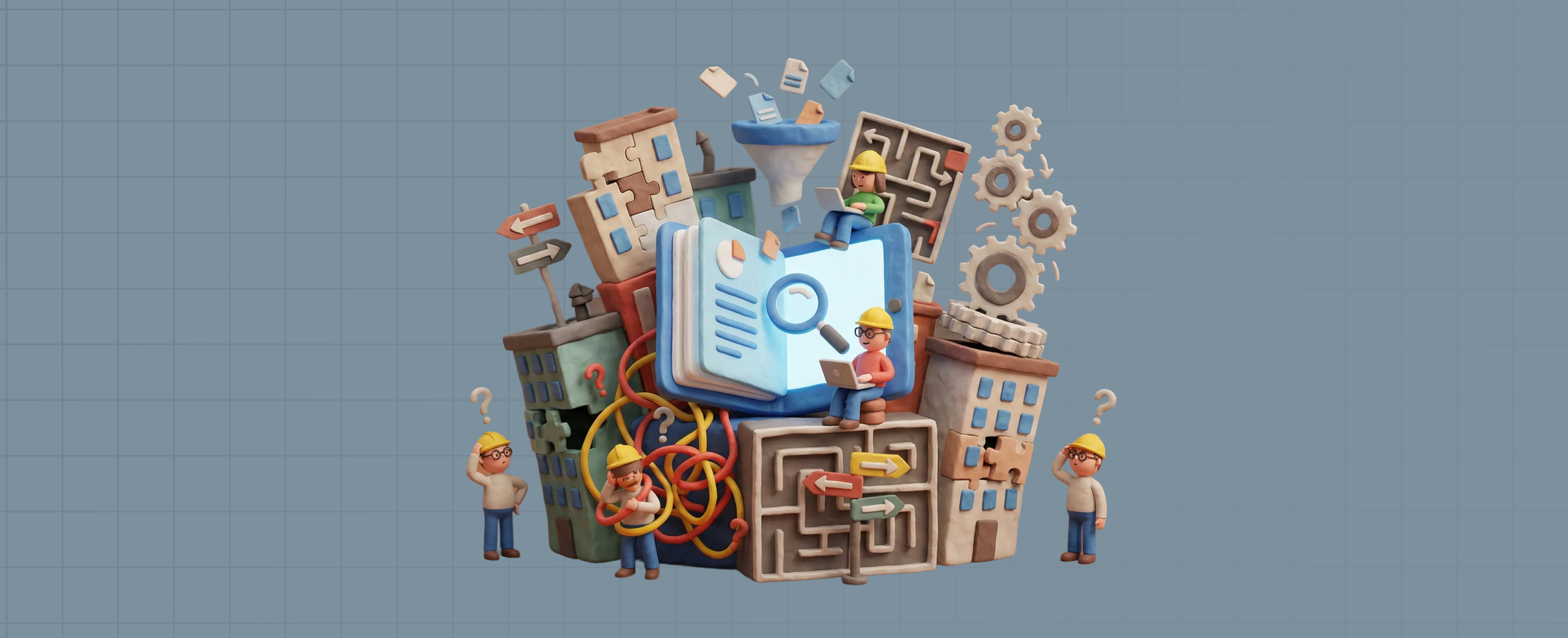
Where Traditional Building Code Research Breaks Down
Traditional building code research methods were developed for a time when projects were simpler, regulatory frameworks were smaller, and institutional knowledge..

Traditional building code research methods were developed for a time when projects were simpler, regulatory frameworks were smaller, and institutional knowledge was easier to maintain. Today, those same methods increasingly fail under the weight of modern complexity.
These failures are not usually dramatic or obvious. Instead, they emerge quietly through missed conditions, inconsistent interpretations, late-stage discoveries, and overreliance on precedent. Individually, these issues seem manageable. Collectively, they create systemic risk.
This article identifies the specific points at which traditional building code research breaks down, explains why these failures are structural rather than individual, and shows why incremental process improvements are no longer sufficient.
Missing Dependencies and Upstream Conditions
Traditional workflows often focus on individual code sections rather than their logical dependencies. As a result:
- Upstream applicability conditions are overlooked
- Requirements are applied out of context
- Conclusions are drawn without validating prerequisites
This failure mode is common when keyword search or section-by-section reading replaces holistic analysis.
Section summary:
Isolated reading misses conditional logic.
Overlooking Exceptions Buried Elsewhere
Many exceptions are:
- Located in different chapters
- Referenced indirectly
- Framed narrowly
Manual workflows make it easy to miss these exceptions, especially when:
- Time is limited
- Familiar provisions are reused
- Assumptions go unchallenged
Section summary:
Exceptions hide in plain sight.
Inconsistent Interpretation Across Projects
What can you ask? (Sample questions)
- What building code edition does my state currently enforce?
- How do state-specific amendments modify the base IBC?
- What structural design loads apply in my jurisdiction?
- What energy code requirements apply to my building type?
Without standardized reasoning frameworks, traditional methods produce:
- Different conclusions for similar conditions
- Variation based on who performs the research
- Conflicting internal guidance
This inconsistency undermines confidence and increases exposure during external review.
Section summary:
People, not principles, drive outcomes.
Overreliance on Precedent
Precedent is valuable - but dangerous when:
- Codes have changed
- Project conditions differ subtly
- Jurisdictional interpretations evolve
Traditional workflows often assume that “what worked before” will work again, even when conditions no longer match.
Section summary:
Precedent decays faster than expected.
Difficulty Managing Multi-Code Interactions
Modern compliance often involves:
- Multiple model codes
- Local amendments
- Referenced standards
Traditional methods require professionals to manually reconcile these interactions, increasing the likelihood of conflict or oversight.
Section summary:
Manual cross-code reconciliation does not scale.
Late Discovery of Compliance Issues
Because dependencies and exceptions are easy to miss, many issues surface late - during permitting or construction - when changes are most costly.
Late discovery often signals not carelessness, but structural limitations of the workflow.
Section summary:
Late issues are workflow failures, not effort failures.
Read more aboutWhen Building Code Research Happens Across the Design Lifecycle
Cognitive Overload and Human Limits
Traditional methods rely heavily on individual memory and attention. However:
- Code volumes exceed what individuals can reliably track
- Context switching increases error rates
- Fatigue reduces interpretation quality
These are human limitations, not professional shortcomings.
Section summary:
Human cognition has limits.
Knowledge Loss Through Turnover
When code reasoning lives in personal notes or memory:
- Departures erase institutional knowledge
- New staff repeat past mistakes
- Firms lose hard-earned insight
Traditional workflows struggle to preserve reasoning beyond individuals.
Section summary:
Uncaptured knowledge evaporates.
Why These Failures Are Structural, Not Personal
Most breakdowns occur despite:
- Competent professionals
- Reasonable effort
- Good intentions
The problem is not people - it is the mismatch between modern complexity and outdated methods.
Section summary:
Structure, not skill, is the limiting factor.
Frequently Asked Questions (FAQs)
Are traditional methods completely unreliable?
No, but they are increasingly insufficient for complex projects.
Why do smart professionals still miss code issues?
Because dependencies and exceptions are easy to overlook manually.
Is precedent still useful?
Yes, but only when validated against current conditions.
Do late-stage issues indicate poor performance?
Not necessarily - they often indicate structural workflow limits.
Why does interpretation vary so much between individuals?
Because traditional workflows lack standardized reasoning frameworks.
Can better training fix these issues?
Training helps, but it cannot eliminate structural complexity.
Is the problem unique to large projects?
No, even small projects can trigger complex interactions.
What kind of failures are most common?
Missed conditions, misapplied exceptions, and unresolved conflicts.
Related Building Code Resources
- Building CodesWhat Are the Key Aspects to Consider When Analyzing Building Codes?
- Building CodesDigital Code Libraries & Search Tools: What They Fix and What They Don’t
- Building CodesThe Hidden Costs of Manual Building Code Research
- Building CodesTraditional Building Code Research Methods
- Building CodesWhy Modern Code Compliance Is Harder Than Ever?
MeltPlan
A curated stream of preconstruction intelligence, estimating innovation, takeoff breakthroughs, workflow advancements, and expert perspectives—powered by the AI and technology shaping the future of construction.
Visit SiteDon't miss what's shaping AEC
The latest on preconstruction, codes, AEC news & trends — so you're always in the know.