Why Building Code Research Is High-Liability Work?
Building code research is one of the highest-liability activities performed by architects and engineers, yet it is often treated as routine or administrative wo..
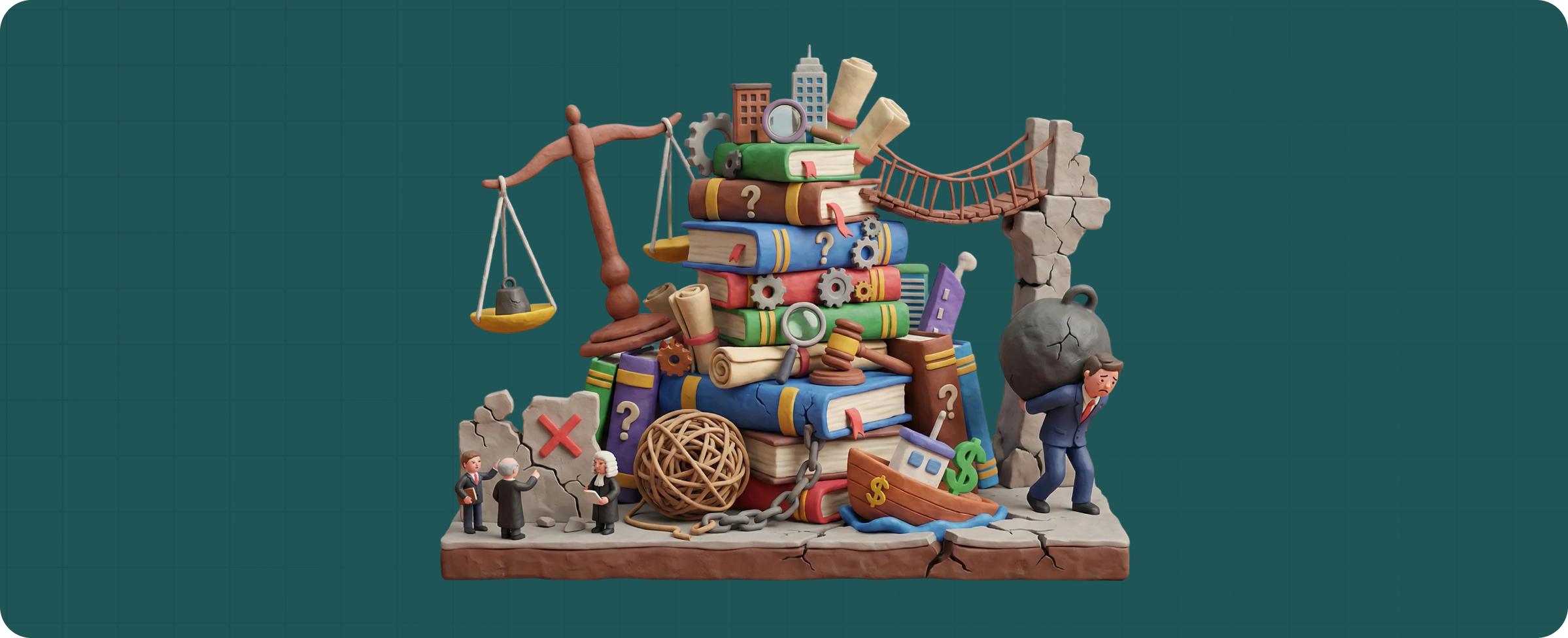
Building code research is one of the highest-liability activities performed by architects and engineers, yet it is often treated as routine or administrative work. Every interpretation made during code research carries legal, financial, and professional consequences, because building codes are enforceable regulations tied directly to public safety.
Unlike many design decisions, code interpretations are not subjective preferences. They determine whether a building is legally permitted, safe to occupy, and defensible under scrutiny from authorities, insurers, and courts. When code research fails, the consequences extend far beyond redesign - they can include permit denials, construction delays, legal claims, and long-term liability exposure.
This article explains why building code research is inherently high risk, where liability actually comes from, and why most compliance failures stem not from missing information, but from undocumented or incorrect reasoning.
Building Codes Are Legal Documents, Not Design Guidelines
Building codes are laws. While they influence design, their primary function is to establish minimum enforceable requirements for safety, accessibility, and performance.
This legal status means:
- Compliance is mandatory, not optional
- Interpretations can be challenged
- Enforcement varies by jurisdiction
- Liability persists beyond project completion
Design professionals are expected to understand and apply these regulations correctly, regardless of how complex or ambiguous they may be.
Section summary:
Code compliance is a legal obligation, not a design preference.
Liability Comes From Interpretation, Not Access
Most professionals today have access to code text. Liability does not arise because a section was unavailable - it arises because a section was misapplied.
Common sources of risk include:
- Misunderstanding applicability
- Overlooking conditions or exceptions
- Applying precedent without validation
- Assuming equivalency without justification
These errors occur during analysis and interpretation, not during research alone.
Section summary:
Access to code does not equal protection from liability.
Undocumented Reasoning Is a Hidden Risk
What can you ask? (Sample questions)
- What building code edition does my state currently enforce?
- How do state-specific amendments modify the base IBC?
- What structural design loads apply in my jurisdiction?
- What energy code requirements apply to my building type?
One of the most significant liability drivers in code research is lack of documentation.
When interpretations are undocumented:
- Assumptions are forgotten
- Team members reinterpret decisions differently
- AHJ questions are difficult to answer
- Defensibility is lost
In disputes, it is often not enough to say what decision was made. Professionals must explain how they arrived there.
Section summary:
If reasoning cannot be reconstructed, it cannot be defended.
Read more about What Architects & Engineers Actually Do When They “Research Code”
Inconsistent Interpretations Across Teams and Projects
Within firms, code interpretations often vary:
- Between junior and senior staff
- Across offices or regions
- Between project teams
Without standardized reasoning frameworks, interpretations become person-dependent. This inconsistency increases risk, especially when projects are reviewed by different AHJs.
Section summary:
Inconsistency is a liability multiplier.
Authority Having Jurisdiction (AHJ) Risk
Even well-reasoned interpretations can be challenged by AHJs. Risk increases when:
- Local amendments are misunderstood
- Enforcement practices differ
- Intent is interpreted conservatively
- Documentation is insufficient
Ultimately, compliance is not final until accepted by the AHJ - and disagreements often surface late in the process.
Section summary:
Compliance is negotiated, not unilateral.
Read more about When Building Code Research Happens Across the Design Lifecycle
Late-Stage Discoveries Amplify Liability
Code issues discovered late:
- Affect multiple disciplines
- Require redesign under time pressure
- Increase construction costs
- Strain client relationships
Late corrections are also more likely to introduce secondary errors, compounding risk.
Section summary:
Timing matters as much as correctness.
Long-Tail Liability After Occupancy
Liability does not end at permit or occupancy. Post-occupancy issues can arise from:
- Inspections
- Insurance audits
- Renovations or change of use
- Incident investigations
Past interpretations may be scrutinized years later, long after team members have moved on.
Section summary:
Code decisions have long memories.
Why “Good Faith” Is Not a Defense
Many professionals assume that reasonable effort or industry practice provides protection. In reality:
- Courts assess compliance, not intent
- Precedent does not override regulation
- “Everyone does it this way” is not defensible
What matters is whether the interpretation was correct and justifiable.
Section summary:
Effort does not equal compliance.
Managing Liability Through Better Code Research Practices
Reducing liability requires:
- Clear documentation of assumptions
- Transparent reasoning paths
- Consistent interpretation frameworks
- Ongoing re-evaluation as designs change
These practices transform code research from a reactive task into a controlled process.
Section summary:
Liability is managed through structure, not speed.
Read more about Where Traditional Code Research Breaks Down
Frequently Asked Questions (FAQs)
Why is code research considered high liability compared to other design tasks?
Because it directly affects legal compliance and public safety.
Does having access to digital codes reduce liability?
No. Liability comes from interpretation, not access.
Are junior staff allowed to perform code research?
Yes, but interpretations typically require senior validation due to risk.
Why do AHJs sometimes reject reasonable interpretations?
Because enforcement authority and local intent can vary.
Is documenting code research legally required?
Not always explicitly, but it is critical for defensibility.
Can precedent protect against liability?
No. Each project must comply independently.
Does liability end after permit approval?
No. Post-occupancy issues can still surface.
How can firms reduce code-related risk?
By standardizing reasoning, documentation, and review processes.
Related Building Code Resources
- Building CodesWhat Are the Key Aspects to Consider When Analyzing Building Codes?
- Building CodesDigital Code Libraries & Search Tools: What They Fix and What They Don’t
- Building CodesWhere Traditional Building Code Research Breaks Down
- Building CodesThe Hidden Costs of Manual Building Code Research
- Building CodesTraditional Building Code Research Methods
MeltPlan
A curated stream of preconstruction intelligence, estimating innovation, takeoff breakthroughs, workflow advancements, and expert perspectives—powered by the AI and technology shaping the future of construction.
Visit SiteDon't miss what's shaping AEC
The latest on preconstruction, codes, AEC news & trends — so you're always in the know.