A Guide to NYC Local Law 97 (Carbon) & FISP (Facade Inspection)
NYC Building Code Deep Dive: Navigating Local Law 97 and FISP Requirements New York City's regulatory landscape is one of the most complex in the world, with lo..
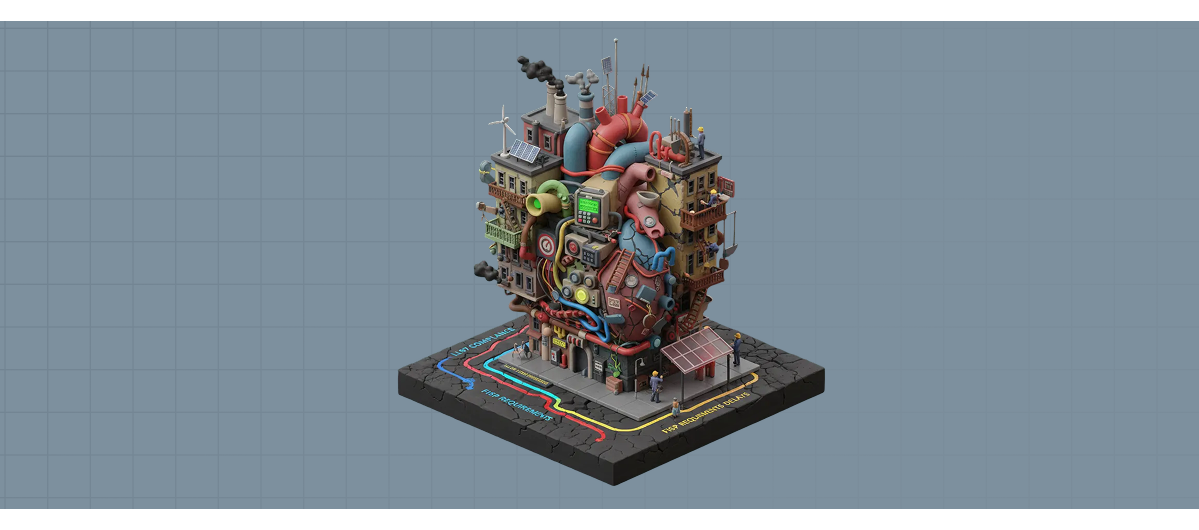
NYC Building Code Deep Dive: Navigating Local Law 97 and FISP Requirements
New York City's regulatory landscape is one of the most complex in the world, with local laws that set aggressive targets for building safety and environmental performance. For architects, engineers, and building owners, two of the most significant regulations are Local Law 97 (LL97), which mandates carbon emission reductions, and the Façade Inspection Safety Program (FISP), also known as Local Law 11, which governs the safety of exterior walls. Understanding how to navigate these requirements is critical for any project, from new high-rise construction to routine maintenance of existing buildings.
Core Requirements: LL97 and FISP at a Glance
Local Law 97 and FISP are powerful regulations enforced by the NYC Department of Buildings (DOB) that fundamentally shape building design, construction, and long-term operation.
Local Law 97 (Carbon Emissions):
What it is: A landmark law establishing escalating carbon emission limits for most buildings larger than 25,000 gross square feet.
Goal: To dramatically reduce the carbon footprint of NYC's building stock, targeting a 40% reduction by 2030.
How it works: Buildings must calculate their annual greenhouse gas (GHG) emissions based on their energy consumption. If emissions exceed the prescribed limit for their occupancy type, owners face steep annual fines.
Key Impact: Drives decisions toward high-efficiency MEP systems, building electrification, and high-performance envelopes for both new construction and major renovations.
FISP - Façade Inspection Safety Program (Local Law 11):
What it is: A program requiring periodic critical examination of the exterior walls and appurtenances of buildings taller than six stories.
Goal: To ensure public safety by identifying and remediating unsafe facade conditions like loose masonry, corroded steel, or deteriorating balconies.
How it works: A Qualified Exterior Wall Inspector (QEWI) must conduct a detailed inspection every five years and file a technical report with the DOB, classifying the building as Safe, Unsafe, or Safe With a Repair and Maintenance Program (SWARMP).
Key Impact: Influences material selection, detailing for durability (especially for parapets and balconies), and the scope of repair and replacement projects.
Feature | Local Law 97 (Carbon Emissions) | FISP (Facade Inspections) |
|---|---|---|
Primary Code | NYC Administrative Code Title 28, Ch. 3 | 1 RCNY §103-04; NYC Admin. Code §28-302 |
Applies To | Buildings > 25,000 sq. ft. | Buildings > 6 stories |
Frequency | Annual emissions reporting (starting 2025 for 2024 data) | 5-year inspection and reporting cycle |
Enforced By | NYC Department of Buildings (DOB) | NYC Department of Buildings (DOB) |
Design Focus | Energy performance, MEP systems, electrification | Facade durability, material selection, waterproofing |
Why These Laws Matter for Design and Construction
LL97 and FISP are not mere checklist items; they are transformative regulations that impact a project from the earliest design phases through its entire operational life. They represent a fundamental shift in NYC's priorities towards long-term building performance, safety, and sustainability.
Early Design Integration: LL97 compliance cannot be an afterthought. Decisions about insulation, glazing, and MEP system types made during schematic design directly determine a new building's ability to meet future carbon limits.
Lifecycle Costs: LL97 introduces a direct financial penalty for inefficient buildings. This forces owners and design teams to consider the long-term operational cost of carbon alongside initial construction costs.
Materiality and Detailing: FISP elevates the importance of durable materials and robust detailing. An architect's choices for brick ties, shelf angles, flashing, and balcony railings are scrutinized not just for initial code compliance, but for their ability to withstand decades of NYC weather and facilitate future inspections.
Interdisciplinary Coordination: These laws demand tight coordination. The architect designing the building envelope, the MEP engineer selecting the HVAC systems, and the energy modeler projecting performance must work in lockstep to achieve LL97 compliance. Similarly, facade consultants, structural engineers, and architects must collaborate to address FISP requirements effectively.
Failing to understand and integrate these requirements early can lead to costly redesigns, permitting delays, and significant financial penalties for the building owner down the line.
My new high-rise project in Manhattan is subject to Local Law 97. How must I demonstrate compliance with the 2030 and 2035 carbon emission limits during the DOB plan review process, and what are the accepted calculation methodologies for projecting operational emissions for MEP systems not yet selected?
What can you ask? (Sample questions)
- What building code edition does my state currently enforce?
- How do state-specific amendments modify the base IBC?
- What structural design loads apply in my jurisdiction?
- What energy code requirements apply to my building type?
To demonstrate compliance for a new high-rise, you must submit detailed energy modeling and carbon emissions calculations as part of the initial construction document filing with the DOB. When specific MEP systems are not yet selected, the energy model must use conservative, code-compliant baseline assumptions based on the performance minimums outlined in the NYC Energy Conservation Code (NYCECC).
Deeper Explanation:
The DOB's plan review process for new buildings requires design teams to prove that the proposed design can meet future energy and emissions targets. This is not just about meeting the current energy code; it's about projecting future operational performance.
1. Demonstrating Compliance at Plan Review:
Energy Model Submission: The primary tool for demonstrating compliance is a whole-building energy model, typically created using software like eQuest, IES-VE, or EnergyPlus. This model must follow the methodology of ASHRAE 90.1, Appendix G, as referenced and amended by the NYCECC.
LL97 Carbon Calculations: The energy model's output (annual energy consumption by fuel type) is then used to calculate the building's projected carbon emissions. This calculation is governed by NYC Administrative Code §28-320.3, which specifies the greenhouse gas coefficients for electricity, natural gas, fuel oil, etc.
Required Forms: The submission to the DOB must include the standard energy analysis (EN1) forms as well as the "Local Law 97 Carbon Emissions Calculator" which clearly shows the building’s projected emissions relative to its 2024-2029 and 2030-2034 limits. The design must demonstrate compliance with the stricter 2030-2034 targets to be considered future-proof.
2. Calculation Methodology for Unselected MEP Systems:
It is common during initial DOB filings that final equipment submittals are not available. The DOB and the NYCECC provide a clear path for this scenario:
Use Code Minimums: The energy model must assume that any unselected equipment will perform at the minimum efficiency level allowed by the current NYCECC. For example, if the basis of design is a 500-ton centrifugal chiller but a specific model isn't chosen, the energy model must use the minimum full-load and part-load efficiency values for that chiller type and capacity as listed in the tables of NYCECC Section C403.
Baseline Assumptions: This approach creates a "worst-case compliant" scenario. It assures the DOB that even if the contractor selects the least efficient code-compliant equipment, the building will still meet its projected performance targets.
Documentation: The energy modeling report submitted to the DOB must clearly state the assumptions made for unselected equipment, referencing the specific tables and sections of the NYCECC used to establish those baseline efficiencies.
This process forces the design team to make architectural and engineering decisions (e.g., a high-performance curtain wall, reduced lighting power density) that ensure carbon compliance, regardless of final equipment selection.
How do the facade inspection requirements of NYC's FISP (Local Law 11) influence the design and material selection for a major facade replacement project, particularly regarding parapet construction, balcony enclosures, and material durability standards referenced in the NYC Building Code?
FISP heavily influences a facade replacement project by forcing designers to prioritize long-term durability, inspectability, and robust construction, especially in historically problematic areas like parapets and balconies. The design must not only meet the prescriptive requirements of the NYC Building Code (NYCBC) but also anticipate the scrutiny of future 5-year inspection cycles.
Deeper Explanation:
The core of FISP, as detailed in 1 RCNY §103-04, is the cyclical "critical examination" of the facade. A successful facade replacement is one that will be classified as "Safe" for many cycles to come.
1. Parapet Construction:
Parapets are consistently identified in FISP reports as sources of "Unsafe" conditions due to their exposure. For a replacement project, this leads to:
Robust Detailing: Designers must go beyond minimum code requirements for waterproofing and flashing. This includes specifying high-quality membrane systems that wrap the parapet, durable metal copings with locked seams, and redundant flashing details, all per NYCBC Chapter 15 (Roof Assemblies).
Structural Stability: The parapet's structural design must account for wind loads per NYCBC Chapter 16 and ensure secure anchorage to the main structure. The replacement design must demonstrate that all bracing and connections are robust and protected from corrosion.
Inspectability: The design should allow for future QEWIs to visually inspect the parapet's condition. This might mean avoiding designs that completely conceal structural supports without providing access.
2. Balcony Enclosures and Guards:
Balconies and their railings are another focal point of FISP. A replacement project must ensure:
Structural Connections: All guardrail and handrail connections must be engineered to meet the structural loads specified in NYCBC §1607.8 and be detailed to prevent water infiltration at the anchor points, which is a common cause of spalling and corrosion.
Material Selection: Material choices are critical. Using corrosion-resistant materials like hot-dip galvanized steel, stainless steel, or aluminum (NYCBC Chapters 22 and 20) is standard practice. Untreated steel is not acceptable.
Drainage: Proper drainage for balcony slabs is essential to prevent water from deteriorating the concrete and its connections to the building, a key item on any FISP checklist.
3. Material Durability Standards:
While the NYCBC provides the baseline for material quality through referenced standards (e.g., ASTM standards for brick, mortar, steel), FISP's practical effect is a strong preference for materials with a proven history of performance in NYC's freeze-thaw climate.
Proven Systems: For a major replacement, there is a lower tolerance for experimental or unproven facade systems. The design professional and owner must consider if a novel material or assembly will be viewed as a potential liability in future FISP cycles.
Corrosion Protection: All steel elements embedded in the facade, including lintels, shelf angles, and anchors, must be properly protected against corrosion (e.g., galvanizing, as required by NYCBC Chapter 21 for masonry construction), as corroded, expanding steel is a primary driver of "Unsafe" conditions.
For facade repairs under NYC's FISP, what is the code-defined difference between a 'repair' and a 'replacement' of a lintel, and how does that affect the scope of required permits and inspections?
The difference between a 'repair' and a 'replacement' of a lintel is defined by whether the work is considered "ordinary maintenance and repair" or structural work, which dictates the need for a DOB permit and special inspections. A repair addresses surface conditions without removing the element, while a replacement involves removing and installing a new structural member.
Deeper Explanation:
This distinction is crucial for managing the scope, cost, and schedule of facade maintenance work stemming from a FISP report. The governing principles are found in the NYC Administrative Code §28-105.4, which lists work exempt from a permit.
1. Lintel Repair (Typically "Ordinary Repair"):
Definition: Work that does not involve "the cutting away of any wall, partition or portion thereof, the removal or cutting of any structural beam or support." This is considered ordinary repair under §28-105.4.1.
Scope:
Scraping off rust and repainting a steel lintel.
Repointing the mortar joints at the lintel bearings.
Applying a compatible sealant over a non-structural crack.
Permit & Inspections: This work is generally exempt from a DOB permit. The repairs are documented by the building's QEWI as part of clearing a SWARMP or Unsafe filing, but it does not require a separate DOB plan review or Special Inspections.
2. Lintel Replacement (Structural Work):
Definition: The removal of the existing lintel and installation of a new one. A lintel is a structural beam supporting the load of the masonry above it. Its removal, even temporarily with shoring, constitutes structural work.
Scope:
Demolishing masonry to access the lintel.
Installing temporary shoring to support the load above.
Removing the old lintel and installing a new one that meets current code.
Permit & Inspections: This work requires a Work Permit from the DOB.
Permit Application: A Registered Architect or Professional Engineer must file drawings and an application with the DOB.
Code Compliance: The new lintel must comply with the current NYCBC, including standards for steel (Chapter 22) and masonry (Chapter 21), such as requirements for corrosion protection (galvanizing).
Special Inspections: The project will trigger mandatory Special Inspections per NYCBC Chapter 17. A Special Inspector must be hired to complete and file a TR1: Technical Report form, certifying the work (e.g., structural steel details, masonry installation) was done according to the approved plans.
This difference fundamentally changes the project's complexity. A replacement involves design professionals, DOB filing fees, plan review, a licensed contractor, and third-party inspectors, adding significant time and cost.
What is Local Law 97 in NYC and does it apply to my co-op building?
Local Law 97 is a landmark NYC climate law that establishes strict carbon emission limits for most buildings over 25,000 gross square feet, with the first compliance period having started in 2024. Yes, the law almost certainly applies to your co-op building if it meets this size threshold.
Deeper Explanation:
LL97 is one of the most ambitious municipal emissions reduction programs in the world and is a central piece of NYC's Climate Mobilization Act.
1. What is Local Law 97?
Purpose: The law aims to force a dramatic reduction in greenhouse gas emissions from the city's largest buildings, which are responsible for the majority of NYC's carbon footprint.
Mechanism: It sets annual carbon intensity limits (kilograms of CO2 equivalent per square foot) based on building occupancy type. These limits become progressively stricter in 2030, 2035, and beyond.
Enforcement: Building owners must file an annual report with the DOB stating their building's emissions. If the emissions exceed the legal limit, the owner faces a substantial fine of $268 per metric ton over the cap. The first report, for calendar year 2024, is due by May 1, 2025.
2. Applicability to Co-op Buildings:
Size Threshold: The law applies to any single building with a gross floor area exceeding 25,000 square feet, as defined by the data collected for Local Law 84 (Benchmarking).
Co-ops are Covered: Co-operative apartment buildings are explicitly included. Unlike condominiums which can sometimes be treated as separate tax lots, a co-op is typically a single building on a single tax lot owned by a corporation. If the total building area exceeds the 25,000 sq. ft. threshold, the co-op corporation is the responsible party for compliance.
Limited Exemptions: While there are some exemptions for certain types of affordable housing with income restrictions, places of worship, and industrial facilities, a standard market-rate co-op is not exempt.
What Your Co-op Board Needs to Do:
Confirm Coverage: Verify your building's gross square footage in the city's benchmarking database.
Calculate Your Limit: Determine your building's specific 2024-2029 emissions limit based on the occupancy classifications listed in the law.
Track Energy Use: Continue to benchmark energy consumption meticulously.
Plan for Compliance: Engage with an engineer or energy consultant to project your building's current emissions. If you are over the limit, the board must begin planning for energy efficiency retrofits, such as upgrading the boiler, improving insulation, converting to heat pumps, or installing solar panels.
Coordination Considerations for LL97 and FISP
Effective compliance with both Local Law 97 and FISP requires proactive and integrated coordination among the design team, building owner, and contractors. These are not siloed issues.
Facade Performance as an LL97 Strategy: A major facade replacement or repair project triggered by FISP is a prime opportunity to dramatically improve the building's thermal performance. Integrating better insulation, high-performance windows, and improved air sealing into the FISP scope can be one of the most effective strategies for meeting LL97 carbon reduction goals.
Early Modeling and Analysis: For new buildings, the architect, MEP engineer, and energy consultant must collaborate from the schematic design phase. The building's massing, orientation, window-to-wall ratio, and envelope details are inputs for the energy model that determine LL97 viability long before MEP systems are finalized.
Owner Education: Design professionals have a duty to educate building owners and co-op/condo boards on the long-term implications. This means presenting LL97 compliance not just as a first cost, but as an investment that avoids future annual fines. For FISP, it means explaining why a more durable (and potentially more expensive) repair is better than a cheap fix that will fail before the next inspection cycle.
Common Mistakes and Misinterpretations
LL97:
Ignoring 2030 Limits: Designing a new building to only meet the 2024-2029 limits is shortsighted. The DOB expects new designs to comply with the much stricter 2030-2034 limits.
Treating it as an "Existing Building" Problem: LL97 applies to new construction from day one of operation. The design must account for its emissions targets.
Miscalculating Square Footage: Using the wrong gross square footage or occupancy classification can lead to an incorrect emissions limit calculation.
FISP:
Underestimating SWARMP: A "Safe With a Repair and Maintenance Program" classification is not a pass. It requires active work within a set timeframe. Failure to complete SWARMP repairs can lead to an "Unsafe" designation and penalties.
Performing Un-permitted Work: Mistaking a structural replacement (like a lintel or shelf angle) for a simple repair can result in DOB violations and the need to undo and re-do the work with proper permits.
Poor Record Keeping: Failing to document repairs made between FISP cycles makes it difficult for the next QEWI to verify that issues were properly addressed.
Frequently Asked Questions (FAQ)
Is Local Law 97 part of the NYC Building Code? Local Law 97 is part of the NYC Administrative Code (Title 28), not the technical Building Code itself. However, it is enforced by the Department of Buildings, and compliance for new buildings is demonstrated through energy models required by the NYC Energy Conservation Code, which is part of the Construction Codes.
Who can perform a FISP inspection? Only a Qualified Exterior Wall Inspector (QEWI) can lead a FISP inspection and file the technical report. A QEWI must be a licensed Professional Engineer (PE) or Registered Architect (RA) in New York State with at least seven years of relevant experience.
Are there exceptions to FISP for smaller buildings? Yes. FISP applies to buildings with more than six stories, including a basement but not including a cellar. Buildings six stories or less are exempt.
Can I get an extension for FISP repairs? Yes, if a building is filed as Unsafe, the owner can file for extensions with the DOB. However, they must provide a detailed plan and timeline from their design professional demonstrating why the extension is needed and how public safety will be maintained in the interim (e.g., with a sidewalk shed).
What are the penalties for not complying with LL97? The primary penalty is a fine of $268 per metric ton of carbon dioxide equivalent that a building emits over its annual limit. There are also penalties for failing to file a report.
Does replacing windows trigger FISP requirements? A full window replacement project requires a DOB permit and the new windows must meet the current NYCECC requirements. While the project itself doesn't trigger an out-of-cycle FISP report, the quality of the installation and its impact on the surrounding facade will be evaluated during the next scheduled FISP cycle.
Can I use renewable energy credits (RECs) to comply with LL97? Yes, but with significant restrictions. For the 2024-2029 compliance period, building owners can use RECs to deduct up to 100% of their emissions over their limit, provided the RECs are generated or deliverable within the NYC electrical grid zone (Zone J).
What's the difference between FISP and a general structural inspection? FISP is a specific, legally mandated program focused on the building's exterior envelope (walls, balconies, parapets, etc.) to prevent components from falling and endangering the public. A general structural stability inspection is a much broader assessment of the entire building's load-bearing system and is not required on a fixed 5-year cycle.
Related Building Code Resources
- Permits & AmendmentsNavigating North Dakota Building Permits & Local Code Amendments
- Energy Code (IECC)North Dakota Energy & MEP Codes: A Compliance Guide for IECC, NEC, IMC & IPC
- Building CodesND Code for Existing Buildings: Ag Exemptions, Renovations, Pole Barns & Tiny Homes
- Fire & Life SafetyNorth Dakota Residential Code: Key IRC Requirements for Decks, Egress, Garages & Railings
- Structural DesignNorth Dakota Structural Design: Code Requirements for Snow Loads, Frost Depth & Wind
MeltPlan
A curated stream of preconstruction intelligence, estimating innovation, takeoff breakthroughs, workflow advancements, and expert perspectives—powered by the AI and technology shaping the future of construction.
Visit SiteDon't miss what's shaping AEC
The latest on preconstruction, codes, AEC news & trends — so you're always in the know.