Utah Accessibility Code: Elevator, Ramp, and Parking Requirements
Navigating accessibility requirements is one of the most critical responsibilities for design and construction professionals. In Utah, compliance involves a har..
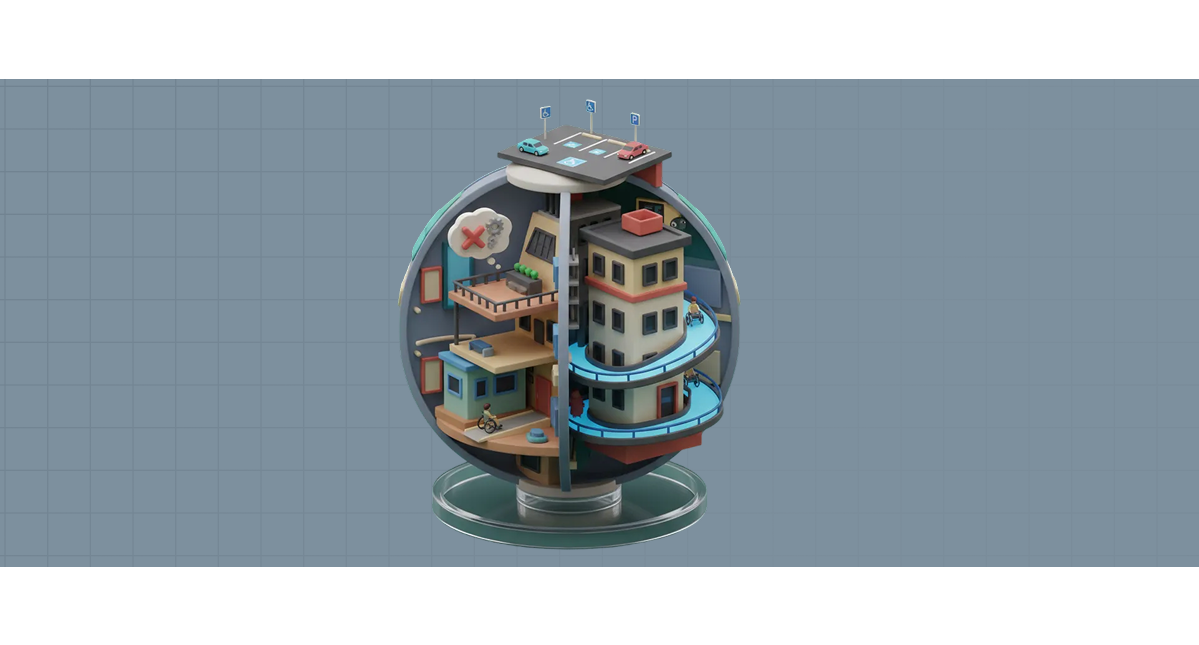
Utah Accessibility Code Explained: A Guide to Ramps, Elevators, and Parking
Navigating accessibility requirements is one of the most critical responsibilities for design and construction professionals. In Utah, compliance involves a harmonized application of the state-adopted International Building Code (IBC) and the federal Americans with Disabilities Act (ADA). Understanding the specific rules for vertical circulation, accessible routes, and parking is essential for a smooth plan review, successful inspections, and creating truly inclusive spaces.
Core Accessibility Requirements in Utah: A Summary
The State of Utah adopts the International Building Code (IBC) statewide, which contains detailed accessibility provisions in Chapter 11. These requirements are designed to align closely with the federal 2010 ADA Standards for Accessible Design. For new commercial construction, here are the key takeaways for elevators, ramps, and parking:
- Elevators: An elevator is generally required in multi-story buildings to provide an accessible route. However, a significant exception exists for two-story buildings where the second story is less than 3,000 square feet. This exemption does not apply if the second floor contains specific uses like healthcare offices, shopping centers, or public transit facilities.
- Accessible Ramps: The trigger for requiring handrails on both sides of an accessible ramp is a vertical rise of more than 6 inches, not the ramp's slope. The maximum allowable running slope for a ramp remains 1:12 (8.33%). Utah's code follows the IBC and ADA standards on this without amendment.
- Parking Spaces: The number of required accessible parking spaces is determined by the total number of parking spaces provided in a lot, following a specific table found in both the IBC and the ADA Standards. At least one of every six accessible spaces must be a van-accessible space.
| Feature | Utah Building Code (2021 IBC) / ADA Requirement | Key Details |
|---|---|---|
| Elevator Requirement | Required in buildings with 2+ stories. | Exception: Not required in 2-story buildings if the 2nd floor is < 3,000 sq. ft. and isn't a specified use type. |
| Ramp Slope | Maximum 1:12 (8.33%) | Slopes between 1:12 and 1:20 are considered ramps. Slopes 1:20 or less are walking surfaces. |
| Ramp Handrails | Required on both sides for any ramp with a vertical rise > 6 inches. | The requirement is based on height, not slope. A long, shallow ramp can still require handrails. |
| Accessible Parking | Based on a sliding scale per total spaces in a lot. | Aligns with the 2010 ADA Standards Table 208.2. |
Why Accessibility Compliance Matters in Utah
In Utah, as in the rest of the country, accessibility is governed by two parallel authorities: the state-adopted building code and federal civil rights law.
- Utah State Construction Code: Utah adopts the IBC, International Residential Code (IRC), and other I-Codes statewide under the Utah Uniform Building Standards Act. IBC Chapter 11, "Accessibility," and the referenced ICC A117.1 standard provide the technical "how-to" for construction. These are enforced by local building departments during plan review and inspections.
- Americans with Disabilities Act (ADA): The ADA is a federal civil rights law that prohibits discrimination based on disability. The 2010 ADA Standards for Accessible Design set the minimum requirements for new construction and alterations. The Department of Justice can enforce the ADA independently of local building officials.
While the IBC and ADA are now closely aligned, compliance with a building permit does not automatically guarantee ADA compliance. Architects, engineers, and contractors must design to meet the most stringent applicable requirements of both to avoid costly retrofits, project delays, and potential legal challenges.
Detailed Answers to Utah Accessibility Questions
What can you ask? (Sample questions)
- How does ANSI A117.1 differ from ADA requirements?
- What accessible route slope maximums apply under IBC?
- When are accessibility upgrades triggered in renovations?
- What door maneuvering clearances does ANSI A117.1 require?
Under the Utah accessibility code (IBC Chapter 11), is an elevator required in a new two-story commercial building if the second floor is less than 3,000 sq. ft.?
Yes, an elevator is typically not required in this specific scenario, thanks to a key exemption in the building code. The general rule in IBC 2021 §1104.4 (as adopted in Utah) requires an accessible route to connect all accessible stories in a building. However, Exception 1 provides significant relief for smaller, two-story buildings.
The elevator exemption applies if all of the following conditions are met:
- The building has only two stories. A story is defined as that portion of a building included between the upper surface of a floor and the upper surface of the floor or roof next above.
- The second story has a floor area of less than 3,000 square feet. This includes mezzanines.
- The second story does not contain specific uses that mandate vertical access regardless of size.
This exemption is mirrored almost identically in the 2010 ADA Standards §206.2.3, Exception 1.
Crucial Limitations to the Exemption:
Even if your two-story building's second floor is under 3,000 square feet, an elevator is still required if the second story contains any of the following:
- The professional office of a health care provider (e.g., dentist, chiropractor, doctor's office).
- A terminal, depot, or other station used for specified public transportation.
- An airport passenger terminal.
- A "shopping center" or "shopping mall," which the code defines as a building or series of buildings housing five or more tenant spaces for retail or service uses.
Code References:
- IBC 2021 §1104.4 Multistory buildings and facilities: "At least one accessible route shall connect each accessible story, including mezzanines, in multistory buildings and facilities."
- IBC 2021 §1104.4, Exception 1: "An accessible route is not required to stories and mezzanines that have an aggregate area of less than 3,000 square feet (278.7 m2) and are located above or below the accessible story. This exception shall not apply to… [list of uses]."
- 2010 ADA Standards §206.2.3 Multi-Story Buildings and Facilities: This section contains a nearly identical general requirement and exception.
In practice, this means a two-story office building (not medical) or a small retail building with a second floor of storage or administrative space under 3,000 sq. ft. can often utilize this exemption. However, designers must carefully verify the intended use of the second floor with the owner.
Does the Utah building code specify a maximum allowable slope for an accessible ramp before handrails are required on both sides, and does this differ from the base ADA standard?
The Utah building code does not link the requirement for handrails directly to a ramp's slope. Instead, it mandates handrails based on the ramp's total vertical rise. This requirement is identical to the provisions in the IBC and the 2010 ADA Standards.
The rule is simple and clear: A ramp run with a rise greater than 6 inches (152 mm) must have handrails on both sides.
This is a frequent point of confusion. A ramp's slope and its need for handrails are two separate, though related, requirements.
- Maximum Slope: The maximum running slope for any accessible ramp is 1:12 (8.33 percent). This is specified in IBC 2021 §1010.3 and 2010 ADA Standards §405.2. Any path of travel with a slope steeper than 1:20 (5 percent) is considered a ramp and must meet all ramp requirements (landings, edge protection, etc.).
- Handrail Trigger: The requirement for handrails is based entirely on vertical height. A ramp could have a gentle 1:20 slope, but if it is long enough to rise more than 6 inches, it requires handrails. Conversely, a very short ramp with a 1:12 slope that only rises 5 inches would not require handrails.
Code References:
- IBC 2021 §1012.1 Where required: "Handrails for stairways and ramps shall be adequate in strength and attachment in accordance with Section 1607.8. Handrails shall be provided on each side of stairs and ramps."
- IBC 2021 §1012.2 Height: This section details handrail height requirements.
- ICC A117.1-2017 §505.2 Where Required: "Handrails shall be provided on both sides of ramps with a rise greater than 6 inches." The IBC directly references this standard for technical criteria.
- 2010 ADA Standards §505.2 Where Required: "Ramp runs with a rise greater than 6 inches (150 mm) shall have handrails complying with 505."
Because Utah adopts the IBC without amending these sections, the state's requirements for ramp slopes and handrails are fully aligned with the national model codes and federal ADA standards. There is no Utah-specific difference.
What are the ADA parking space requirements in Utah?
Utah's accessible parking requirements are governed by the state-adopted IBC 2021 Chapter 11, Section 1106, which is fully consistent with the 2010 ADA Standards §208. The number of required accessible parking spaces is calculated based on the total number of parking spaces provided for the facility.
The required minimum number of accessible parking spaces is determined by the following table:
| Total Parking Spaces in Lot | Minimum Number of Required Accessible Spaces |
|---|---|
| 1 to 25 | 1 |
| 26 to 50 | 2 |
| 51 to 75 | 3 |
| 76 to 100 | 4 |
| 101 to 150 | 5 |
| 151 to 200 | 6 |
| 201 to 300 | 7 |
| 301 to 400 | 8 |
| 401 to 500 | 9 |
| 501 to 1000 | 2 percent of total |
| 1001 and over | 20, plus 1 for each 100 over 1000 |
Source: IBC 2021 Table 1106.1 / 2010 ADA Standards Table 208.2
Beyond the total count, several other critical requirements apply:
- Van-Accessible Spaces: For every six (or fraction of six) accessible parking spaces required, at least one must be a van-accessible space (IBC §1106.5 / ADA §208.2.4). Van spaces require a wider access aisle (96 inches) or can have a standard 60-inch aisle if the parking space itself is widened to 132 inches.
- Location: Accessible parking spaces must be located on the shortest accessible route of travel to an accessible facility entrance (IBC §1106.3 / ADA §208.3). For buildings with multiple accessible entrances, spaces should be dispersed and located near the various entrances.
- Signage and Pavement Markings: Each accessible space must be identified by a sign displaying the International Symbol of Accessibility. Van-accessible spaces require an additional sign stating "VAN ACCESSIBLE." These signs must be mounted so the bottom edge is at least 60 inches above the ground surface (IBC §1106.7). The access aisle must also be marked (typically with diagonal stripes) to discourage parking in it.
Common Mistakes and Coordination Considerations
Achieving full accessibility compliance requires careful attention to detail and coordination across design disciplines. Here are some common pitfalls to avoid in Utah projects.
Common Misinterpretations:
- Applying the Elevator Exemption Incorrectly: Forgetting that a "professional office of a health care provider" on the second floor negates the 3,000 sq. ft. elevator exemption is a common and costly mistake.
- Measuring Door Clearance Incorrectly: The required 32-inch clear opening for a door is measured from the face of the door (in the 90-degree open position) to the stop on the strike jamb. It is not the width of the door slab itself.
- Forgetting Employee-Only Areas: While some exceptions exist, most work areas must be designed to be accessible, allowing individuals with disabilities to approach, enter, and exit the space. This includes providing accessible turning spaces and routes.
- "Equivalent Facilitation" Assumptions: Proposing a solution that deviates from the code's prescriptive requirements requires explicit approval from the local building official. Designers cannot unilaterally decide an alternative provides equal access.
Coordination Between Disciplines:
- Architect ↔ Civil Engineer: The site plan is the first line of defense for accessibility. The civil engineer and architect must coordinate the location of accessible parking, slopes of exterior walkways, curb ramp locations, and the connection from the public right-of-way to the building entrance.
- Architect ↔ MEP Engineer: The placement of light switches, thermostats, fire alarm pull stations, and plumbing fixtures is critical. MEP drawings must reflect the reach range and clearance requirements detailed in ICC A117.1 and the ADA Standards. For example, ensuring a clear floor space of 30"x48" is provided at controls and that nothing protrudes into accessible routes.
- Architect ↔ Structural Engineer: Column placement and shear walls can inadvertently obstruct an accessible route or reduce required clearances in restrooms or corridors. The structural design must be reviewed against the architectural accessibility plan early in the design process.
Jurisdictional Variations and Plan Review in Utah
While the Utah State Legislature adopts the IBC and other model codes to create a uniform standard, designers should still be aware of local processes.
- Statewide Uniformity: The Utah Uniform Building Standards Act is intended to prevent a patchwork of conflicting technical codes across the state. A city like Salt Lake City or a county like Utah County cannot legally adopt an amendment that is less stringent than the state code.
- Local Amendments: Jurisdictions can adopt more stringent amendments, but this is less common for accessibility due to the strong federal baseline set by the ADA. It is most often seen for issues like local snow loads or wildland-urban interface (WUI) requirements.
- Plan Reviewer Interpretation: The most significant local variation comes from the interpretation and enforcement priorities of the local building department. Some jurisdictions may have specific submittal requirements or checklists for demonstrating accessibility compliance. It is always a best practice to engage with the local plan reviewer early on complex projects to clarify any questions.
Ultimately, the burden of proof for compliance rests with the design professional. Clear, well-detailed drawings that explicitly show accessible routes, clearances, fixture locations, and ramp/stair details will lead to a faster and more successful permitting process.
Frequently Asked Questions (FAQ)
What is the current building code in effect in Utah? As of the latest adoption cycle, Utah has adopted the 2021 International Building Code (IBC), 2021 International Residential Code (IRC), and other 2021 I-Codes with state-specific amendments.
Is the ADA a law or a building code? The ADA is a federal civil rights law. The 2010 ADA Standards for Accessible Design provide the technical requirements for compliance. While not a "code" in the same way as the IBC, its requirements are legally enforceable and are closely mirrored within the IBC to facilitate compliance.
What is the minimum clear width for an accessible door in Utah? Following IBC 2021 §1105.1.1 and ICC A117.1 §404.2.3, the minimum clear opening width for a swinging door is 32 inches. This is measured from the face of the door at a 90-degree angle to the door stop.
Are accessible restrooms required on every floor of a building? Generally, yes. If a floor is required to be accessible, any toilet rooms or bathing facilities serving that floor must also be accessible, as required by IBC 2021 §1109.2.
Do existing buildings in Utah need to be made fully accessible when renovated? It depends on the scope of work. Alterations are primarily governed by the International Existing Building Code (IEBC), which Utah also adopts. Generally, the altered elements must be made accessible. Additionally, if the alteration affects a primary function area, an accessible path of travel to that area (including restrooms, phones, and drinking fountains) must also be provided, up to a limit of 20% of the total alteration cost.
What is the difference between IBC Chapter 11 and ICC A117.1? Think of it this way: IBC Chapter 11 tells you what, when, and where you need to make elements accessible (e.g., "provide accessible parking," "provide an accessible entrance"). The referenced ICC A117.1 standard provides the detailed technical criteria for how to build those elements (e.g., "an accessible parking space shall be 96 inches wide with a 60-inch access aisle").
Can a city in Utah, like Provo or Ogden, have its own accessibility code? No. Utah law establishes the State Construction Code as the minimum standard statewide. A city can adopt more stringent amendments, but it cannot create its own separate accessibility code or enforce requirements that are less strict than the IBC and ADA.
What is the maximum height for an accessible light switch or thermostat in Utah? Per ICC A117.1 §308, controls must be located within an accessible reach range. For a forward approach, the maximum height for an operable part is 48 inches above the finished floor. For a side approach, the maximum height is also 48 inches.
More Utah Building Code Guides
- MEP CodesUtah's Key Amendments to Mechanical, Electrical, and Plumbing (MEP) Codes
- Residential Code (IRC)Utah Residential Code (IRC) Guide for Home Construction & Remodeling
- Wildfire / WUI CodesAdvanced Utah Code: Existing Buildings (IEBC) and Wildland-Urban Interface (WUI)
- Commercial Code (IBC)Utah Code Guide to Building Height, Area, and Occupancy Separation
- Structural DesignStructural Design in Utah: Seismic, Snow Load, and Foundation Code Requirements
MeltPlan
A curated stream of preconstruction intelligence, estimating innovation, takeoff breakthroughs, workflow advancements, and expert perspectives—powered by the AI and technology shaping the future of construction.
Visit SiteDon't miss what's shaping AEC
The latest on preconstruction, codes, AEC news & trends — so you're always in the know.