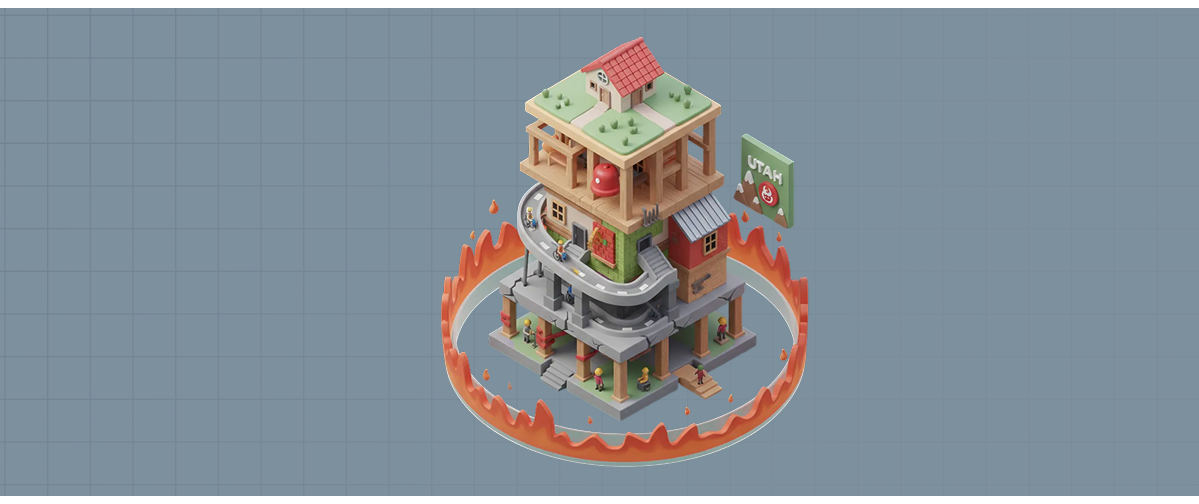
Utah Residential Code (IRC) Guide for Home Construction & Remodeling
Navigating Utah's Residential Code (IRC): A Guide for Home Construction & Remodeling Utah's unique landscape is matched by its unique approach to building codes..
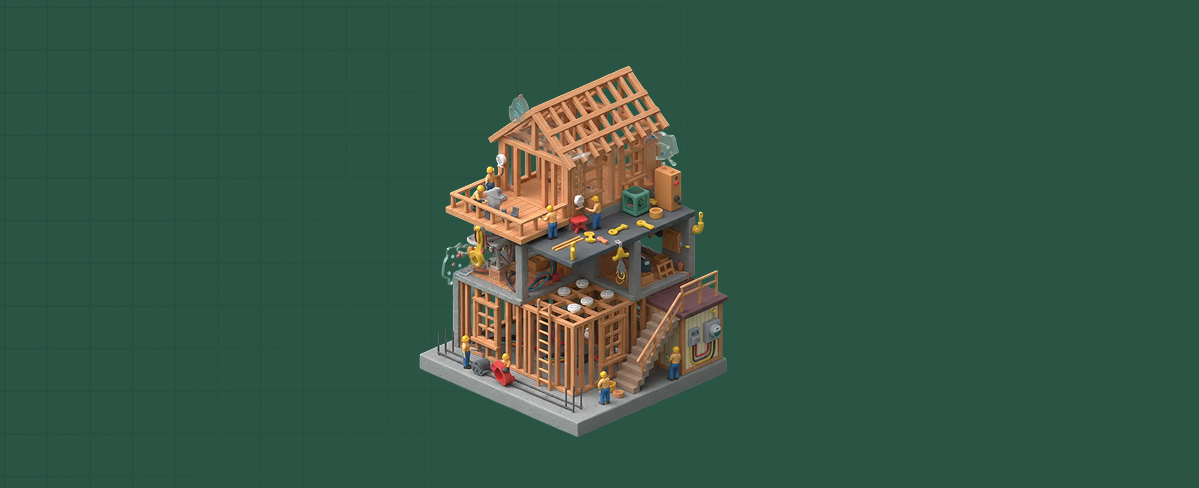
Navigating Utah's Residential Code (IRC): A Guide for Home Construction & Remodeling
Utah's unique landscape is matched by its unique approach to building codes. While the state adopts the International Residential Code (IRC) as its foundation, a series of significant state-level amendments creates a distinct set of rules for architects, builders, and homeowners. Understanding these specific requirements—from fire sprinklers and deck construction to basement finishes and Accessory Dwelling Units (ADUs)—is critical for a smooth design, permitting, and inspection process.
This guide provides a deep dive into the Utah-amended IRC, answering the most common questions about residential construction and remodeling projects across the state.
Key Utah Residential Code Requirements at a Glance
For professionals navigating a residential project in Utah, the core requirements are based on the state-adopted International Residential Code (IRC) with crucial legislative amendments. Here are the essential takeaways:
Fire Sprinklers Not Mandatory: Utah law (Utah Code § 15A-3-107) prohibits a statewide mandate for automatic fire sprinklers in new one- and two-family dwellings and townhouses. Local jurisdictions cannot independently require them unless it's part of a developer's agreement for specific concessions.
Deck Construction: Deck safety is paramount. Codes focus heavily on proper ledger board attachment to the house, weather-protective flashing, and lateral load connections to prevent deck collapse. These requirements are detailed in IRC Chapter 5.
Basement Finishes: Finishing a basement legally requires adherence to several code sections. Key among them are providing emergency egress from every bedroom (IRC § R310), meeting minimum ceiling heights (IRC § R305), and correct installation of stairs, smoke alarms, and carbon monoxide detectors.
Accessory Dwelling Units (ADUs): While the state encourages ADUs, the specific rules are governed by local city and county zoning ordinances, not the IRC. These local laws dictate size, setbacks, parking, and utility requirements. The construction itself must still meet all IRC standards for a dwelling unit.
Life Safety is Non-Negotiable:
Guardrails: Required on decks, porches, and balconies more than 30 inches off the ground and must be at least 36 inches high.
Handrails: Required on stairs with four or more risers, with specific height (34-38 inches) and grip size requirements.
Smoke & CO Alarms: Must be installed in specific locations, interconnected, and meet power source requirements as defined in IRC § R314 and § R315.
Feature | Utah Requirement (Based on Amended IRC) | Key Code Section(s) |
|---|---|---|
Fire Sprinklers | Not required in 1 & 2 family homes by state law. | Utah Code § 15A-3-107 |
Deck Guardrail Height | Min. 36 inches high (for surfaces >30" above grade). | IRC § R312.1.2 |
Basement Egress | Required in every sleeping room. | IRC § R310 |
Basement Ceiling Height | Min. 7 feet for habitable spaces. | IRC § R305.1 |
Stair Handrail Height | 34 inches to 38 inches from nosing. | IRC § R311.7.8.1 |
ADU Regulations | Construction per IRC; size/siting per local zoning. | Local Ordinances |
Why Understanding Utah's Amendments Matters
In the United States, most states adopt model codes like the IRC and then amend them to suit local needs, politics, and construction practices. Utah is a prime example of this process. The Utah Uniform Building Standards Act grants the state authority to adopt and amend codes, creating a baseline that applies statewide. However, it also allows counties and cities to make further amendments, provided they are not less stringent than the state's.
This creates a hierarchy of regulations that can be confusing:
International Residential Code (IRC): The model code foundation.
Utah State Amendments: Legislative changes that override the base IRC. The fire sprinkler prohibition is the most well-known example.
Local County/City Ordinances: Additional rules specific to a jurisdiction, such as reduced square footage for permit-exempt sheds or specific zoning rules for ADUs.
For design and construction professionals, failing to account for this hierarchy can lead to costly redesigns, failed plan reviews, and inspection delays. A project in Salt Lake City may have slightly different deck footing requirements than one in St. George due to soil conditions and local amendments, and the rules for building an ADU in Provo will differ from those in Ogden. The key to success is starting with the state-amended IRC and then verifying all requirements with the local building department where the project is located.
Ask any code questions on Utah Residential codes & get instant answers with cited sections
▶ Learn How it works (1 min)
What can you ask? (Sample questions)
Are fire sprinklers required for this one- or two-family home/townhouse in Utah?
Do all basement bedrooms meet egress window/window well requirements?
Is the deck ledger attachment, flashing, and lateral load connection IRC-compliant?
Does the ADU meet local zoning rules (size/setbacks/parking) and IRC separation/egress requirements?
Detailed Answers to Utah Residential Code Questions
Does Utah's amendment to IRC R313 allow for the omission of residential fire sprinklers in single-family homes and townhouses if specific alternative fire protection measures are met?
Yes, Utah state law explicitly prohibits a statewide mandate for fire sprinklers in certain residential buildings, effectively allowing for their omission. This is one of the most significant deviations from the model IRC, which since the 2009 edition has included a mandatory fire sprinkler provision in Section R313.
The governing statute is Utah Code § 15A-3-107, "Fire suppression in residential dwellings." This law states that the Utah Uniform Building Standards Act "does not authorize the commission to require that a fire sprinkler be installed" in any new one-family or two-family dwelling, or in townhouses that are not more than three stories above grade plane and have a separate means of egress.
Key points of this amendment include:
State-Level Prohibition: The law prevents the state building code commission from adopting the IRC's mandatory sprinkler provision for these building types.
Local Jurisdiction Limitation: The statute also prohibits a "compliance agency" (i.e., a local city or county building department) from independently requiring sprinklers.
Developer-Initiated Option: An exception exists where sprinklers may be required if they are part of a voluntary agreement between a developer and the local jurisdiction. For example, a developer might agree to install sprinklers in exchange for concessions on street width, fire-flow requirements, or subdivision density.
While sprinklers are not required, many jurisdictions may still encourage or require alternative fire safety measures, such as enhanced smoke alarm systems (e.g., more detectors than the IRC minimum) or specific fire-resistant construction materials, though these are not explicitly tied to the sprinkler omission in the state statute.
For a deck attached to a single-family home in Davis County, what are the specific code requirements for ledger board attachment, flashing, and lateral load connections back to the house structure?
The requirements for attaching a deck to a home in Davis County are based on the Utah-adopted International Residential Code (IRC), primarily Chapter 5 (Floors). While Davis County may have specific administrative rules or handouts, the technical requirements align with the IRC.
1. Ledger Board Attachment: The ledger board, which fastens the deck to the house, is a critical structural element. IRC Section R507.9.1.3 specifies the connection details.
Fasteners: The ledger must be attached with ½-inch diameter bolts or lag screws with washers.
Placement: Fasteners must be staggered in two rows and placed according to the detailed tables and figures in the IRC, such as Figure R507.9.1.3(1). The spacing depends on the joist span of the deck. For example, for a deck with 10-foot joists, lag screws must be spaced approximately 15 inches on center.
Prohibited Connections: Attaching a ledger board over house siding or stucco is prohibited. The siding must be removed so the ledger has direct contact with the home's band joist or structural sheathing. Attaching to or through brick or stone veneer is also prohibited.
2. Flashing: Proper flashing is required to prevent water intrusion and rot, which is a leading cause of deck failure.
Code Reference:IRC Section R703.4 requires corrosion-resistant flashing at all points of attachment to a wall of wood-frame construction.
Installation: The flashing must be installed between the ledger board and the house sheathing, extending up behind the water-resistive barrier and down over the front face of the ledger. Many jurisdictions, including those in Utah, highly recommend or require self-adhered flashing membrane for superior protection. End-dam flashing is also a best practice at the ends of the ledger.
3. Lateral Load Connections: Decks must be tied back to the house to resist lateral (side-to-side) forces from wind, seismic activity, or occupants. This prevents the deck from pulling away from the house.
Code Reference:IRC Section R507.9.2 requires lateral load connections.
Requirement: A minimum of two hold-down tension devices are required, each with a capacity of at least 1,500 pounds. These devices must be installed in at least two locations per deck.
Placement: These connectors, such as a Simpson Strong-Tie DTT2Z or equivalent, are typically installed at opposite ends of the deck, connecting a deck joist directly to the home's floor framing or foundation. The manufacturer's installation instructions must be followed precisely.
Designers and builders in Davis County should always consult the county's building department for any specific detail sheets or checklists they provide, as these often clarify common issues and expectations during plan review and inspection.
What are the Utah code requirements for finishing a basement?
Finishing a basement in Utah transforms it into a habitable space, which means it must comply with all relevant life safety, structural, and energy efficiency requirements of the Utah-adopted IRC. The primary requirements include:
Emergency Egress: Per IRC Section R310, every sleeping room (bedroom) and any basement with habitable space must have at least one emergency escape and rescue opening (EERO). This can be a window or a door. If it's a window, it must meet specific size criteria (e.g., min. 5.7 sq. ft. net clear opening, max. 44-inch sill height). If the EERO opens into a window well, the well must also meet size and access requirements (e.g., a permanently affixed ladder if deeper than 44 inches).
Ceiling Height:IRC Section R305.1 requires a minimum ceiling height of 7 feet in habitable spaces, including basements. Beams, girders, and ducts can project down to 6 feet 4 inches. Bathrooms can have a minimum height of 6 feet 8 inches.
Stairs: Any new stairs must comply with IRC Section R311.7. This includes rules for riser height (max. 7 ¾ inches), tread depth (min. 10 inches), headroom (min. 6 feet 8 inches), and the installation of handrails and guards.
Smoke and Carbon Monoxide Alarms:
Smoke Alarms (IRC § R314): Must be installed in each sleeping room, outside each sleeping area, and on each level. They must be interconnected so that when one sounds, they all sound.
Carbon Monoxide Alarms (IRC § R315): Required outside of each separate sleeping area in any dwelling with fuel-fired appliances or an attached garage.
Insulation and Energy Code: The basement walls must be insulated to meet the requirements of the Utah-adopted International Energy Conservation Code (IECC). This is critical for preventing heat loss and moisture problems.
Ventilation: Bathrooms, toilets, and shower rooms require ventilation to the outdoors per IRC Section R303.3 and the International Mechanical Code (IMC).
Light and General Ventilation: All habitable rooms must have natural light equal to at least 8% of the floor area and natural ventilation of at least 4%, unless an artificial light and mechanical ventilation system is provided (IRC § R303.1).
Plumbing, Mechanical, and Electrical: All new systems must be installed according to the adopted plumbing (UPC), mechanical (IMC), and electrical (NEC) codes, and will require permits and inspections. This includes proper GFCI protection for outlets in bathrooms and unfinished areas.
What are the Utah building code requirements for an ADU (Accessory Dwelling Unit)?
The requirements for an Accessory Dwelling Unit (ADU) in Utah are a two-part issue: zoning and building code. While the state has passed legislation encouraging cities and counties to allow ADUs, the specific rules governing them are found in local ordinances.
1. Local Zoning and Planning Ordinances: This is the first place to check. The local jurisdiction's rules will dictate whether an ADU is even allowed on your property and will define critical parameters such as:
Location: Whether the ADU can be internal (e.g., a basement apartment), attached, or a detached backyard cottage.
Size: Maximum and minimum square footage.
Setbacks: Required distances from property lines.
Parking: Whether additional off-street parking is required.
Owner Occupancy: Many jurisdictions require the owner to live in either the primary residence or the ADU.
State Law: Utah Code § 10-9a-530 (for municipalities) and § 17-27a-526 (for counties) provide a framework that limits how much a local jurisdiction can restrict ADUs, often requiring them to permit at least one internal ADU per residential lot.
2. Utah Building Code (IRC) Requirements: Once the zoning rules are met, the ADU must be designed and built to the standards of the IRC, just like any other dwelling unit. This includes:
Independent Dwelling Standards: The ADU must have its own provisions for living, sleeping, eating, cooking, and sanitation (IRC Chapter 2, Definition of Dwelling Unit).
Means of Egress: The ADU must have its own independent egress path that does not pass through the primary dwelling. All sleeping rooms require an emergency escape and rescue opening (IRC § R310).
Fire Separation: If the ADU is attached to or internal to the primary home, a fire separation is typically required between the two units. This is often a 1-hour fire-rated assembly (wall and/or floor/ceiling) per IRC Section R302.3.
Life Safety Systems: The ADU requires its own smoke and carbon monoxide alarms meeting the requirements of IRC § R314 and § R315. The alarms within the ADU must be interconnected, but they are not typically required to be interconnected with the primary home's system.
All Other Code Compliance: The ADU must meet all other applicable IRC requirements for ceiling height, stairs, insulation, ventilation, electrical, plumbing, and mechanical systems.
For an Accessory Dwelling Unit (ADU) in a Utah jurisdiction, are the utility separations (electrical, water, sewer) required to be independent from the primary residence, and is a separate address required by code?
The requirements for utility separation and addressing for an ADU are primarily driven by local ordinances and utility provider policies, not the building code itself.
Utility Separations (Electrical, Water, Sewer):
The International Residential Code (IRC) and National Electrical Code (NEC) do not mandate separate meters or utility services for an ADU. From a technical code standpoint, it is often permissible to have the ADU's plumbing and electrical systems connect to the primary residence's systems, provided those systems have adequate capacity.
However, the local jurisdiction's zoning ordinance or the policies of the utility providers (e.g., Rocky Mountain Power, Dominion Energy, local water/sewer district) are the final authority. Many jurisdictions do require separate meters, especially for detached ADUs, to manage billing and utility loads properly. This is a policy decision, not a building code mandate. It is crucial to contact each utility provider early in the design process to confirm their requirements for an ADU.
Separate Address:
Yes, a separate address is almost universally required by the local jurisdiction (city or county).
This is not a building code requirement but a critical public safety and administrative one. A distinct address is necessary for emergency services (911 response), mail delivery, and utility billing. The local planning or public works department is typically responsible for assigning new addresses.
In summary, while the building code allows for shared utilities, local rules often require separation. A separate address is almost always mandatory for public safety.
Do I need a permit to build a shed in my backyard in Salt Lake County?
Yes, you will likely need a permit to build a shed in Salt Lake County, depending on its size. While the base IRC provides a general exemption, many Utah jurisdictions, including Salt Lake County, have amended it.
General Rule (IRC): The model IRC Section R105.2 exempts "one-story detached accessory structures used as tool and storage sheds, playhouses and similar uses, provided the floor area is not more than 200 square feet."
Salt Lake County Rule (Check Locally): Salt Lake County and its incorporated cities (Salt Lake City, Sandy, West Jordan, etc.) often amend this provision. Many local Utah ordinances reduce the exemption threshold to 120 square feet. Any shed larger than this size typically requires a building permit.
Zoning Requirements: Regardless of whether a building permit is required, the shed must still comply with all local zoning ordinances. This includes:
Setbacks: Minimum required distance from property lines (rear and side).
Height: Maximum allowable height for an accessory structure.
Lot Coverage: The percentage of your lot that can be covered by structures.
Best Practice: Before building any shed, regardless of size, always contact the specific building department for your jurisdiction (e.g., Salt Lake County Planning & Development Services or the building department of the city you live in) to verify both the permit exemption size and the applicable zoning setbacks.
What is the minimum ceiling height for a basement bedroom in Utah?
The minimum ceiling height for a basement bedroom in Utah is 7 feet. This is governed by the Utah-adopted IRC Section R305.1.
This section states that habitable space, which includes sleeping rooms, shall have a ceiling height of not less than 7 feet. There are a few important exceptions:
Projections: Beams, girders, ducts, or other obstructions are permitted to project down to no less than 6 feet 4 inches from the finished floor, provided they do not cover more than 50% of the room's ceiling area.
Sloped Ceilings: For rooms with sloped ceilings, at least 50% of the required floor area of the room must have a ceiling height of at least 7 feet. No portion of the required floor area may have a ceiling height of less than 5 feet.
Bathrooms: Bathrooms have a slightly lower minimum requirement of 6 feet 8 inches over the fixtures and at the front clearance area.
Are egress windows required for every bedroom in a basement in Utah?
Yes, absolutely. The Utah-adopted IRC Section R310.1 unequivocally requires that every sleeping room shall have at least one operable emergency escape and rescue opening (EERO). For a basement bedroom, this is almost always a window.
The EERO must meet the following strict criteria from IRC Section R310.2:
Sill Height: The bottom of the opening (the sill) can be no more than 44 inches above the finished floor.
Minimum Opening Area: The net clear opening must be at least 5.7 square feet.
Minimum Opening Height: The net clear opening height must be at least 24 inches.
Minimum Opening Width: The net clear opening width must be at least 20 inches.
Operationality: The opening must be openable from the inside of the room without the use of keys, tools, or special knowledge.
If the egress window opens into a window well, the well itself must comply with IRC Section R310.2.3, including minimum horizontal area (9 sq. ft.) and the requirement for a permanent ladder if the well is deeper than 44 inches.
How high does a guardrail need to be on a deck in Utah?
A guardrail on a deck in Utah must be a minimum of 36 inches high. This requirement comes directly from the Utah-adopted IRC Section R312.1.2.
The code specifies two key things:
When a Guard is Required: Guards are required on the open sides of walking surfaces—including decks, balconies, and porches—that are located more than 30 inches measured vertically to the floor or grade below.
Height Requirement: The top of the required guard must be at least 36 inches high, measured vertically from the walking surface.
Additionally, the guard must have intermediate rails or balusters such that a 4-inch diameter sphere cannot pass through (IRC § R312.1.3). This is to prevent small children from falling through.
What is the Utah code for handrail height and grip size on stairs?
The Utah code for stair handrails is based on IRC Section R311.7.8. These standards are designed for safety and usability.
Handrail Height:
The top of the handrail must be placed not less than 34 inches and not more than 38 inches vertically above the nosing of the stair treads (IRC § R311.7.8.1). The nosing is the front edge of the step.
Handrail Grip Size:
The handrail must be easy to grasp. IRC Section R311.7.8.3 specifies the allowable dimensions.
Type I (Circular): If the handrail has a circular cross-section, its diameter must be between 1 ¼ inches and 2 inches.
Type II (Non-circular or "Profiled"): If the handrail is not circular, its perimeter dimension must be between 4 inches and 6 ¼ inches, with a maximum cross-section dimension of 2 ¼ inches. This allows for common rectangular "2x4" or "2x6" handrails with eased edges.
The code also requires a minimum clearance of 1 ½ inches between the handrail and the wall (IRC § R311.7.8.2).
Does Utah require fire sprinklers in new single-family homes?
No, Utah does not require fire sprinklers in new single-family homes. As detailed previously, Utah Code § 15A-3-107 specifically prohibits the state from adopting or enforcing a mandatory fire sprinkler requirement for new one- and two-family dwellings and most townhouses. This is a direct legislative override of the model IRC's sprinkler provision.
What are the smoke detector placement requirements for a house in Utah?
Smoke detector placement requirements in Utah follow IRC Section R314. Proper placement is a critical life safety measure.
Detectors must be installed in the following locations:
In each sleeping room.
Outside each separate sleeping area, in the immediate vicinity of the bedrooms.
On each additional story of the dwelling, including basements and habitable attics but not including crawl spaces and uninhabitable attics.
Additionally, the code has requirements for power and interconnection:
Power Source (IRC § R314.6): Smoke alarms must receive their primary power from the building wiring and have a battery backup.
Interconnection (IRC § R314.4): When more than one smoke alarm is required, they must be interconnected so that the activation of one alarm will cause all alarms throughout the dwelling to sound.
Are carbon monoxide detectors required in Utah homes?
Yes, carbon monoxide (CO) detectors are required in Utah homes with fuel-burning appliances or attached garages. The requirements are found in IRC Section R315.
New Construction: For new construction, CO alarms are required in dwelling units that contain a fuel-fired appliance or have an attached garage with an opening that communicates with the dwelling unit.
Location: The alarms must be installed outside of each separate sleeping area in the immediate vicinity of the bedrooms.
Existing Dwellings: Utah law (Utah Code § 15A-5-207) also requires that CO alarms be installed in existing dwellings according to the manufacturer's instructions when any work requiring a permit occurs or upon the sale of the dwelling.
Does the Utah building code have specific rules for tiny houses?
The Utah building code's approach to tiny houses can be complex. The IRC has an Appendix AQ, "Tiny Houses," which provides specific standards for homes that are 400 square feet or less. However, appendices to the model codes are not automatically adopted.
Local Adoption is Key: The adoption of Appendix AQ is left to the discretion of local jurisdictions in Utah. Some municipalities may have adopted it, while others have not. You must check with the local building department to see if they have specific provisions for tiny houses.
If Appendix AQ is Not Adopted: If a jurisdiction has not adopted the appendix, a tiny house must meet all standard IRC requirements. This can be challenging for things like:
Stairways: The IRC has strict rules for tread depth and riser height that can be difficult to fit in a tiny footprint. Appendix AQ allows for ladders, ship's ladders, or alternating tread devices to access lofts.
Ceiling Height: A tiny home would need to meet the 7-foot minimum habitable space height requirement.
Egress: Lofts used for sleeping must still have proper egress windows.
Alternative Classifications: If a tiny house is built on a chassis with wheels, it may be classified as a Recreational Vehicle (RV) and would need to be certified under RV standards (ANSI A119.5) instead of the IRC.
Additional Considerations for Utah Projects
Common Mistakes and Misinterpretations
Assuming the 200 sq. ft. Shed Exemption: Many Utah homeowners and builders get cited for building 150-200 sq. ft. sheds without a permit, not realizing their local city has amended the exemption down to 120 sq. ft.
Improper Deck Flashing: Simply placing the ledger over the house wrap is a common and serious mistake. It traps moisture and leads to rot. Flashing must be installed correctly behind the weather-resistive barrier.
Ignoring ADU Zoning Rules: Focusing only on the building code for an ADU is a recipe for failure. The project must first comply with all local zoning ordinances for size, placement, and parking.
Forgetting Handrail Returns: Per IRC R311.7.8.2, handrails must have a return (curving back to the wall) or terminate in a newel post. Leaving an open end can snag clothing and cause falls.
Jurisdictional Variations: Always Check Locally
The single most important piece of advice for any residential project in Utah is to contact the local building department. While the state provides the base code, enforcement and amendments happen at the city and county level.
Wasatch Front (Salt Lake, Davis, Utah, Weber Counties): These more populated areas often have well-staffed building departments with helpful checklists, standard detail sheets (especially for decks and basements), and online permit portals.
St. George / Washington County: This area has specific considerations for soils (expansive clays) and may have different footing requirements.
Mountain and Rural Areas: Jurisdictions in Summit County (Park City) or rural areas may have additional requirements related to high snow loads, wildfire risk (Wildland-Urban Interface or WUI codes), and different frost depth requirements for foundations.
Best Practices for Permitting & Plan Review
Start with Zoning: Before drawing a single line, confirm that your project (especially an ADU or large detached garage) is permitted by the local zoning ordinance.
Use Local Handouts: Check the building department's website for any guides, checklists, or standard details they provide. Aligning your plans with these documents dramatically speeds up plan review.
Clear and Complete Drawings: Ensure your plans clearly show all code-required elements. Call out egress window sizes, guardrail and handrail heights, smoke alarm locations, and structural connection details.
Anticipate Inspections: Understand the required inspection sequence (e.g., footing, foundation, framing/rough-in, insulation, final) and schedule them in advance to avoid work delays.
Frequently Asked Questions (FAQ)
What version of the IRC is Utah currently using? Utah typically operates on a three-year code adoption cycle, following the release of the International Codes. To find the exact version currently in effect, consult the Utah Division of Occupational and Professional Licensing (DOPL) or your local building department, as there is often a transition period after a new code is published.
Do I need an architect or engineer for my home remodel plans in Utah? For most simple interior remodels, basement finishes, or decks that follow prescriptive IRC guidelines, an architect or engineer is not required by code. However, if your project involves altering major structural elements (like bearing walls or roof rafters), complex foundations, or is outside the scope of the prescriptive code, engineered plans will be required.
What are the frost depth requirements for foundations in Utah? The required frost depth for foundations varies by location in Utah. It is generally 30 inches below grade along the Wasatch Front but can be deeper (42 inches or more) in colder, high-altitude areas like Park City. Your local building department will have the specific frost depth requirement for your area.
Are there special seismic requirements for building in Utah? Yes. A large portion of Utah, especially along the Wasatch Front, is in a high seismic design category (typically C or D). The IRC includes prescriptive methods for bracing walls in these areas to resist earthquake forces. For more complex homes or sites with poor soil, a structural engineer may be needed to design the lateral force-resisting system.
How close to my property line can I build a deck or shed? This is determined by local zoning ordinances, not the building code. Setback requirements vary by city and zoning district. Typically, accessory structures like sheds have different (often smaller) setback requirements than the primary home. Always check with your local planning and zoning department.
What are the insulation R-value requirements for a new home in Utah? Insulation requirements are set by the Utah-adopted International Energy Conservation Code (IECC). The required R-values vary by climate zone within the state and by building assembly (e.g., ceilings, walls, floors, basement walls).
Do I need a permit to replace windows in my Utah home? Generally, yes. Replacing windows is typically considered an alteration that requires a permit. This is to ensure the new windows meet energy code requirements and, if located in a bedroom, that they meet the egress size requirements of the IRC.
What is the difference between the IRC and the IBC in Utah? The International Residential Code (IRC) applies to one- and two-family dwellings and townhouses up to three stories high. The International Building Code (IBC) applies to all other buildings, including commercial buildings, multi-family apartment buildings, and schools.
More Utah Building Code Guides
- MEP CodesUtah's Key Amendments to Mechanical, Electrical, and Plumbing (MEP) Codes
- Wildfire / WUI CodesAdvanced Utah Code: Existing Buildings (IEBC) and Wildland-Urban Interface (WUI)
- Commercial Code (IBC)Utah Code Guide to Building Height, Area, and Occupancy Separation
- Structural DesignStructural Design in Utah: Seismic, Snow Load, and Foundation Code Requirements
- Overview GuideUtah Building Code Explained: Adopted Codes, Amendments & Local Jurisdiction
MeltPlan
A curated stream of preconstruction intelligence, estimating innovation, takeoff breakthroughs, workflow advancements, and expert perspectives—powered by the AI and technology shaping the future of construction.
Visit SiteDon't miss what's shaping AEC
The latest on preconstruction, codes, AEC news & trends — so you're always in the know.