Utah Building Code Explained: Adopted Codes, Amendments & Local Jurisdiction
Navigating Utah's construction regulations requires a clear understanding of which model codes are adopted, what specific amendments the state has made, and how..

Utah Building Code Explained: A Guide to Adopted Codes, Amendments, and Enforcement
Navigating Utah's construction regulations requires a clear understanding of which model codes are adopted, what specific amendments the state has made, and how local jurisdictions enforce these rules. This guide provides a comprehensive overview for architects, engineers, contractors, and inspectors working on projects within the state.
Current Adopted Codes and Key Takeaways
Utah has adopted the 2021 suite of International Codes (I-Codes) and the 2020 National Electrical Code (NEC). This code cycle became effective statewide on July 1, 2023. Design and construction professionals must adhere to these versions, along with all state-specific amendments.
Here are the core takeaways for the current Utah State Building Code:
Statewide Adopted Codes: The primary codes adopted under the Utah Uniform Building Standards Act (Utah Code Title 15A) include:
- Building: 2021 International Building Code (IBC)
- Residential: 2021 International Residential Code (IRC)
- Energy: 2021 International Energy Conservation Code (IECC)
- Electrical: 2020 National Electrical Code (NEC) (NFPA 70)
- Plumbing: 2021 International Plumbing Code (IPC)
- Mechanical: 2021 International Mechanical Code (IMC)
- Fire: 2021 International Fire Code (IFC)
- Existing Buildings: 2021 International Existing Building Code (IEBC)
- Fuel Gas: 2021 International Fuel Gas Code (IFGC)
- Wildland-Urban Interface: 2021 International Wildland-Urban Interface Code (IWUIC)
Significant Utah Amendments: Utah does not adopt the model codes verbatim. The state legislature makes several critical amendments that designers must be aware of. The most impactful changes include:
- Residential Fire Sprinklers: Utah has amended the 2021 IRC to remove the mandatory requirement for automatic fire sprinklers in new one- and two-family dwellings and townhouses (Utah Code §15A-3-103). This is a significant departure from the base IRC §R313.
- Energy Code Modifications: The 2021 IECC is adopted with amendments that can affect compliance pathways. For example, Utah often modifies prescriptive R-values and may alter requirements for mandatory blower door testing, making it crucial to consult the state-amended version.
- Radon Control Systems: Utah amends the IRC (Appendix F) to mandate passive radon gas control systems in new residential construction in counties designated as Zone 1 (high radon potential).
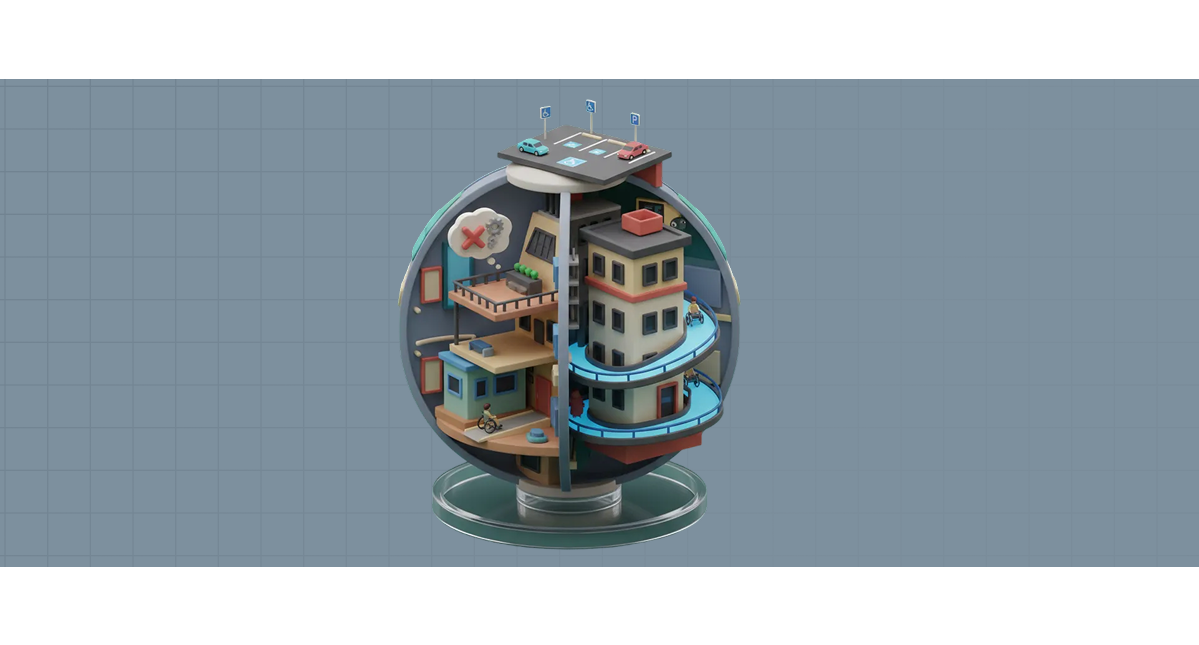
- Accessibility: While Utah adopts IBC Chapter 11 for accessibility, it’s essential to verify any minor state amendments that may exist. The primary referenced standard remains ANSI A117.1-2017.
Why Understanding Utah's Code Landscape Matters
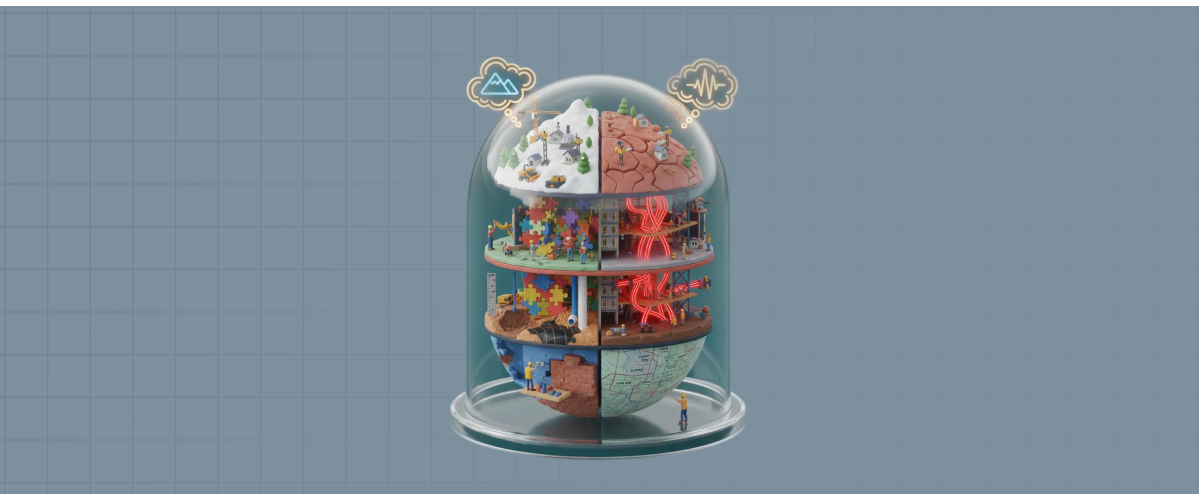
In Utah, the building code is not a single book but a collection of model codes modified by state law. This distinction is critical for ensuring compliance, avoiding costly redesigns, and navigating the permitting process smoothly. The state's unique geography—encompassing the high seismic risk of the Wasatch Front, heavy mountain snow loads, and expansive Wildland-Urban Interfaces (WUI)—drives many of these regulations.
Common pitfalls for design professionals include:
- Using Off-the-Shelf I-Codes: Relying solely on the unamended IBC or IRC from the International Code Council (ICC) will lead to non-compliance. The Utah amendments, particularly regarding fire sprinklers and energy conservation, are legally binding.
- Ignoring Local Amendments: While the State Construction Code is the minimum standard, cities and counties may adopt more restrictive ordinances, especially concerning zoning, setbacks, and administrative procedures.
- Misunderstanding Jurisdictional Boundaries: Knowing whether the city or the county building department is the Authority Having Jurisdiction (AHJ) is fundamental, especially for projects in unincorporated areas or near city limits.
A deep understanding of this framework is not just about compliance; it's about delivering safe, resilient, and efficient buildings tailored to Utah's specific environmental and regulatory challenges.
What specific version of the IBC, IRC, IECC, and NEC has Utah currently adopted statewide, what is the effective date of this code cycle, and what are the most significant Utah-specific amendments to these model codes?
Utah has currently adopted the 2021 versions of the IBC, IRC, and IECC, and the 2020 version of the NEC. The effective date for this statewide code cycle was July 1, 2023.
The most significant state-specific amendments modify the base model codes in several key areas of life safety, energy efficiency, and residential construction.
Adopted Codes and Effective Date:
- Primary Codes: Governed by the Utah Uniform Building Standards Act (Utah Code Title 15A), the state adopted the following effective July 1, 2023:
- 2021 International Building Code (IBC)
- 2021 International Residential Code (IRC)
- 2021 International Energy Conservation Code (IECC)
- 2020 National Electrical Code (NEC)
- Other 2021 I-Codes (IFC, IMC, IPC, etc.)
Most Significant Utah-Specific Amendments:
- Elimination of Mandatory Residential Fire Sprinklers: This is arguably the most well-known Utah amendment. While the model 2021 IRC §R313 requires automatic fire sprinkler systems in all new one- and two-family dwellings and townhouses, Utah law explicitly prohibits this mandate. Utah Code §15A-3-103(1)(a) states that the IRC is adopted without the sections requiring fire sprinklers in these occupancies.
- Energy Code (IECC) Modifications: Utah adopts the 2021 IECC with amendments that often provide more flexibility or slightly reduce the stringency of the base code. Designers must consult the state-specific version for accurate requirements related to:
- Prescriptive R-values:Insulation requirements may be adjusted from the standard IECC tables.
- Air Leakage Testing: While blower door tests are required, Utah may amend the specific thresholds or exceptions for compliance.
- Energy Rating Index (ERI): If using the ERI performance path, the target scores may be modified by state amendment.
- Mandatory Radon Control Systems: Utah amends the IRC to require passive radon mitigation systems in new residential construction within designated high-risk areas. Utah Code §15A-3-107 mandates that Appendix F of the IRC (Radon Control Methods) is adopted and enforced for new residential buildings in counties designated by the Utah Department of Environmental Quality as having high radon potential (Zone 1).
- Seismic and Structural Provisions: While Utah adopts the structural provisions of the IBC, including references to ASCE 7, local jurisdictions in high seismic areas like the Wasatch Front may have specific administrative or procedural requirements for structural plan review and special inspections. The design parameters themselves (e.g., Seismic Design Category D or E) are determined by the site location as specified in the IBC and ASCE 7, not typically amended by the state.
What is the current building code for Utah?
The current building code for Utah is the Utah State Construction Code. This is not a single, custom-written document but rather the suite of 2021 International Codes (I-Codes) and the 2020 National Electrical Code (NEC), along with a set of legally binding state amendments passed by the Utah Legislature.
This set of regulations, effective since July 1, 2023, governs all new construction, alterations, and additions statewide. To be fully compliant, one must consult both the base model code (e.g., the 2021 IBC) and the specific Utah amendments that add, delete, or modify its provisions.
Where can I find the Utah building code online for free?
You can find the Utah building code and its amendments online for free from several official sources. These resources provide access to the base model codes and the specific Utah modifications.
- International Code Council (ICC) Utah Page: The ICC provides free online access to the Utah State Construction Code. This is often the most user-friendly format, presenting the base I-Codes with Utah's amendments clearly indicated.
- Utah State Legislature Website: The legal text of the Utah amendments is codified in Utah Code Title 15A, the State Construction and Fire Codes Act. This is the primary legal source for the amendments themselves, though it does not contain the full text of the I-Codes.
- Utah Division of Occupational and Professional Licensing (DOPL): DOPL oversees the Uniform Building Code Commission and provides information, updates, and links related to the current code adoption. This is a good source for official notices and effective dates.
- Website:https://dopl.utah.gov/ubc/
For the National Electrical Code (NEC), free online access is provided by the National Fire Protection Association (NFPA).
- Website:https://www.nfpa.org/codes-and-standards/all-codes-and-standards/list-of-codes-and-standards/detail?code=70 (Requires free account creation).
How often does Utah update its building codes?
Utah typically updates its state building codes on a three-year cycle, aligning with the publication schedule of the International Code Council's (ICC) I-Codes.
The process is governed by the Utah Uniform Building Standards Act. It generally follows these steps:
- ICC Publication: The ICC releases a new edition of the model codes (e.g., 2021, 2024, 2027).
- Commission Review: The Utah Uniform Building Code Commission (UBCC), along with its various advisory committees, reviews the new model codes and proposed amendments. They hold public hearings and gather input from industry stakeholders.
- Recommendations: The UBCC makes recommendations to the Utah Legislature's Business and Labor Interim Committee regarding which code versions to adopt and what state-specific amendments should be included.
- Legislative Action: A bill is introduced during the legislative session to formally adopt the new codes and amendments into state law (Title 15A).
- Effective Date: Once the bill is passed and signed by the governor, a future effective date (typically July 1st) is set to allow time for professionals to train on the new requirements.
While the target is a three-year cycle, this timeline can be delayed by the legislative process, occasionally leading to a longer period before a new code edition is adopted.
What is the difference between the Utah Building Code and the International Building Code (IBC)?
The primary difference is that the Utah Building Code is the International Building Code with state-specific amendments. The IBC serves as the foundational model document, but Utah law modifies it to address state priorities, regional construction practices, and political considerations.
Think of it this way:
- International Building Code (IBC): A model code developed by the ICC through a consensus-based process, representing best practices in building safety. It is not law until a jurisdiction adopts it.
- Utah Building Code: The legally enforceable regulation in Utah. It consists of the 2021 IBC as its base, but certain sections are added, deleted, or changed by amendments found in Utah Code Title 15A.
Key Differences Illustrated:
| Feature | International Building Code (IBC) | Utah Building Code |
|---|---|---|
| Foundation | Is the model code itself. | Uses the 2021 IBC as its foundation. |
| Legal Status | A recommendation; not law. | Is the enforceable law in Utah. |
| Content | Contains all original model provisions. | Contains most IBC provisions, but some are legally modified. |
| Example (Residential) | The related IRC §R313 requires fire sprinklers in new homes. | Utah Code §15A-3-103 removes the mandatory IRC fire sprinkler requirement. |
| Example (Energy) | The related IECC sets baseline energy efficiency targets. | Utah may amend the IECC to adjust insulation values or testing protocols. |
Therefore, an architect or engineer cannot simply design to the generic IBC; they must reference the Utah-amended version to ensure their project is compliant.
Who enforces the building code in unincorporated parts of a Utah county?
In the unincorporated areas of a Utah county, the county government is the Authority Having Jurisdiction (AHJ) responsible for enforcing the building code.
Each of Utah's counties has a building department or a community development department that handles plan review, permit issuance, and field inspections for all construction projects outside the boundaries of incorporated cities or towns. For example, a project in an unincorporated part of Salt Lake County would be permitted and inspected by the Salt Lake County Planning & Development Services, not by a nearby city like Sandy or West Jordan.
This is a standard practice nationwide. The county government serves as the local building authority for all lands that have not been incorporated into a municipality with its own building department.
How do I find out the specific building code amendments for Provo, Utah?
To find the specific building code amendments for the City of Provo, you should consult the Provo City Code, which contains local ordinances that supplement the Utah State Construction Code.
Follow these steps:
- Start with the Official City Website: The most reliable source is the official Provo City website. Look for departments named "Community Development," "Building Inspections," or "Development Services."
- Search the Municipal Code: The city's complete set of ordinances is published in the Provo City Code. There will be a section or title dedicated to "Buildings and Construction" (often Title 16). This section will state that Provo adopts the current Utah State Construction Code and then list any specific local amendments.
- Direct Link: You can typically find the Provo City Code online. A direct search for "Provo City Municipal Code" is effective. The relevant chapter will outline any amendments to administrative procedures, fees, or potentially more restrictive local requirements (though substantive technical amendments are less common at the city level).
- Contact the Building Department Directly: For clarification or to confirm the most current rules, it is always best practice to contact the Provo City Community Development Department. Their plan reviewers and building officials can provide definitive answers on how they interpret and apply codes for projects within the city.
- Provo City Community Development: The department is responsible for building permits and inspections. Their contact information is available on the city's official website.
In most cases, Utah cities adopt the state code and primarily amend administrative sections like permit fees, plan submittal requirements, and local zoning interfaces. However, it is a critical due diligence step to always verify if any technical amendments exist.
Additional Considerations for Utah Projects
What can you ask? (Sample questions)
- How do local code amendments modify the base IBC requirements?
- What triggers the need for a building permit?
- What plan review documents are typically required?
- How do jurisdictional amendments affect fire and structural codes?
Navigating Jurisdictional Authority: State vs. Local
Understanding the hierarchy of code enforcement in Utah is crucial.
- State of Utah: The Utah Legislature, through the Uniform Building Code Commission, adopts the statewide minimum construction code. No local jurisdiction can adopt a code that is less stringent than the state code.
- Counties: County building departments are the AHJ for all unincorporated areas. They enforce the Utah State Construction Code and any county-level amendments (which are mostly administrative).
- Cities and Towns: Incorporated municipalities (like Salt Lake City, St. George, or Provo) act as the AHJ within their corporate limits. They enforce the state code and may adopt their own ordinances that are more restrictive than the state code, though this is uncommon for technical provisions. Most local amendments relate to:
- Permit fees and processes.
- Plan review timelines and requirements.
- Local snow load, wind speed, or frost depth design criteria based on microclimate studies.
- Zoning ordinances that impact building placement, height, and use.
Best Practice: Always contact the local building department where your project is located at the start of the design process to confirm their specific administrative rules and design criteria.
Key Design Considerations for Utah's Environment
Utah's diverse geography imposes significant design challenges that are directly addressed by the building code.
- Seismic Design: The majority of Utah's population lives along the Wasatch Fault, a seismically active zone. Most projects in Salt Lake, Utah, Davis, and Weber counties fall under Seismic Design Category (SDC) D. This mandates rigorous structural engineering for lateral force resistance, including specific requirements for foundations, shear walls, and structural connections under the IBC and ASCE 7.
- Snow Loads: Snow loads vary dramatically across the state, from 30 psf in the Salt Lake Valley to over 200 psf in high-elevation areas like Park City. The state provides a ground snow load map, but Utah Code §15A-3-109 requires that the local AHJ determines and publishes the official ground snow load for its jurisdiction. Never assume a value; always verify with the local building official.
- Wildland-Urban Interface (WUI): With vast areas of wildland bordering communities, the International Wildland-Urban Interface Code (IWUIC) is adopted statewide. If a project is located in a designated WUI area (as mapped by the local fire marshal or AHJ), it must comply with requirements for ignition-resistant construction materials, defensible space, and safe access for emergency responders.
The Utah Code Adoption Process
The path from a model I-Code to enforceable Utah law is a public, multi-step process. Understanding it helps explain why certain amendments exist. The Uniform Building Code Commission (UBCC), composed of industry professionals, reviews new codes and holds public meetings. They weigh testimony from builders, fire officials, architects, and other groups before making a recommendation. This recommendation then goes to the state legislature, which makes the final decision. This process ensures that local industry concerns and economic impacts are considered, leading to well-known amendments like the prohibition of mandatory residential fire sprinklers.
Frequently Asked Questions (FAQ)
What are the seismic design requirements in Salt Lake City? Salt Lake City is located in a high seismic risk zone. Projects must be designed according to the 2021 IBC and ASCE 7-16. Most sites in the city fall into Seismic Design Category (SDC) D, requiring detailed structural analysis and design for earthquake resistance.
Do I need a building permit for a shed in Utah? Generally, yes, unless it meets specific exemptions. Under the 2021 IRC, one-story detached accessory structures used as tool and storage sheds, playhouses, and similar uses are exempt from a permit if the floor area does not exceed 200 square feet. However, you must still comply with local zoning and setback rules, and local jurisdictions can amend this size limit. Always check with your city or county building department.
What is the required frost depth for foundations in Utah? The required frost depth varies significantly by location and elevation. It is typically 30 inches below grade in the Salt Lake Valley but can be 36 inches or more in colder areas like Park City or the Cache Valley. The local building department for your project's jurisdiction establishes the official minimum frost depth.
Are Accessory Dwelling Units (ADUs) allowed in Utah? Yes. State law generally promotes the creation of ADUs, but all projects must comply with local zoning ordinances regarding size, location, and parking, as well as the Utah State Construction Code (IRC) for construction, egress, and life safety requirements.
Does Utah have a separate state accessibility code? No, Utah does not have a standalone accessibility code. It directly adopts Chapter 11 of the 2021 International Building Code (IBC) for accessibility in buildings and facilities. This chapter, in turn, references the ANSI A117.1 standard for technical requirements.
What are the requirements for radon control in new homes? In counties designated as having high radon potential (Zone 1), Utah law requires all new residential construction to include a passive radon mitigation system, as detailed in the 2021 IRC, Appendix F. This typically involves installing a vent pipe from below the foundation slab up through the roof.
When does the Wildland-Urban Interface (WUI) Code apply? The Utah-adopted IWUIC applies to the construction of new buildings and structures within WUI areas as designated by the local jurisdiction. The local fire marshal or AHJ is responsible for creating and maintaining maps of these high-risk areas. If your project falls within a WUI zone, you must meet specific requirements for ignition-resistant materials and creating defensible space.
Is a blower door test required for new homes in Utah? Yes, the Utah-amended 2021 IECC requires air leakage testing (a blower door test) for new residential construction to verify the tightness of the building envelope. The specific air changes per hour (ACH) threshold must be met, as specified in the state-amended energy code.
More Utah Building Code Guides
- MEP CodesUtah's Key Amendments to Mechanical, Electrical, and Plumbing (MEP) Codes
- Residential Code (IRC)Utah Residential Code (IRC) Guide for Home Construction & Remodeling
- Wildfire / WUI CodesAdvanced Utah Code: Existing Buildings (IEBC) and Wildland-Urban Interface (WUI)
- Commercial Code (IBC)Utah Code Guide to Building Height, Area, and Occupancy Separation
- Structural DesignStructural Design in Utah: Seismic, Snow Load, and Foundation Code Requirements
MeltPlan
A curated stream of preconstruction intelligence, estimating innovation, takeoff breakthroughs, workflow advancements, and expert perspectives—powered by the AI and technology shaping the future of construction.
Visit SiteDon't miss what's shaping AEC
The latest on preconstruction, codes, AEC news & trends — so you're always in the know.