Oregon Seismic & Structural Design Guide: OSSC, OEBC, and Special Inspection Requirements
Due to its location within the Cascadia Subduction Zone, Oregon has some of the most stringent seismic design requirements in the United States. The Oregon Stru..
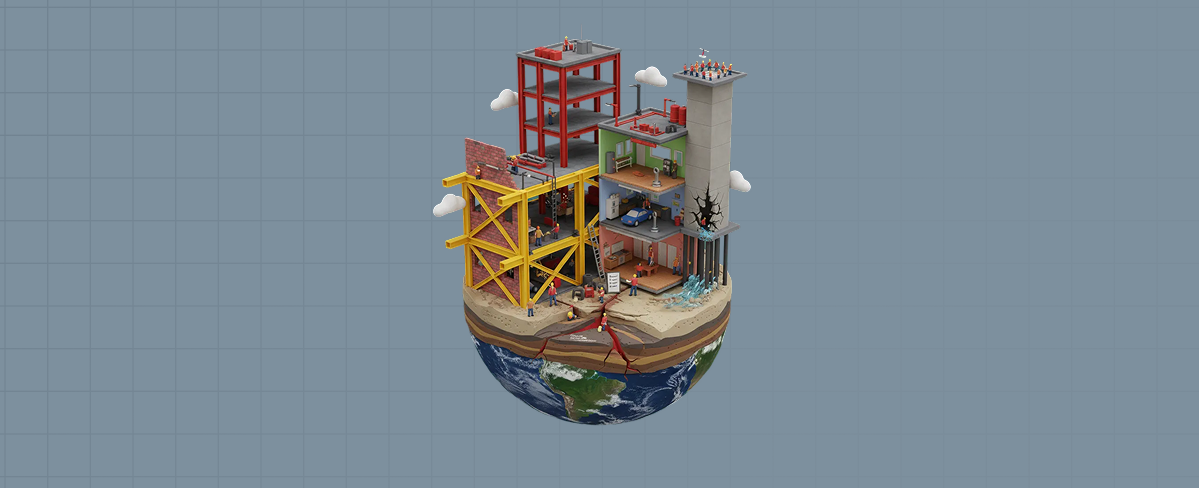
Navigating Oregon's Structural and Seismic Codes: An OSSC & ORSC Guide for Professionals
Core Structural & Seismic Requirements in Oregon
Due to its location within the Cascadia Subduction Zone, Oregon has some of the most stringent seismic design requirements in the United States. The Oregon Structural Specialty Code (OSSC) and Oregon Residential Specialty Code (ORSC) enforce robust provisions to ensure life safety and structural resilience during earthquakes, tsunamis, and other significant load events. Compliance requires a deep understanding of these state-amended codes and their referenced standards.
Key takeaways for architects, engineers, and builders include:
- High Seismic Risk: Most of Western Oregon is in Seismic Design Category (SDC) D, with some coastal areas designated as D, E, or F due to tsunami risk. This mandates detailed seismic design, specific material requirements, and rigorous inspection protocols.
- Existing Building Triggers: The Oregon Existing Building Code (OEBC) contains critical triggers that mandate seismic upgrades. A change of occupancy to a more hazardous use, especially in an unreinforced masonry (URM) building, almost always requires a full seismic retrofit to current OSSC standards.
- Special Inspections are Mandatory: For commercial projects in SDC D, OSSC Chapter 17 requires a comprehensive program of special inspections for critical structural elements, including welding, high-strength bolting, and concrete. This program must be submitted and approved during permitting.
- Tsunami Design is Codified: For projects within mapped tsunami inundation zones, the OSSC and referenced standard ASCE 7 impose specific requirements for flood-resistant design, robust foundations, potential breakaway walls, and, in some cases, vertical evacuation structures.
- Design Loads are Localized: Critical design parameters like ground snow load, wind speed, and site-specific seismic data are determined by the local Authority Having Jurisdiction (AHJ). Always verify these values with the local city or county building department before starting design.
| Topic | OSSC (Commercial) | ORSC (Residential) | Key Consideration |
|---|---|---|---|
| Governing Code | 2022 OSSC (based on 2021 IBC) | 2021 ORSC (based on 2018 IRC) | Use the correct code for the building's occupancy. |
| Seismic Design | Based on ASCE 7-16. Requires dynamic analysis for many structures in SDC D. | Prescriptive bracing methods or engineered design. Limits on prescriptive methods in high-seismic zones. | The entire state is seismically active; engineering is often required. |
| Retaining Walls | Permit & engineering required over 4 ft. height. 42" guardrail required for >30" drop. | Permit & engineering required over 4 ft. height. 36" guardrail required for >30" drop. | Height is measured from the bottom of the footing. |
| Existing Buildings | Governed by the 2023 Oregon Existing Building Code (OEBC). | Governed by ORSC Appendix J or OEBC. | Change of occupancy is a major trigger for structural upgrades. |
Why Oregon's Structural Codes Matter
Oregon’s position relative to the Cascadia Subduction Zone—a 600-mile fault capable of producing a magnitude 9.0+ earthquake—is the primary driver behind its stringent structural and seismic codes. The state has proactively amended the model IBC and IRC to create the OSSC and ORSC, codes tailored to address the specific geologic hazards faced by its communities. For design and construction professionals, this means that a standard approach used in a low-seismic region is often insufficient and non-compliant in Oregon.
Understanding these codes is critical for:
- Project Feasibility & Permitting: Early identification of seismic triggers, like those in the OEBC for existing buildings, can dramatically affect a project's scope, budget, and timeline. A successful permit application requires a thorough structural package that demonstrates compliance with OSSC seismic detailing, load paths, and special inspection requirements.
- Life Safety & Resilience: The ultimate goal of these codes is to prevent structural collapse and ensure occupant safety during a major seismic event. Proper application of the OSSC and ORSC is a professional and ethical obligation.
- Interdisciplinary Coordination: Structural requirements dictate architectural design (e.g., location of shear walls, size of moment frames), impact MEP systems (e.g., bracing for pipes and ducts, penetrations through structural members), and define the scope for geotechnical investigations.
Common misunderstandings include underestimating the requirements for nonstructural component bracing, misapplying importance factors in mixed-occupancy buildings, and failing to engage the local building department early to confirm site-specific design loads.
Our project in Bend involves a change of occupancy in an existing, unreinforced masonry building from Group B to a Group A-2 assembly space. What specific triggers in the Oregon Existing Building Code (OEBC) will mandate a full seismic retrofit to the current OSSC seismic design category, and what are the fire sprinkler and egress system upgrade requirements?
What can you ask? (Sample questions)
- What building code edition does my state currently enforce?
- How do state-specific amendments modify the base IBC?
- What structural design loads apply in my jurisdiction?
- What energy code requirements apply to my building type?
A change of occupancy from Group B (Business) to Group A-2 (Assembly) in an unreinforced masonry (URM) building is one of the most significant triggers for a mandatory seismic upgrade under the 2023 Oregon Existing Building Code (OEBC). This change requires the building's seismic force-resisting system to be evaluated and retrofitted to meet the requirements of the current Oregon Structural Specialty Code (OSSC) for new construction.
The primary trigger is found in OEBC Chapter 10, Change of Occupancy.
- Hazard Category Increase: OEBC Table 1002.1 classifies occupancies by their relative hazard. A change from Group B to Group A-2 is a change to a higher relative hazard category for seismic, fire, and egress.
- Seismic Upgrade Mandate: Per OEBC §1003.3, when a change of occupancy results in a building being assigned to a higher risk category (as defined in OSSC Table 1604.5), the building must conform to the seismic requirements of the OSSC for new construction. A Group A-2 with an occupant load of 300 or more is Risk Category III, while Group B is typically Risk Category II. This change in risk category is a direct trigger for a full seismic retrofit.
- Unreinforced Masonry (URM) Buildings: Even if the risk category did not change, OEBC §1003.3.1 specifically states that any URM building undergoing a change of occupancy must comply with the seismic requirements of the OSSC. This is an absolute trigger, reflecting the high danger URM buildings pose in an earthquake. The retrofit will need to address wall-to-diaphragm anchorage, in-plane and out-of-plane wall stability, and the creation of a complete lateral force-resisting system.
Fire Sprinkler and Egress Upgrades:
The change to a Group A-2 occupancy also triggers significant fire and life safety upgrades:
- Fire Sprinklers: Per OSSC §903.2.1.2, an automatic sprinkler system is required for Group A-2 occupancies where the fire area exceeds 5,000 square feet or the occupant load is 100 or more. Since the project is in Bend, the fire area occupant load for an A-2 use would likely exceed 100, mandating a new NFPA 13 sprinkler system. OEBC §1004 confirms that the building must meet the sprinkler requirements of the OSSC for the new occupancy.
- Egress Systems: OEBC §1005 requires that the means of egress in the area of the change of occupancy comply with OSSC Chapter 10 for the new use. This will require a complete analysis and potential overhaul of the egress system, including:
- Occupant Load: Calculating the new, higher occupant load based on OSSC Table 1004.5.
- Exit Capacity: Ensuring sufficient number and width of exits (OSSC §1006, §1021).
- Travel Distance: Verifying travel distances to exits meet the limits in OSSC Table 1017.2.
- Exit Signage & Emergency Lighting: Installing new systems compliant with OSSC §1013 and §1008.
In Bend, this project would require a comprehensive structural, architectural, and fire protection engineering analysis to bring the URM building into compliance with modern life safety standards.
What are the precise structural design requirements under the OSSC for a building located in Oregon's mapped tsunami inundation zone? Detail the requirements for flood-resistant construction, foundation design, breakaway walls, and vertical evacuation provisions.
The Oregon Structural Specialty Code (OSSC) directly addresses tsunami hazards by adopting and amending Chapter 6 of ASCE 7-16, Minimum Design Loads and Associated Criteria for Buildings and Other Structures. For a building in a mapped tsunami inundation zone, the design must go far beyond typical seismic and gravity load considerations.
The precise requirements are as follows:
1. Flood-Resistant Construction: The building must first comply with the flood load and flood-resistant construction requirements of OSSC Chapter 16, Section 1612, and ASCE 24, Flood Resistant Design and Construction. This includes elevating the lowest floor to or above the Design Flood Elevation (DFE), using flood-damage-resistant materials below the DFE, and ensuring utilities are protected from flooding. However, for tsunami zones, these are just the baseline requirements.
2. Tsunami Loads and Analysis: Per OSSC §1614 and ASCE 7-16 Chapter 6, a tsunami load analysis is required. The analysis must determine the Tsunami Design Zone (TDZ) based on site-specific inundation maps and run-up elevations provided by the Oregon Department of Geology and Mineral Industries (DOGAMI) or the AHJ. The design must account for:
- Hydrostatic and Hydrodynamic Loads: Forces from the pressure of standing and moving water.
- Impact Loads: Forces from water-borne debris (e.g., logs, vehicles) striking the structure, as specified in ASCE 7-16 Section 6.10.
- Scour Effects: The erosion of soil around foundations due to turbulent water flow, which must be accounted for in foundation design.
3. Foundation Design: Foundations in the TDZ must be designed to resist all tsunami loads and prevent failure due to scour.
- Deep Foundations: Piles or piers are often required to extend below the maximum predicted scour depth (ASCE 7-16 §6.12.3).
- Load Resistance: Foundations and their connections to the superstructure must be designed to transfer the immense hydrostatic, hydrodynamic, and debris impact forces into the ground.
4. Breakaway Walls: For elevated buildings, any walls below the Tsunami Design Flood Elevation (TDFE) that are not part of the main structural system must be designed as breakaway walls.
- Per ASCE 7-16 §6.11.3, these walls must be designed to fail under prescribed hydrodynamic and hydrostatic loads without transferring those damaging forces to the building's foundation and structural frame.
- The design must ensure that if the walls break away, the primary structure remains intact and supported.
5. Vertical Evacuation Provisions: For certain critical facilities, vertical evacuation may be required.
- OSSC §1614.3 requires that new Risk Category IV buildings (e.g., hospitals, fire stations) located in a Tsunami Design Zone be designed as Tsunami Vertical Evacuation Structures in accordance with ASCE 7-16.
- For new Risk Category III educational and assembly occupancies with occupant loads greater than 250, the code requires an assessment of whether a vertical evacuation structure is needed based on evacuation time. If evacuation to high ground is not feasible within the available time, a vertical evacuation refuge must be designed and constructed as part of the building.
What are the code-mandated special inspections for a new steel moment frame structure in Seismic Design Category D, as outlined in OSSC Chapter 17? Provide a checklist of required inspections.
In Seismic Design Category (SDC) D, a new steel moment frame structure requires a comprehensive program of special inspections as mandated by 2022 OSSC Chapter 17 and the referenced standards AISC 360 and AISC 341. The engineer of record must prepare a Statement of Special Inspections, which is submitted to and approved by the building official before a permit is issued.
Below is a checklist of the required special inspections for a typical steel moment frame system in SDC D.
Special Inspection Checklist: Steel Moment Frame (SDC D)
1. Material Verification & Fabrication:
- [ ] Material Traceability: Verify mill certificates for all structural steel, bolts, and weld filler metals match the approved plans and specifications (OSSC §1704.2.2).
- [ ] Fabricator Approval: Ensure the steel fabricator is approved and accredited as required by OSSC §1704.2.2.
- [ ] Shop Welding & Bolting: If applicable, perform inspections at the fabrication shop for welding and high-strength bolting.
2. High-Strength Bolting (OSSC §1705.2.1):
- [ ] Bolt Identification: Verify markings on bolts, nuts, and washers conform to ASTM standards.
- [ ] Pre-Installation Verification: Observe pre-installation verification testing of fastener assemblies as required by the Research Council on Structural Connections (RCSC) specification.
- [ ] Installation & Tightening Method: Continuously inspect snug-tightening and the application of the specified pretensioning method (e.g., turn-of-nut, calibrated wrench, direct tension indicator).
- [ ] Post-Installation Inspection: Perform routine observation and final verification of the tightened fastener assemblies.
3. Structural Welding (OSSC §1705.2.2):
- [ ] Welder Certification: Verify welder qualification records (WPS, PQR) are current and appropriate for the work being performed.
- [ ] Materials: Verify weld filler metal types and handling procedures.
- [ ] Pre-Weld Inspection: Inspect joint preparation, fit-up, and alignment before welding.
- [ ] Continuous Inspection: Observe welding operations to ensure compliance with the approved WPS.
- [ ] Post-Weld Visual Inspection: Visually inspect 100% of all welds for defects.
- [ ] Nondestructive Testing (NDT): This is critical for moment frames in SDC D.
- Demand Critical Welds: Per AISC 341, Chapter J, all Complete Joint Penetration (CJP) groove welds at moment frame connections require 100% ultrasonic testing (UT) or radiographic testing (RT).
- Other CJP Welds: Inspect other CJP welds as specified by the engineer.
- Partial Joint Penetration (PJP) & Fillet Welds: Inspect using magnetic particle testing (MT) as specified on the plans.
4. Concrete Construction (OSSC §1705.3):
- [ ] Reinforcing Steel: Inspect size, grade, placement, and clearances of rebar in foundations and slabs on deck.
- [ ] Concrete Mix Design: Verify approved mix design is being used.
- [ ] Sampling & Testing: Continuously inspect concrete placement and take samples for compressive strength testing (slump, air content, temperature, and casting of cylinders).
- [ ] Anchor Bolts: Inspect anchor bolt placement, size, and embedment depth before and during concrete placement.
5. Seismic Resistance Systems (OSSC §1705.12 & §1705.13):
- [ ] System Conformance: Verify that the designated seismic force-resisting system (the moment frame) is constructed in accordance with the approved documents. This is an overarching inspection.
- [ ] Connection Details: Pay special attention to the geometry, weld access holes, and detailing of the beam-to-column moment connections to ensure they match the prequalified connection details (e.g., per AISC 358) or tested proprietary connections specified by the engineer.
In a mixed-occupancy building, if an R-2 occupancy is over a B occupancy, does the OSSC require the entire building to be designed for the more restrictive R-2 seismic importance factor (Ie)?
Yes, the Oregon Structural Specialty Code (OSSC) requires the entire building to be designed for the more restrictive seismic importance factor. When a building contains multiple occupancies, the entire structure must be assigned the highest (most critical) Risk Category of any of the occupancies present.
Here is the code-based rationale:
Determine Risk Category: The process starts with OSSC Table 1604.5, which is based on ASCE 7 Table 1.5-1.
- Group B (Business): This is typically assigned to Risk Category II.
- Group R-2 (Residential): An R-2 occupancy with an occupant load greater than 250 is assigned to Risk Category III. Most apartment or condominium buildings will meet this threshold.
Assign Importance Factor: Based on the Risk Category, OSSC Table 1604.5 (or ASCE 7 Table 1.5-2) assigns the seismic importance factor (Ie).
- Risk Category II: Ie = 1.00
- Risk Category III: Ie = 1.25
Apply the Mixed-Occupancy Rule:ASCE 7-16 Section 1.5.3, "Multiple Risk Categories," which is adopted by the OSSC, states: "Where a building or other structure is assigned to a higher risk category for one hazard, that risk category shall be applicable to the design for all hazards." More explicitly for different occupancies, it states that if a structure contains occupancies that fall into different risk categories, it must be assigned the highest applicable risk category.
Therefore, because the Group R-2 occupancy dictates a more critical Risk Category III, the entire mixed-use building—including the Group B portion and the entire lateral force-resisting system—must be designed using the corresponding seismic importance factor, Ie = 1.25. This factor increases the design seismic base shear, resulting in a more robust structure.
Under the ORSC, what is the maximum permitted notch size and location for a 2x10 floor joist, and are there different rules for engineered lumber?
Under the 2021 Oregon Residential Specialty Code (ORSC), the rules for notching solid sawn lumber like a 2x10 floor joist are very specific and are found in ORSC Section R502.8.1.
For a 2x10 solid sawn lumber floor joist:
- Notch Depth: The maximum depth of a notch at the end of the joist (where it rests on a support) cannot exceed one-fourth the joist depth.
- For a 2x10 (actual depth ~9.25 inches), the maximum end notch depth is 9.25" / 4 = 2.31 inches.
- Notch Location: Notches are not permitted in the middle third of the joist span. They are only allowed in the outer thirds of the span.
- Notch Depth (Away from Support): The maximum depth of a notch located in the outer thirds of the span (but not at the very end) cannot exceed one-sixth the joist depth.
- For a 2x10, the maximum notch depth is 9.25" / 6 = 1.54 inches.
- Notch Length: The length of a notch cannot exceed one-third of the joist depth.
Rules for Engineered Lumber (I-Joists, LVL, PSL, etc.):
Yes, the rules are completely different and much more restrictive for engineered lumber. The prescriptive rules in ORSC R502.8.1 do not apply to engineered wood products.
- Manufacturer's Instructions are Code:ORSC Section R502.1.7 states that engineered wood products must be used in accordance with the manufacturer's recommendations. These recommendations are considered part of the code-approved installation.
- General Rules for I-Joists:
- Flanges:Never cut, notch, or drill the top or bottom flanges of an I-joist, except for small "knockouts" provided by the manufacturer. Doing so destroys its structural capacity.
- Web: Holes can be drilled in the web of an I-joist, but only according to the manufacturer's specific charts that dictate the maximum size and minimum spacing of holes based on the joist's depth and location along the span.
- General Rules for LVL/PSL Beams: Laminated Veneer Lumber (LVL) and Parallel Strand Lumber (PSL) also have specific limitations on notching and drilling. Notching is generally discouraged, especially on the tension side (bottom) of the member. Always consult the manufacturer's technical guide before modifying any engineered lumber.
Cutting or notching engineered lumber without following the manufacturer's guide is a serious structural violation that can lead to failure.
For a retaining wall over 4 feet in height, does the OSSC or ORSC require a structural permit and engineered drawings, and what are the guardrail requirements at the top?
Yes, for a retaining wall over 4 feet in height, both the Oregon Structural Specialty Code (OSSC) and the Oregon Residential Specialty Code (ORSC) require a structural permit and, consequently, engineered drawings.
Permit and Engineering Requirements:
- Permit Trigger: The requirement is based on exemptions listed in the codes.
- OSSC §105.2 (Work Exempt from Permit): Item 2 exempts "retaining walls that are not over 4 feet (1219 mm) in height measured from the bottom of the footing to the top of the wall, unless supporting a surcharge or impounding Class I, II or IIIA liquids."
- ORSC §R105.2 (Work Exempt from Permit): This section has an identical exemption for residential projects.
- Engineered Drawings: Once a permit is required, the building official needs to see documentation showing the structure is designed to safely resist all imposed loads, including lateral earth pressure, surcharge loads, and hydrostatic pressure. For a retaining wall over 4 feet, these forces are substantial. OSSC §1601.1 and ORSC §R301.1 require that buildings and structures be designed and constructed in accordance with strength, serviceability, and stability requirements. A prescriptive design for such a wall does not exist in the code, therefore, plans prepared and stamped by an Oregon-licensed professional engineer are required to be submitted for permit.
Guardrail Requirements:
The requirement for a guardrail at the top of a retaining wall is based on the height of the fall hazard it creates.
- Guardrail Trigger: A guardrail is required at open-sided walking surfaces where the drop to the surface below is more than 30 inches.
- OSSC §1015.2: "Guards shall be located along open-sided walking surfaces, including mezzanines, equipment platforms, aisles, stairs, ramps and landings, that are located more than 30 inches (762 mm) measured vertically to the floor or grade below."
- ORSC §R312.1.1: Has the same 30-inch trigger for residential projects.
- Guardrail Height: If a guard is required, the height is different for commercial and residential projects.
- OSSC §1015.3: The top of the guardrail must be a minimum of 42 inches high.
- ORSC §R312.1.2: The top of the guardrail must be a minimum of 36 inches high.
Therefore, if a retaining wall creates a walking surface with a drop-off greater than 30 inches to the lower grade, a guardrail is mandatory.
Do I need an engineer for a simple home addition in Oregon?
Whether you need an engineer for a simple home addition in Oregon depends on whether the design falls within the prescriptive limits of the Oregon Residential Specialty Code (ORSC). For many straightforward additions, an engineer may not be required, but one is often needed if the project involves any complexity.
You generally do not need an engineer if your addition strictly adheres to the following:
- Conventional Light-Frame Construction: The entire design uses standard dimensional lumber and follows the prescriptive methods outlined in the ORSC.
- Standard Spans: All joist, rafter, and header spans are within the limits provided in the ORSC span tables for the species and grade of lumber being used.
- Prescriptive Bracing: The design uses one of the prescriptive wall bracing methods described in ORSC Chapter R6, and your project is not in a location with wind speeds or seismic forces that exceed the limits of those methods.
- Standard Foundations: The addition uses a standard continuous concrete foundation on soils with adequate presumed bearing capacity, as described in ORSC Chapter R4.
You will likely need an engineer if your addition includes any of the following:
- Exceeds Prescriptive Limits: The design includes long spans for beams, joists, or rafters that are not covered in the ORSC tables.
- Large Openings: You are creating large openings in walls (e.g., for large sliding doors or window walls) that require engineered headers or moment frames.
- Complex Roof or Floor Systems: The design involves complex roof geometry, trusses not covered by a manufacturer's specification, or unconventional floor framing.
- Non-Prescriptive Materials: The design incorporates steel beams, engineered lumber (LVL, PSL) used in a non-standard way, concrete moment frames, or other systems not covered prescriptively.
- Poor Site Conditions: Your property has poor soil conditions (requiring a geotechnical report and engineered foundation), is on a steep slope, or is in a mapped landslide or flood hazard area.
- High-Hazard Zones: The project is located in an area with very high snow loads, high wind speeds, or high seismic forces that exceed the limitations of the prescriptive ORSC provisions. In these cases, ORSC R301.2 will require an engineered design.
Ultimately, the local building official has the final say and may require engineered plans if they deem the project to be outside the scope of conventional construction (ORSC §R106.1).
Is it true that Oregon has special earthquake building codes?
Yes, it is true. While Oregon does not have a completely separate, standalone earthquake code, it adopts the model International Building Code (IBC) and International Residential Code (IRC) and modifies them with state-specific amendments to create the Oregon Structural Specialty Code (OSSC) and Oregon Residential Specialty Code (ORSC). These amendments, combined with the state's geology, result in special and highly enforced earthquake building requirements.
The key factors that make Oregon's codes "special" for earthquakes are:
- High Seismic Hazard: A significant portion of the state, especially the densely populated Willamette Valley and the entire coast, lies within the Cascadia Subduction Zone. This places these areas in high Seismic Design Categories (SDC D is common), which automatically triggers the most stringent design and detailing requirements in the model codes.
- State Amendments: The Oregon Building Codes Division (BCD) develops amendments that sometimes exceed the base requirements of the model codes to address specific local risks.
- Tsunami Provisions: The OSSC includes specific, mandatory design requirements for structures built in mapped tsunami inundation zones, which are a direct result of subduction zone earthquakes. This is a specialized provision not found in the base IBC.
- Existing Building Code (OEBC): Oregon has a robust Existing Building Code that contains strict triggers for seismic retrofits of older, vulnerable buildings (like unreinforced masonry) when they undergo renovation or a change of use.
So, while Oregon uses the national model codes as a foundation, the combination of its high seismic risk and state-specific amendments means that earthquake-resistant design is a primary and non-negotiable focus of its building regulatory system.
How do I find out the snow load requirements for my property in Oregon?
The method for determining the official ground snow load for a property in Oregon is to obtain it directly from the local building department (the city or county with jurisdiction over your property). The OSSC and ORSC do not provide a single statewide map; they delegate this authority to the local level.
Follow these steps to find the correct snow load for your design:
- Identify the Authority Having Jurisdiction (AHJ): Determine if your property is within the city limits or in an unincorporated county area. This will tell you which building department to contact.
- Check the Local Building Department Website: Many Oregon counties and cities publish snow load maps, tables, or interactive GIS tools on their websites. Search for terms like "snow load," "structural design criteria," or "building codes."
- Example: Deschutes County provides a snow load map that correlates loads with elevation zones.
- Example: Clackamas County has specific snow load requirements based on location and elevation.
- Call the Building Department: If you cannot find the information online, call the building department's main line or plan review desk. Be prepared to provide the property address or tax lot number. The staff can tell you the required ground snow load (in pounds per square foot, or psf) for that specific location.
- Consult a Professional Engineer: For complex sites, particularly in mountainous terrain with significant elevation changes or areas known for drifting, a site-specific case study might be required by the building official per OSSC §1608.2. An engineer will use the methodology in ASCE 7 to determine a more precise snow load based on climate data and local conditions.
Important Note: Do not use national online hazard tools as your final design value. While helpful for preliminary estimates, OSSC §1608.2 and ORSC §R301.2.3 are clear that the ground snow load shall be that which is established by the local building official. Using the wrong load can lead to permit rejection or structural failure.
Additional Code Considerations & Best Practices
Common Mistakes and Misinterpretations
- Ignoring Nonstructural Bracing: In SDC D, OSSC Chapter 16 and ASCE 7 Chapter 13 require that nonstructural components (like HVAC equipment, piping, ductwork, suspended ceilings, and partitions) be seismically braced. This is a frequently overlooked requirement that is critical for building function and safety after an earthquake.
- Incorrect Soil Classification: The seismic base shear calculation is highly dependent on the Site Class (A-F). Using the default Site Class D when better soils exist can lead to an over-designed, more expensive structure. Conversely, failing to perform a geotechnical investigation on a site with poor soils can lead to an unsafe, under-designed building. A geotechnical report is almost always a worthwhile investment in Oregon.
- Misunderstanding Prescriptive Bracing Limits: The prescriptive wall bracing methods in ORSC Chapter R6 have strict limitations on building size, configuration, and the seismic/wind loads they can resist. In many parts of Western Oregon, the seismic forces exceed these limits, mandating an engineered design.
- Forgetting Diaphragm Detailing: Proper load path requires that diaphragms (floors and roofs) and their connections to shear walls or frames be meticulously detailed to transfer lateral forces. This includes specifying nailing patterns, collector elements, and chord splices.
Coordination for Structural Design in Oregon
Successful projects require tight coordination between the structural engineer and other disciplines from the very beginning of the design process.
- Architectural: The architect and structural engineer must work together to locate lateral force-resisting elements (shear walls, braced frames, moment frames). These elements have a significant impact on floor plans, window openings, and building aesthetics. Changes to these elements late in the design can trigger a complete structural redesign.
- MEP (Mechanical, Electrical, Plumbing): Large ducts, conduits, and pipes cannot indiscriminately penetrate structural members. Coordination is needed to locate penetrations in areas of low stress, provide required reinforcement around openings, and ensure that MEP equipment bracing is incorporated into the structural drawings and specifications.
- Geotechnical: The geotechnical engineer provides the foundational design parameters, including soil bearing capacity, Site Class for seismic calculations, and recommendations for foundation type. The structural design cannot begin without this critical information.
Navigating Permitting and Plan Review
Oregon plan reviewers, particularly in high-seismic areas, conduct thorough structural reviews. To ensure a smooth process:
- Submit a Complete Package: The structural drawing set should be complete, including a cover sheet with design loads, a Statement of Special Inspections, foundation plans, framing plans, structural details, and all necessary calculations.
- Clearly Show the Load Path: Drawings must explicitly show how lateral forces (seismic and wind) are collected in the diaphragms, transferred through collectors to the lateral force-resisting system, and carried down to the foundation.
- Reference OSSC Amendments: Be aware of and reference any Oregon-specific amendments in your calculations and drawings. This shows the plan reviewer that you are using the correct code.
Frequently Asked Questions (FAQ)
What is the current version of the Oregon building code? As of late 2023, the primary codes in effect are the 2022 Oregon Structural Specialty Code (OSSC), the 2023 Oregon Existing Building Code (OEBC), and the 2021 Oregon Residential Specialty Code (ORSC). Always verify the effective date of the latest code cycle with the Oregon Building Codes Division (BCD).
What's the difference between the OSSC and the ORSC? The OSSC is based on the International Building Code (IBC) and applies to commercial buildings, multi-family housing with more than two units, and mixed-use buildings. The ORSC is based on the International Residential Code (IRC) and applies to detached one- and two-family dwellings and their accessory structures.
Do I need a geotechnical report for my project in Oregon? While not universally required by code for every project, a geotechnical (soils) report is strongly recommended for most new construction in Oregon and is often required by the local building official. It is essential for determining the seismic Site Class and providing foundation design recommendations, which are critical in Oregon's complex geologic environment.
What is the Seismic Design Category for Portland, OR? Most of Portland is in Seismic Design Category (SDC) D. Some areas with poor soil conditions near rivers could be classified as SDC E or F, which would require a site-specific geotechnical investigation.
Does Oregon have a specific code for mass timber buildings? Yes. The 2022 OSSC incorporates the tall mass timber provisions from the 2021 IBC. It allows for the construction of mass timber buildings of Type IV-A, IV-B, and IV-C construction up to 18 stories, with specific requirements for fire-resistance, structural design, and inspections.
Can I use the prescriptive bracing methods in the ORSC anywhere in the state? No. The applicability of prescriptive wall bracing methods in ORSC Section R602 is limited by the Seismic Design Category. In areas of high seismicity (like much of SDC D), the prescriptive methods may not be sufficient, and an engineered design for the lateral system will be required by the local jurisdiction.
Are there special requirements for building on a steep slope in Oregon? Yes. Both the OSSC and ORSC have requirements for foundation design on or near slopes. Building officials will almost always require a geotechnical report and an engineered foundation design for any construction on a site with a slope steeper than 3 horizontal to 1 vertical (3:1).
Are ADUs subject to the same structural rules as the main house? Yes. An Accessory Dwelling Unit (ADU), whether attached or detached, must be designed and constructed to meet all applicable structural, seismic, fire, and life safety requirements of the Oregon Residential Specialty Code (ORSC).
Where can I find the official Oregon building codes online? The Oregon Building Codes Division (BCD) provides information and links to view the state specialty codes online. The International Code Council (ICC) also offers free online access to the Oregon codes on their digital codes platform.
How often are the Oregon building codes updated? Oregon typically updates its specialty codes on a three-year cycle, following the release schedule of the International Codes by the ICC. However, the adoption date and effective date for each specialty code (structural, residential, mechanical, etc.) can vary.
More Oregon Building Code Guides
- Energy Code (IECC)Oregon Energy Code (OEESC) Compliance: From Blower Door Tests to the Reach Code
- Residential Code (IRC)Key ORSC Requirements for Decks, Stairs, and Residential Construction in Oregon
- Wildfire / WUI CodesOregon Wildland-Urban Interface (WUI) Code: Construction Requirements for Wildfire Zones
- MEP CodesOregon MEP Code Guide: Key Requirements from the OESC, OMSC, and OPSC
- Fire & Life SafetyOSSC Egress and OFC Fire Department Access Requirements in Oregon
MeltPlan
A curated stream of preconstruction intelligence, estimating innovation, takeoff breakthroughs, workflow advancements, and expert perspectives—powered by the AI and technology shaping the future of construction.
Visit SiteDon't miss what's shaping AEC
The latest on preconstruction, codes, AEC news & trends — so you're always in the know.
.png?alt=media&token=c5b8a6d7-4cf4-45ef-9ec4-71bf5917b07a)
.png?alt=media&token=8493acdd-b645-4d61-a719-dc081287610c)