Structural & Seismic Design in Washington: IBC Amendments, Mass Timber & Special Inspections
The Washington State Building Code (WSBC) presents a unique and robust regulatory landscape for design and construction professionals. Driven by the state's sig..
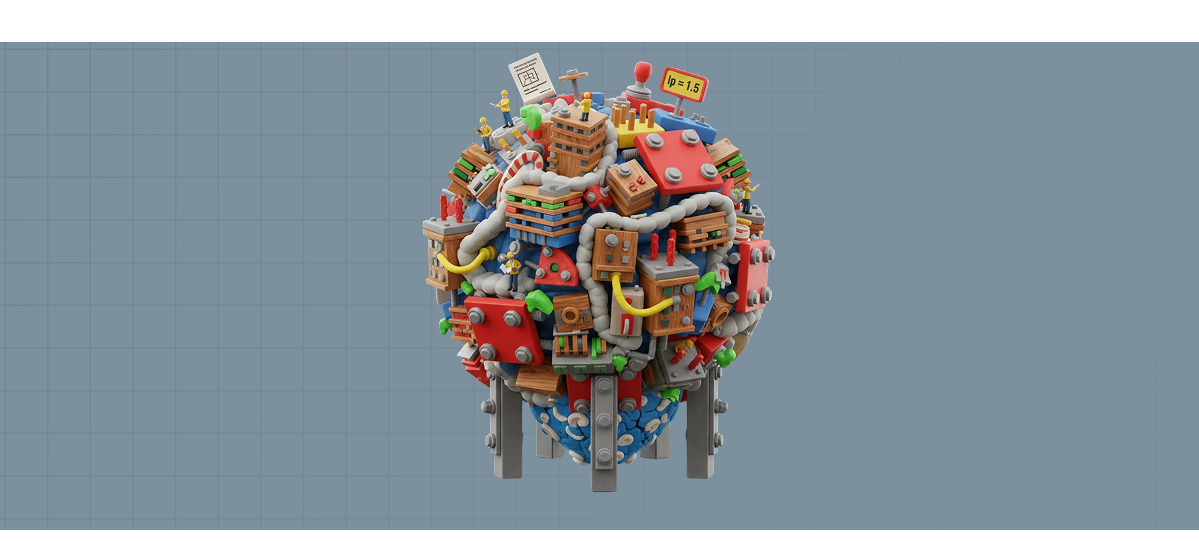
Navigating Washington's Structural Code: A Guide to Seismic Design, Mass Timber, and Special Inspections Under the 2021 WSBC
The Washington State Building Code (WSBC) presents a unique and robust regulatory landscape for design and construction professionals. Driven by the state's significant seismic risks and its pioneering role in mass timber construction, the WSBC introduces critical amendments to the model International Building Code (IBC). For architects, structural engineers, and contractors, mastering these state-specific requirements is not just about compliance—it's about ensuring life safety, project viability, and navigating the permitting process efficiently.
Effective March 15, 2024, Washington adopted the 2021 suite of International Codes, including the IBC and International Residential Code (IRC), along with state-specific amendments. Understanding these changes is crucial for any project in the state.
Here is a summary of the key structural and seismic provisions you need to know:
- Enhanced Seismic Analysis: For projects in Seismic Design Category (SDC) D2, particularly west of the Cascade Mountains, Washington's amendments mandate a more rigorous analysis of liquefaction susceptibility than the base IBC requires.
- Mandatory Geotechnical Reports: Unlike the base IRC, the Washington Residential Code (WRC) effectively requires a site-specific geotechnical investigation for nearly all new single-family home foundations, removing common exceptions.
- Robust Mass Timber Inspections: As a leader in mass timber, Washington has stringent special inspection protocols for Type IV construction. These cover everything from the structural integrity of Cross-Laminated Timber (CLT) connections to the precise installation of fire-resistive encapsulation.
- Strict Anchor Inspections: For non-structural components in high seismic areas (SDC D), continuous special inspection is often required for post-installed anchors in concrete, particularly for life-safety systems.
- Local Amendments Add Complexity: Major cities like Seattle often impose stricter requirements. A prime example is Seattle's detailed and prescriptive rules for the seismic strapping and flexible connections on water heaters, which go beyond state minimums.
Context + Why This Topic Matters
Washington State sits atop the Cascadia Subduction Zone, a fault capable of producing a magnitude 9.0+ earthquake. This geological reality is the primary driver behind the state's stringent seismic design requirements. The amendments found in the Washington Administrative Code (WAC) are not arbitrary; they are carefully crafted to mitigate risk and improve building performance during a major seismic event.
For design and construction professionals, these codes intersect at critical points in a project's lifecycle:
- Early Feasibility: The requirement for geotechnical reports can impact land acquisition decisions and initial site planning for both commercial and residential projects.
- Structural Design: The engineer of record must apply Washington's modifications to IBC Chapters 16 (Structural Design) and 18 (Soils and Foundations), which directly influences the design of lateral force-resisting systems and foundations.
- Architectural Detailing: Architects must accommodate requirements for non-structural component bracing and, in mass timber projects, detail the encapsulation layers necessary to achieve fire-resistance ratings under Type IV-B or IV-A construction.
- Permitting & Plan Review: A project's Statement of Special Inspections must accurately reflect the heightened requirements of WAC 51-50, Chapter 17. Failure to do so will result in plan review comments and project delays.
- Construction & Inspection: Special inspectors play a crucial role on-site, verifying that everything from CLT fastener schedules to the installation of post-installed anchors is performed exactly as specified in the approved construction documents.
A common pitfall is assuming the base IBC is sufficient for design. In Washington, the WAC amendments are not suggestions—they are law. A deep understanding of these differences is essential for delivering safe, compliant, and successful projects.
What are the key differences between the base 2021 IBC seismic design provisions and the Washington State amendments for a project in Seismic Design Category D2? Specifically, how do the state amendments modify requirements for liquefaction analysis, foundation design, and non-structural component bracing?
The Washington State Building Code (WSBC) introduces significant, safety-focused amendments to the 2021 IBC's seismic provisions, particularly for projects in high-seismic areas like SDC D2. These modifications primarily target soil stability, foundation integrity, and the performance of non-structural systems during an earthquake.
The key differences are concentrated in amendments to IBC Chapters 16, 17, and 18, found in WAC 51-50.
Deeper Explanation
1. Liquefaction Analysis (WAC 51-50-1803)
Washington State amends IBC §1803.5.12 to make liquefaction analysis more broadly required.
- Base IBC Requirement: The IBC allows for an exception to liquefaction analysis for certain structures if the effects of liquefaction, lateral spreading, and seismic settlement are determined to not be a life-safety hazard.
- Washington State Amendment: The WSBC modifies this section for sites located west of the Cascade Mountains crest. For these sites in SDC C, D, E, or F, an evaluation of liquefaction susceptibility is mandatory. The exceptions present in the model IBC are largely removed, reflecting the heightened risk in the Puget Sound region and coastal areas. The geotechnical report must assess liquefaction potential and propose mitigation strategies if necessary.
2. Foundation Design (WAC 51-50-1809 & 1810)
Washington's amendments add robustness to foundation systems to better resist seismic forces.
- Foundation Ties for SDC D2: While ASCE 7-16 §12.13.8 already has requirements for foundation ties, Washington's high seismicity makes their proper implementation critical. The structural engineer must ensure that foundation elements are interconnected to move as a single unit.
- Seismic Settlement: The geotechnical report, now mandatory, must address the potential for seismic settlement. This directly impacts the structural engineer's design of the foundation, potentially requiring ground improvement, deep foundations, or a more robust mat slab.
3. Non-Structural Component Bracing (ASCE 7-16 Chapter 13)
The requirements for non-structural components (architectural, mechanical, and electrical) are governed by ASCE 7-16 Chapter 13, which is referenced by the IBC. While Washington does not heavily amend this chapter directly, the state's geography makes its provisions critically important.
- High Seismic Importance: Most of Western Washington is classified as SDC D. This automatically triggers the most stringent bracing requirements in ASCE 7-16 for components like ceilings, partitions, piping, ductwork, and electrical equipment.
- Life-Safety Components (Ip = 1.5): Components designated with an importance factor (Ip) of 1.5, such as egress lighting, fire sprinkler systems, and essential electrical equipment, require robust seismic bracing designed and detailed by a registered design professional.
- Enforcement: Local jurisdictions, particularly the City of Seattle, are highly focused on non-structural bracing during plan review and inspections. They often provide checklists and supplementary guidelines to ensure compliance with ASCE 7-16 Chapter 13.
For a new mass timber project pursuing a Type IV-B construction classification, what are the Washington-adopted special inspection requirements for cross-laminated timber (CLT) panel-to-panel connections, adhesive applications, and encapsulation verification for fire-resistance ratings?
What can you ask? (Sample questions)
- How do local code amendments modify the base IBC requirements?
- What triggers the need for a building permit?
- What plan review documents are typically required?
- How do jurisdictional amendments affect fire and structural codes?
For a Type IV-B mass timber project, the Washington State Building Code requires a comprehensive program of special inspections to ensure structural integrity and life safety. These requirements are based on IBC 2021 Chapter 17 and are amplified by Washington-specific amendments in WAC 51-50-1700. The design engineer must list these inspections in the project's Statement of Special Inspections.
Deeper Explanation
1. Cross-Laminated Timber (CLT) Panel-to-Panel Connections (IBC §1705.5)
Special inspection is mandatory for the fabrication and erection of mass timber elements. For field-installed connections, this is critical.
- Inspection Type: This typically falls under "periodic" special inspection, but the structural engineer can specify "continuous" inspection for novel or highly critical connections.
- Items to Verify: The special inspector must verify compliance with the approved construction documents for:
- Fasteners: Correct type, grade, diameter, and length of self-tapping screws, dowels, or other connectors.
- Spacing and Geometry: Correct fastener spacing, edge distances, and end distances.
- Connection Type: Proper installation of proprietary connectors, splines, or half-lap joints used for diaphragm connections.
- Bearing: Verification of panel bearing on supporting elements.
2. Adhesive Applications (IBC §1705.4)
If structural adhesives are used on-site to bond wood members (e.g., in glued-laminated timber repairs or certain connections), continuous special inspection is required.
- Items to Verify: The inspector must confirm:
- Surface Preparation: Wood surfaces are clean, dry, and prepared according to the adhesive manufacturer’s instructions.
- Mixing and Application: Adhesives are mixed correctly and applied at the proper temperature and humidity.
- Curing: Appropriate clamping pressure and curing time are maintained.
- Applicator Certification: Verification that installers are certified if required by the manufacturer or construction documents.
3. Encapsulation Verification for Fire-Resistance (IBC §703.5 & §1704.2.5)
In Type IV-B construction, mass timber elements are protected ("encapsulated") by non-combustible materials like gypsum wallboard to achieve the required fire-resistance rating. Verifying this encapsulation is a crucial life-safety inspection.
- Inspection Type: This is a special inspection for fire-resistant construction.
- Items to Verify: The inspector must confirm that the installation matches the specified and tested fire-resistance-rated assembly (e.g., a specific UL design number). This includes:
- Material: Correct type and thickness of gypsum board (e.g., Type X or Type C).
- Layers: The correct number of layers is installed.
- Fasteners: Correct type, length, and spacing of fasteners used to attach the gypsum board.
- Joints and Penetrations: All joints are properly staggered and finished, and all penetrations are protected with a listed firestop system appropriate for mass timber construction.
What is the threshold in the Washington Building Code for requiring special inspections on post-installed anchors in concrete for non-structural components like mechanical equipment stands in Seismic Design Category D?
In Seismic Design Category D, the Washington Building Code requires continuous special inspection for the installation of post-installed mechanical and adhesive anchors in hardened concrete when those anchors resist seismic loads for non-structural components designated with an importance factor (Ip) of 1.5. For components with an Ip of 1.0, periodic special inspection is the default, unless specific conditions apply.
This requirement is dictated by IBC 2021 §1705.3.3 and Table 1705.3, which reference the stringent quality control provisions of ACI 318-19, Chapter 17.
Deeper Explanation
The threshold for special inspections on post-installed anchors is determined by a combination of factors:
- Seismic Design Category (SDC): SDC D is a high-seismic region, which automatically increases inspection requirements.
- Component Importance Factor (Ip): As defined in ASCE 7-16 §13.1.3:
- Ip = 1.5: This applies to life-safety components, such as fire sprinkler systems, major egress path lighting, smoke control systems, and any equipment containing hazardous materials. Anchors for these components in SDC D require continuous special inspection. This means the inspector must be on-site observing the work throughout the entire anchor installation process.
- Ip = 1.0: This applies to most standard non-structural components, including typical mechanical equipment stands, ductwork, and electrical conduit. In SDC D, anchors for these components require periodic special inspection by default.
- Type of Loading: A critical exception exists. If an anchor supporting a component with Ip = 1.0 is subject to "sustained tension loads" (e.g., hanging equipment), the inspection level may be elevated to continuous. This is determined by the engineer of record.
- Engineer's Specification: The registered design professional can always specify a higher level of inspection in the Statement of Special Inspections if they deem it necessary for the project's performance.
| Component Type (in SDC D) | Importance Factor (Ip) | Required Special Inspection Level | Code Reference |
|---|---|---|---|
| Fire Sprinkler Piping Supports | 1.5 | Continuous | IBC Table 1705.3 |
| Egress Stair Pressurization Fan | 1.5 | Continuous | IBC Table 1705.3 |
| Standard Rooftop HVAC Unit Stand | 1.0 | Periodic | IBC Table 1705.3 |
| Suspended Ductwork (non-life-safety) | 1.0 | Periodic | IBC Table 1705.3 |
When does the Washington State code require a geotechnical report for a standard single-family home foundation design, and are there prescriptive footing sizes that can be used without one in specific soil conditions?
The Washington Residential Code (WRC) effectively requires a geotechnical (soils) report for all new single-family home foundations. While the model IRC provides exceptions, Washington State amendments have removed them, making a site-specific investigation the default requirement.
Prescriptive footing sizes from the WRC tables can only be used if supported by the recommendations in a geotechnical report or if the local building official explicitly waives the report requirement, which is rare and typically only occurs in areas with well-documented, stable soil conditions.
Deeper Explanation
This requirement stems from Washington's amendment to the model IRC.
- Model IRC R401.2: The base code allows foundations to be designed using the presumptive load-bearing values provided in Table R403.1(1) without a geotechnical report.
- Washington Amendment (WAC 51-51-0401): The state deletes this provision. WRC R401.4 (Soil investigation report) is amended to state that a written report of the investigation shall be submitted to the building official. This report must include recommendations for foundation type and design criteria.
This change effectively mandates a geotechnical investigation for several reasons:
- Variable Geology: Washington has highly variable soil conditions, from soft alluvial deposits in river valleys to dense glacial till in the Puget Sound lowlands. Prescriptive values cannot account for this variability.
- Seismic Hazards: A geotechnical report is necessary to identify seismic hazards such as liquefaction potential, slope instability, and fault proximity.
- Foundation Performance: The report provides the structural engineer with the specific soil bearing capacity, lateral resistance values, and settlement estimates needed to properly design a safe and durable foundation.
In practice, a design professional should assume a geotechnical report is required for any new home construction in Washington State and budget for it accordingly in the project's soft costs.
How does the City of Seattle's building code modify the state's requirements for water heater seismic strapping and flexible connectors?
The City of Seattle amends the state-adopted plumbing code with significantly more prescriptive and stringent requirements for the seismic restraint of water heaters. While the state code requires seismic bracing, the Seattle Plumbing Code (SMC Title 22.500) provides explicit, non-negotiable details for how it must be accomplished.
These rules are designed to prevent water heaters from tipping over during an earthquake, which can rupture gas and water lines, posing a significant fire and water damage risk.
Deeper Explanation
The primary differences between the state minimum and Seattle's requirements are detail and enforcement.
Washington State Requirement (Uniform Plumbing Code):
- The UPC, as adopted by Washington, requires water heaters to be "anchored or strapped to resist horizontal displacement due to earthquake motion" (UPC §507.2). It also generally requires flexible connectors. The code's language is performance-based, leaving the exact method to the installer or designer.
City of Seattle Requirements (SMC 22.500, amending UPC §507.2):
Seattle's amendments are highly prescriptive and leave no room for interpretation. Key mandates include:
- Two Straps: All tank-type water heaters must be secured with at least two straps. One strap must be in the upper one-third of the tank and the other in the lower one-third. The lower strap must be at least 4 inches above the controls.
- Strap Material: Straps must be at least 1-1/2 inch wide, 22-gauge, hot-dipped galvanized metal or an approved, listed commercial strap kit.
- Blocking: 2x4 or larger wood blocking must be installed between the wall studs to provide a solid attachment point for the straps.
- Anchorage: Straps must be anchored to the blocking with 1/4" x 3" lag screws with washers.
- Flexible Connectors: The use of flexible connectors for water (hot and cold), gas, and temperature/pressure relief lines is mandatory. These connectors must be of an approved type and long enough to allow for movement without failure.
- Clearance: The back of the water heater must be no more than 2 inches from the wall.
These detailed requirements are a direct response to lessons learned from past earthquakes and are rigorously enforced by Seattle's plumbing inspectors.
Additional Supporting Sections
Coordination Between Disciplines is Key
A successful structural design in Washington requires seamless coordination between multiple disciplines, orchestrated by the architect and engineer of record. The Statement of Special Inspections is the central document that outlines this coordinated effort.
- Geotechnical Engineer: Provides the foundational report detailing soil bearing capacity, liquefaction risk, and seismic site class. This is the first critical input.
- Structural Engineer: Uses the geotechnical report to design the foundation and the building's lateral force-resisting system. They create the Statement of Special Inspections, defining exactly what must be tested and verified during construction.
- Architect: Integrates the structural system into the overall design. They are responsible for detailing non-structural elements, such as ceiling systems, partitions, and exterior cladding, to accommodate seismic drift. For mass timber, they detail the fire-resistive encapsulation.
- MEP Engineer: Designs the bracing for mechanical, electrical, and plumbing systems per ASCE 7-16 Chapter 13. This includes ductwork, piping, conduit, and equipment stands.
- Special Inspector: An independent third party hired by the owner, who acts as the "eyes and ears" of the building official and design team on-site. They verify that the work is performed according to the approved plans and specifications.
Common Mistakes and Misinterpretations
- Ignoring Local Amendments: Assuming the WSBC is the final word. Cities like Seattle, Bellevue, and Tacoma have their own amendments that can add another layer of requirements. Always check with the local Authority Having Jurisdiction (AHJ).
- Underestimating Non-Structural Bracing: Treating non-structural bracing as an afterthought. In a seismic event, falling light fixtures, ceilings, and ductwork are a major life-safety hazard. Plan review in major Washington jurisdictions heavily scrutinizes these details.
- Incorrectly Specifying Special Inspections: Submitting an incomplete or generic Statement of Special Inspections. This document must be project-specific and reflect all Washington amendments, including those for mass timber or post-installed anchors.
- Relying on Prescriptive IRC Solutions: Attempting to use prescriptive footing sizes or wall bracing methods from the IRC without engineering or a geotechnical report will lead to rejection by the plan reviewer.
Frequently Asked Questions (FAQ)
What is the current building code in Washington State? As of March 15, 2024, Washington State uses the 2021 International Building Code (IBC), 2021 International Residential Code (IRC), and other 2021 I-Codes, all with state-specific amendments.
Where can I find the Washington State amendments to the IBC? The amendments are codified in the Washington Administrative Code (WAC). The building code amendments are in WAC Title 51-50, and the residential code amendments are in WAC Title 51-51. They are available online through the Washington State Building Code Council (SBCC) website.
Is a professional engineer's stamp required for all structural plans in Washington? For buildings designed under the IBC, a Washington-licensed structural engineer's stamp is required for the structural drawings. For single-family homes under the WRC, engineered designs are required whenever the project falls outside the code's narrow prescriptive limits, which is common due to Washington's seismic and geological conditions.
How do I determine my project's Seismic Design Category (SDC) in Washington? The SDC is determined using the procedures in ASCE 7-16, which involves using mapped spectral response acceleration parameters from the U.S. Geological Survey (USGS), determining the site class from a geotechnical report, and applying the formulas in ASCE 7.
Are special inspections required for wood shear walls in SDC D? Yes. IBC §1705.5.1 requires special inspection for the nailing, strapping, and hold-down anchor installation for wood structural panel shear walls in buildings assigned to SDC C, D, E, or F.
Does Washington have specific requirements for tall mass timber buildings? Yes. The adoption of the 2021 IBC provides Washington with the full suite of provisions for Type IV-A, IV-B, and IV-C construction, which allow for mass timber buildings up to 18 stories. These come with specific requirements for fire-resistance, encapsulation, and special inspections.
What is the typical snow load in the Cascade Mountains? Snow loads vary dramatically with elevation and location. There is no single "typical" load. They must be determined on a site-specific basis using local jurisdictional snow load maps (if available) and the procedures outlined in ASCE 7-16.
Does the Seattle Energy Code (SEC) impact structural design? Yes, indirectly. The SEC's stringent requirements for continuous exterior insulation and minimizing thermal bridging can affect the detailing of foundations, slab edges, balconies, and parapets, requiring close coordination between the architect and structural engineer.
More Washington Building Code Guides
- Building CodesApplying the WIEBC & Accessibility Codes in Washington: Renovations and Change of Occupancy
- Commercial Code (IBC)Washington State IBC Amendments: Key Changes for Commercial & Multi-Family Buildings
- Residential Code (IRC)Washington State Residential Code Requirements: Permits, Foundations & Dimensions
- Energy Code (IECC)Washington State Energy Code (WSEC) Compliance: Heat Pumps, Insulation & Air Leakage
- Wildfire / WUI CodesWashington Code for ADUs, WUI Construction, and Fire Separation
MeltPlan
A curated stream of preconstruction intelligence, estimating innovation, takeoff breakthroughs, workflow advancements, and expert perspectives—powered by the AI and technology shaping the future of construction.
Visit SiteDon't miss what's shaping AEC
The latest on preconstruction, codes, AEC news & trends — so you're always in the know.
.png?alt=media&token=13dfbd4a-6c7d-4a6d-acb0-bbd5896a7a8c)
.png?alt=media&token=c0f42f66-9e9b-4fd0-a62e-ea3c7c3db658)