Change of Occupancy in Arizona: When the IEBC Triggers Major Upgrades
Converting an existing building for a new use is a cornerstone of urban revitalization, but it requires a deep understanding of the International Existing Build..
Contents
Navigating a Change of Occupancy in Tucson: IEBC Triggers for Seismic, Accessibility, and Sprinklers
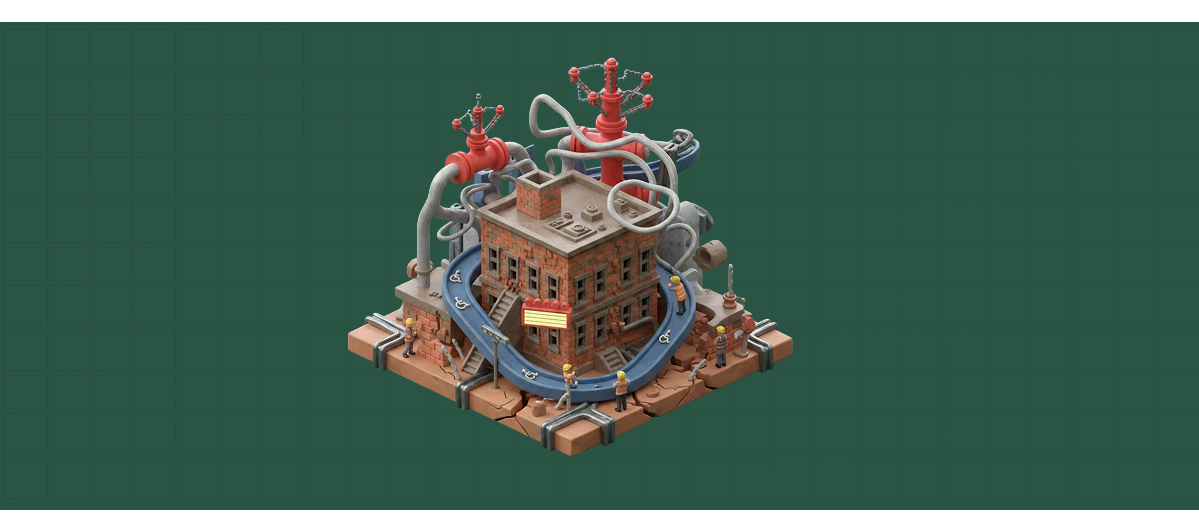
Converting an existing building for a new use is a cornerstone of urban revitalization, but it requires a deep understanding of the International Existing Building Code (IEBC). For a complex project—such as converting a 1970s unreinforced masonry (URM) building from a Business use to an A-2 restaurant in Tucson, Arizona—the code triggers for structural, accessibility, and life safety upgrades are significant and can dramatically impact the project's scope and budget.
Understanding these triggers is not just about compliance; it's about ensuring the safety and usability of the reimagined space for decades to come.
Direct Answer: Key Code Triggers for a B to A-2 Change of Occupancy in Tucson
For a change of occupancy from Business (Group B) to an Assembly (Group A-2) restaurant in a 1970s unreinforced masonry building in Tucson, you can expect the following upgrades to be mandated by the adopted 2018 IEBC and Tucson City Code amendments:
- Full Seismic Retrofit: A seismic evaluation and subsequent retrofit are almost certain to be required. This is triggered by two primary factors: the change to a higher-risk occupancy category (from Risk Category II to III) and the building's classification as unreinforced masonry (URM), a structure known for poor seismic performance. The IEBC does not permit a significant increase in life safety risk without a corresponding structural upgrade to near-modern standards.
- Major Accessibility Upgrades: The new restaurant space (the primary function area) and the path of travel to it from the exterior must be brought into full compliance with current accessibility standards (IBC Chapter 11, ANSI A117.1, and the 2010 ADA). This includes the public entrance, interior routes, dining areas, and restrooms. Unlike simple alterations, the 20% "disproportionate cost" safe harbor for path of travel upgrades is less likely to limit the scope in a full change of occupancy.
- New Automatic Fire Sprinkler System: The installation of a new NFPA 13-compliant fire sprinkler system is highly probable. The IEBC requires the new A-2 occupancy to meet the fire protection requirements of the current International Building Code (IBC). Under the 2018 IBC, a new A-2 occupancy requires sprinklers if the occupant load is 100 or more, a threshold a restaurant will almost certainly exceed.
| Upgrade Category | Primary Trigger | Governing Code Sections | Likelihood |
|---|---|---|---|
| Seismic Retrofit | Change to a higher Risk Category (II to III) in a URM building. | IEBC §1006.3, IBC Table 1604.5, ASCE 41 | Almost Certain |
| Accessibility Upgrade | Change of Occupancy to a place of public accommodation. | IEBC §1005, IBC Ch. 11, 2010 ADA | Certain |
| Fire Sprinkler System | New A-2 use exceeds the IBC occupant load threshold (100+). | IEBC §1003, IBC §903.2.1.2 | Highly Probable |
Context + Why This Topic Matters
In jurisdictions like Tucson, which has a rich stock of older buildings, the International Existing Building Code (IEBC) is the critical legal framework governing adaptive reuse. Unlike the IBC, which is written for new construction, the IEBC provides a structured pathway for altering, repairing, or changing the use of existing structures while improving life safety.
This topic is critical for several reasons:
- Project Viability: The cost of a seismic retrofit for a URM building or a new fire sprinkler system can be substantial. Identifying these requirements during due diligence, not during plan review, is essential for a project's financial feasibility.
- Life Safety: A change of occupancy from a low-density office (Group B) to a high-density restaurant (Group A-2) fundamentally changes the risk profile of a building. More people, concentrated in one area, with potential ignition sources (kitchens) and impaired judgment (alcohol service), demand higher standards for structural stability, egress, and fire suppression.
- Legal & Permitting Compliance: Arizona is a "home rule" state, meaning building codes are adopted and amended at the local level. A project in Tucson is governed by the City of Tucson's specific adoptions of the 2018 I-Codes, including local administrative and technical amendments. Assuming the model IEBC is the only applicable code is a common and costly mistake. Failure to comply can result in lengthy permitting delays, stop-work orders, and the inability to obtain a Certificate of Occupancy.
Successfully navigating a change of occupancy requires a coordinated effort between the architect, structural engineer, MEP engineer, and the local authority having jurisdiction (AHJ)—in this case, the City of Tucson Planning & Development Services Department and the Tucson Fire Department.
What are the triggers for a full seismic retrofit in a Tucson URM building undergoing a change of occupancy?
What can you ask? (Sample questions)
- How does IBC classify mixed-use buildings?
- When does a renovation trigger a change of occupancy?
- What are the IEBC triggers for code compliance upgrades?
- How do separated vs. nonseparated mixed occupancies differ?
The primary trigger for a seismic retrofit is the change of occupancy to a higher relative hazard, as defined by the building code. Converting a Group B (Business) occupancy to a Group A-2 (Assembly) in a building with a known structural deficiency like unreinforced masonry creates a significant increase in risk, compelling a structural upgrade to meet or approach modern seismic safety standards.
The 2018 IEBC, as adopted by Tucson, addresses this directly in its Change of Occupancy provisions. The key steps in the code's logic are:
Risk Category Assessment: The first step is to determine the Risk Category of the existing and proposed occupancies using IBC 2018 Table 1604.5, Risk Category of Buildings and Other Structures.
- Existing Use (Group B): Typically classified as Risk Category II.
- Proposed Use (Group A-2): A restaurant with an occupant load greater than 300 is Risk Category III. Even if the occupant load is less than 300, the change to an assembly use in a vulnerable structure will be scrutinized by the building official.
Structural Trigger:IEBC 2018 §1006.3 (Structural) contains the critical requirement. It states that when a change of occupancy results in a building being assigned to a higher risk category, the building must comply with the seismic provisions of the IBC for new construction. This effectively means the 1970s URM building must be analyzed and potentially strengthened to resist the seismic forces prescribed by the current code (which references ASCE 7, Minimum Design Loads for Buildings and Other Structures).
Unreinforced Masonry (URM) Vulnerability: URM buildings are explicitly recognized by structural engineering standards like ASCE 41, Seismic Evaluation and Retrofit of Existing Buildings, as having significant structural deficiencies. Their brittle behavior during an earthquake can lead to catastrophic collapse. When a building official sees "change of occupancy" and "URM" on a permit application, a seismic evaluation becomes non-negotiable. The City of Tucson building official has the authority under IEBC §1006.1 (General) to require a structural analysis to ensure the building is safe for the proposed new occupancy.
In practice, a structural engineer will be required to perform an ASCE 41 Tier 1, Tier 2, and likely Tier 3 evaluation of the existing URM structure. This analysis will identify deficiencies (e.g., weak mortar, inadequate wall-to-diaphragm anchorage, lack of in-plane and out-of-plane wall strength) and form the basis for a retrofit design, which could include steel braces, shotcrete overlays, or other strengthening techniques.
What IEBC and ADA requirements mandate a full accessibility upgrade for the entire building?
A change of occupancy to a place of public accommodation like a restaurant acts as a major trigger for accessibility compliance under both the IEBC and the federal Americans with Disabilities Act (ADA). The requirement mandates that the new A-2 use itself, and the path to it, must be made fully accessible.
Here’s a breakdown of the specific code and legal drivers:
- IEBC Chapter 10 Requirements:IEBC 2018 §1005 (Accessibility) is the governing section. It states that "existing buildings or portions thereof that undergo a change of occupancy shall have all of the following accessible features," and then lists requirements that effectively mandate compliance with IBC Chapter 11 (Accessibility) for the new use. This means the restaurant's dining areas, waiting areas, and employee work areas must meet current accessibility standards.
- Path of Travel: The IEBC and the ADA both require an accessible "path of travel" to be provided to the new primary function area. This includes:
- Accessible parking spaces.
- An accessible route from the parking and public sidewalk to the building entrance.
- An accessible building entrance.
- An accessible route from the entrance to the restaurant space.
- Accessible restrooms serving the restaurant.
- Distinction from "Alteration": In a simple "alteration" project (e.g., renovating an existing office), the requirement to upgrade the path of travel is limited to 20% of the total alteration cost (IEBC §705). However, in a "change of occupancy," this 20% safe harbor is less protective. The fundamental requirement is to make the new use accessible. The City of Tucson will interpret this to mean that providing accessible facilities, particularly restrooms, is a mandatory part of the change of use, not an optional upgrade subject to the 20% cap.
- 2010 ADA Standards: As a place of public accommodation, the restaurant is subject to Title III of the ADA. A change of occupancy is considered an "alteration" under the ADA, which triggers the obligation to remove barriers to accessibility. This federal law runs parallel to the building code and is enforced separately by the Department of Justice. Compliance with IBC Chapter 11 generally ensures compliance with the 2010 ADA Standards, but it is the designer's responsibility to verify both.
The phrase "full accessibility upgrade for the entire building" can be misleading. The mandate applies specifically to the portion of the building undergoing the change of occupancy and the path of travel serving it. If the building had, for example, second-floor apartments that were not part of the project, they would not typically be required to be made accessible unless the path of travel to them was also being altered as part of the primary project.
When is an automatic fire sprinkler system required for a change of occupancy in Tucson?
An automatic fire sprinkler system is required when the new occupancy, if it were built today as new construction, would mandate one under the International Building Code (IBC). The IEBC directs users to the IBC for fire protection system requirements when a building's use is changed.
The specific triggers for this A-2 restaurant scenario are found in IBC 2018 §903.2.1.2 (Group A-2):
- Occupant Load Trigger: An automatic sprinkler system is required throughout a fire area containing a Group A-2 occupancy when the occupant load is 100 or more.
- To determine the occupant load, you must use IBC Table 1004.5 (Maximum Floor Area Allowances Per Occupant). For a restaurant, this includes:
- "Assembly without fixed seats, unconcentrated (tables and chairs)" = 15 square feet (net) per person.
- "Standing space" = 5 square feet (net) per person.
- A restaurant with just 1,500 square feet of dining space would have a calculated occupant load of 100, triggering the sprinkler requirement. Nearly every viable restaurant project will exceed this threshold.
- To determine the occupant load, you must use IBC Table 1004.5 (Maximum Floor Area Allowances Per Occupant). For a restaurant, this includes:
- Location Trigger: Sprinklers are also required if the A-2 fire area is located on a floor other than the level of exit discharge.
- Size Trigger: Sprinklers are required if the A-2 fire area exceeds 5,000 square feet.
Given these low thresholds in the IBC, the change of occupancy from Group B to a functional Group A-2 restaurant almost guarantees that a new automatic fire sprinkler system, designed to NFPA 13 standards, will be required. This is a life safety provision that the Tucson Fire Department will strictly enforce during plan review and inspection.
Jurisdictional Nuances: Navigating Tucson's Local Amendments
While the 2018 IEBC provides the model framework, it is crucial to remember that the City of Tucson enforces its own adopted and amended version of the code. All projects must comply with the Tucson City Code, Chapter 6, Building and Construction.
Key practical steps include:
- Review Local Amendments: Before beginning design, obtain and review the specific city amendments to the IEBC, IBC, and IFC. These can modify thresholds, add requirements, or clarify interpretations. They are typically available on the city's website.
- Pre-Submittal Meeting: For a project of this complexity (change of use, URM, assembly occupancy), a pre-submittal or preliminary design review meeting with the Tucson Planning & Development Services Department is not just recommended—it's essential. This allows the design team to present the proposed project and get direct feedback from plan reviewers and the fire marshal on major code issues like seismic retrofitting, accessibility paths, and fire protection requirements.
- Engage the Fire Marshal Early: The Tucson Fire Department is a key stakeholder. Involve them early to discuss sprinkler and fire alarm requirements, kitchen hood suppression systems (IMC Chapter 5), and egress pathways. Their interpretation of the code is final for fire and life safety systems.
Coordination is Key: Architecture, Engineering, and Inspections
A successful change of occupancy project hinges on seamless coordination between all design and construction disciplines.
- Architect: Leads the code analysis, documents the existing conditions, and prepares the architectural plans demonstrating compliance for the new A-2 use, including egress, accessibility, and fire-rated separations.
- Structural Engineer: This role is paramount in a URM building. The engineer will perform the seismic evaluation (per ASCE 41) and design the retrofit system. Their work is often the most costly and complex part of the project.
- MEP/FP Engineer: The Mechanical, Electrical, Plumbing, and Fire Protection engineer designs the systems necessary for the new use. This includes new HVAC for the restaurant's occupant load, commercial kitchen exhaust and makeup air (IMC), electrical systems to handle kitchen equipment loads (NEC), plumbing for restrooms and kitchen fixtures (IPC), and the new fire sprinkler and fire alarm systems (NFPA 13 & 72).
- Plan Review and Inspections: The city's review will be meticulous. Expect detailed comments on the seismic analysis, accessibility details, and fire sprinkler shop drawings. During construction, special inspections will be required for all structural work related to the seismic retrofit, such as epoxy dowels, new concrete, and welding.
Common Pitfalls in Arizona Change of Occupancy Projects
- Underestimating Seismic Costs: The discovery of a mandatory seismic retrofit during plan review can derail a project. For URM buildings, this analysis must be part of the initial due diligence.
- Ignoring the Path of Travel: Focusing only on the new restaurant space and forgetting that the path to it—including parking, sidewalks, the main entrance, and restrooms—must also be made fully accessible.
- Applying "Alteration" Rules: Incorrectly applying the less-stringent rules for an "alteration" from IEBC Chapters 7 or 8 instead of the mandatory requirements for a "change of occupancy" in IEBC Chapter 10.
- Miscalculating Occupant Load: Using an inaccurate occupant load calculation can lead to improperly designed egress systems (door widths, exit counts) and missing the trigger for fire sprinklers or alarms.
Frequently Asked Questions (FAQ)
1. Does Arizona have a statewide building code? No, Arizona is a "home rule" state. Each city, town, or county adopts and amends its own building codes. You must always verify the codes in effect for the specific jurisdiction where your project is located.
2. What is the main purpose of the International Existing Building Code (IEBC)? The IEBC provides a dedicated set of regulations for the alteration, repair, addition, or change of occupancy in existing buildings. It is designed to encourage the safe reuse of older structures by providing more flexibility than applying the new-construction rules of the IBC directly.
3. Does "grandfathering" protect my old building from needing upgrades? Generally, no. The concept of "grandfathering" only allows existing non-conforming conditions to remain if the building is untouched and not deemed unsafe. Any significant work, especially a change of occupancy, triggers mandatory upgrades to improve safety and accessibility for the new use.
4. Do I need a new Certificate of Occupancy for this project? Yes. A change of occupancy, by definition, means the use of the building is changing. A new Certificate of Occupancy (C of O) must be issued by the building department upon final inspection, certifying that the building is compliant and safe for its new use as an A-2 restaurant.
5. How do I find Tucson's specific code amendments? You can find them on the City of Tucson's website, typically under the Planning & Development Services Department section, or by searching the official Tucson City Code online.
6. What is a URM building and why is it a major concern? URM stands for Unreinforced Masonry. These are typically older brick buildings constructed without steel reinforcing bars in the masonry walls. They are known to be brittle and perform very poorly in earthquakes, posing a significant life-safety risk, which is why they are scrutinized so heavily during a change of occupancy.
7. Does the ADA apply to a building built in the 1970s? Yes. The Americans with Disabilities Act (ADA) applies to all buildings that are "public accommodations," regardless of their age. Alterations and changes of use are key events that trigger the legal requirement to remove architectural barriers and improve accessibility.
8. Who has the final say on code interpretation? The Authority Having Jurisdiction (AHJ) has the final authority for interpreting and enforcing the code. In this scenario, the AHJ is the City of Tucson building official and the Tucson fire marshal.
More Arizona Building Code Guides
- Permits & AmendmentsArizona Building Codes: Current Adoption, Amendments & Permit Guide
- Residential Code (IRC)Arizona Residential Code (IRC) Guide: Decks, Pools, Garages & ADUs
- Accessibility (ADA)Applying Accessibility Codes (ADA & ANSI A117.1) in Arizona
- Fire & Life SafetyArizona Commercial Egress & Life Safety Code Requirements
- Wildfire / WUI CodesArizona Environmental Hazard Codes: WUI, Floodplain & HazMat Requirements
Don't miss what's shaping AEC
The latest on preconstruction, codes, AEC news & trends — so you're always in the know.
MeltPlan
A curated stream of preconstruction intelligence, estimating innovation, takeoff breakthroughs, workflow advancements, and expert perspectives—powered by the AI and technology shaping the future of construction.
Visit Site