Navigating the IEBC in Nevada: Requirements for Renovations, Change of Occupancy, and Historic Buildings
When working on existing buildings in Nevada, from a tenant improvement in a Las Vegas high-rise to a historic preservation project in Carson City, the Internat..
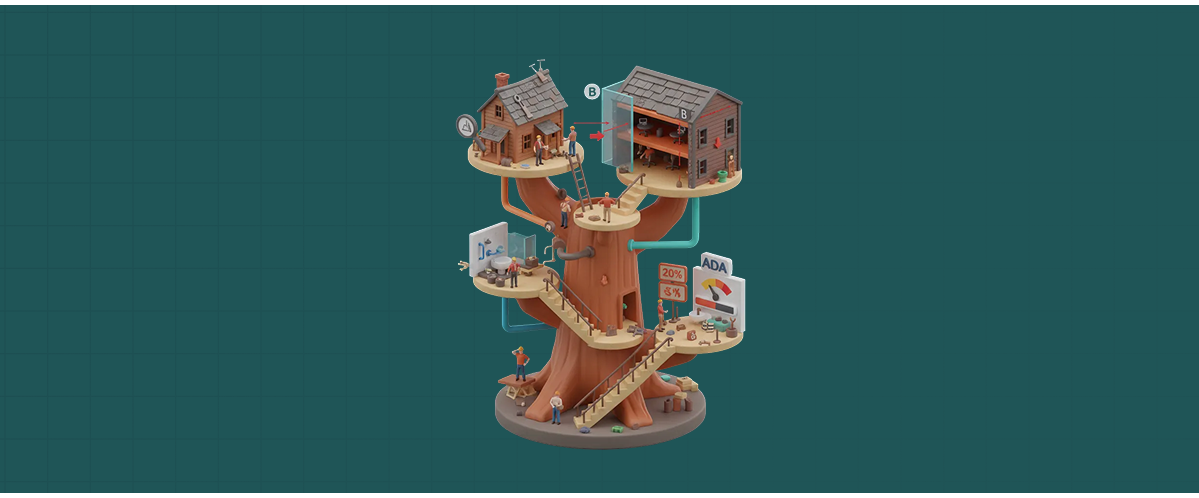
Nevada's IEBC Explained: A Guide to Code Compliance for Renovations, Alterations, and Historic Buildings
When working on existing buildings in Nevada, from a tenant improvement in a Las Vegas high-rise to a historic preservation project in Carson City, the International Existing Building Code (IEBC) is the essential rulebook. Unlike the International Building Code (IBC), which governs new construction, the IEBC provides a specific framework for alterations, repairs, additions, and changes of occupancy, balancing safety upgrades with the practical realities of existing structures.
The State of Nevada and its major jurisdictions, including Clark County, Henderson, Las Vegas, and Reno, have adopted the 2018 IEBC with local amendments. Understanding how to apply this code is critical for a smooth design, permitting, and inspection process.
Key takeaways for working with the Nevada-adopted IEBC include:
- Change of Occupancy is a Major Trigger: Converting a space from one use to another (e.g., storage to office) is considered a "change of occupancy" under IEBC Chapter 10. This event often triggers significant requirements for fire-rated separations, means of egress, accessibility, and sometimes structural and systems upgrades, bringing the affected area closer to new construction standards.
- Alterations Have Scaled Requirements: The IEBC categorizes alterations into different levels or uses a "Work Area Method" (Chapter 6). The scope of required upgrades depends on the extent of the work. Even small projects can trigger accessibility upgrades.
- Accessibility is a Dual Requirement: Renovations must comply with both the building code (IEBC referencing IBC Chapter 11) and federal law (the 2010 ADA Standards). Alterations to "primary function areas" require an accessible path of travel to be provided, with costs for that path of travel capped at 20% of the total project cost.
- Historic Buildings Have Flexibility: IEBC Chapter 12 provides crucial exceptions and alternatives for designated historic structures. This allows project teams to achieve a reasonable level of life safety and accessibility while preserving the building's historic character, but it requires close collaboration with the local building official.
- Local Amendments are Critical: Major jurisdictions like the City of Henderson, Las Vegas, and Clark County publish the Southern Nevada Building Code Amendments, which can modify requirements. Always verify requirements with the Authority Having Jurisdiction (AHJ) where the project is located.
Context + Why This Topic Matters
For architects, engineers, and contractors in Nevada, mastering the IEBC is not optional—it's fundamental to project success. Misinterpreting its provisions can lead to costly redesigns, permit rejections, and failed inspections. The IEBC acknowledges that forcing an existing building to meet all requirements for new construction is often technically and financially infeasible. Instead, it provides a tiered, logical approach to improving a building's safety and accessibility over time as it undergoes renovation.
Understanding this code is vital for:
- Accurate Scoping: Properly identifying if a project is a simple repair, a Level 1, 2, or 3 Alteration, or a Change of Occupancy determines the entire scope of code-required work.
- Budgeting: A small TI can trigger tens of thousands of dollars in unexpected accessibility upgrades (the "path of travel" requirement) if not planned for.
- Permitting Strategy: A clear, code-compliant approach based on the correct IEBC chapters streamlines plan review and reduces comments from the building department.
- Interdisciplinary Coordination: The IEBC's triggers affect every discipline. A change of occupancy impacts the architect (egress, separations), the MEP engineer (ventilation, lighting, plumbing fixtures), and the structural engineer (live loads, seismic evaluation).
Failing to apply the IEBC correctly is a common pitfall. Designers often either default to the stricter IBC for new construction, over-designing and adding unnecessary cost, or they underestimate the IEBC's triggers, leading to non-compliant designs that must be fixed during permitting or, even worse, during construction.
I'm designing a tenant improvement for a medical clinic (Group B) within an existing shell building (Group S-1) in Henderson, NV. What is the complete list of code requirements for the mixed-occupancy fire separation (both horizontal and vertical), egress path continuity, and accessibility upgrades triggered by this change of occupancy under the Nevada-adopted IEBC and local amendments?
This project constitutes a change of occupancy from a lower-hazard Storage (Group S-1) to a higher-hazard Business (Group B) for the medical clinic area. Under the 2018 IEBC as adopted and amended by Henderson, this triggers compliance with IEBC Chapter 10, which mandates specific upgrades for life safety and accessibility, treating many aspects of the new space as if it were new construction.
The primary requirements fall into three categories:
1. Mixed-Occupancy Fire Separation
The IEBC requires that when a change of occupancy occurs, any new separations between the new use and existing uses must comply with the requirements for new construction found in the IBC.
- Code Reference: IEBC 2018 §1012.3 (Change of Occupancy - Fire Protection) and IBC 2018 §508.4 (Mixed Occupancies).
- Requirement: According to IBC Table 508.4, the required fire-resistance rating for a separation between a Group B and a Group S-1 occupancy is 1-hour.
- Application:
- Vertical Separations: Any walls separating the new medical clinic (Group B) from the adjacent S-1 shell space must be constructed as 1-hour fire barriers. These assemblies must be built per IBC Chapter 7 and tested according to ASTM E119 or UL 263.
- Horizontal Separations: If the S-1 space is located above or below the new clinic, the floor/ceiling assembly between them must also be a 1-hour rated horizontal assembly.
- Continuity: The separation must be continuous from the floor slab to the rated roof/floor deck above, and all penetrations (ducts, conduits, pipes) must be firestopped with listed systems per IBC §714. All doors in this barrier must be 45-minute rated opening protectives (IBC Table 716.1(2)).
- Local Amendments: The City of Henderson adopts the Southern Nevada Amendments. You must verify if any local fire department requirements impose stricter conditions, though the 1-hour separation is standard.
2. Means of Egress Continuity
The means of egress for the new Group B occupancy must comply with the requirements of IBC Chapter 10 for new construction. This applies to the entire path from within the new clinic space to the public way.
- Code Reference: IEBC 2018 §1012.5 (Means of Egress).
- Requirements:
- Occupant Load Calculation: You must calculate the occupant load for the medical clinic based on IBC Table 1004.5. For "Business Areas," it's 150 gross square feet per person. However, a clinic may have concentrated areas, and the specific function must be evaluated.
- Number and Location of Exits: Based on the occupant load and space layout, provide the required number of exits per IBC §1006.
- Exit Access Travel Distance: The distance from the most remote point in the clinic to an exit must not exceed the limits in IBC Table 1017.2 (200 feet for unsprinklered, 300 feet for sprinklered Group B).
- Corridor and Door Widths: All corridors and doors within the means of egress serving the clinic must meet the minimum width requirements of IBC §1020 and §1010, respectively.
- Exit Signs and Emergency Lighting: The entire means of egress path from the clinic to the exit discharge must be provided with exit signs and emergency lighting per IBC §1013 and §1008.
3. Accessibility Upgrades
The change of occupancy triggers a requirement for the new Group B space to be fully accessible. It also triggers upgrades to the path of travel leading to the new space.
- Code Reference: IEBC 2018 §1012.7 (Accessibility) and IBC 2018 Chapter 11.
- Requirements for the New Space: The medical clinic itself must be designed and constructed to be fully accessible, complying with IBC Chapter 11 and its referenced standard, ANSI A117.1-2017. This includes accessible patient rooms, reception counters, restrooms, and clear floor space at doors.
- Requirements for the Path of Travel: An accessible route must be provided from the building's main entrance to the new medical clinic. This path of travel includes:
- The building entrance.
- The corridors and lobbies leading to the clinic.
- The restrooms, drinking fountains, and public telephones serving the clinic.
- Disproportionate Cost (20% Rule): The cost of providing the accessible path of travel is not unlimited. Per IEBC §502.2 (referenced by Chapter 10), the cost of these upgrades is capped at 20% of the total cost of the tenant improvement work. If the cost to make the entire path of travel fully compliant exceeds this 20% threshold, you must spend up to that amount on a priority basis (e.g., first the entrance, then the route, then restrooms).
We are performing a major alteration on a historic building in Carson City. How do the Nevada-adopted IEBC provisions for historic structures balance life safety and accessibility upgrades with the preservation of historic features, and what is the specific process for seeking interpretations or exceptions from the local building official?
What can you ask? (Sample questions)
- How does IBC classify mixed-use buildings?
- When does a renovation trigger a change of occupancy?
- What are the IEBC triggers for code compliance upgrades?
- How do separated vs. nonseparated mixed occupancies differ?
The 2018 IEBC, as adopted by Carson City, contains a dedicated chapter to address the unique challenges of historic buildings. IEBC Chapter 12, "Historic Buildings," provides the framework for balancing modern safety standards with the critical need to preserve the building's historic character and materials.
The code's fundamental approach is to meet the intent of the safety and accessibility requirements, even if the prescriptive methods cannot be met without damaging historic features.
Balancing Life Safety and Preservation
IEBC Chapter 12 grants the building official significant authority to approve alternatives to standard code requirements, provided that the alternatives offer a reasonable level of safety.
- Code Basis: IEBC 2018, Chapter 12. A building must be designated as historic by a state or local authority to use these provisions (IEBC §1201.2).
- Fire Safety (IEBC §1203): This section allows for numerous alternatives. For example:
- Instead of replacing historic doors and transoms in a corridor to achieve a fire rating, the building official may accept the installation of a fire sprinkler system or a smoke detection system.
- Existing, non-compliant fire escapes may be permitted to remain if they are inspected, repaired, and determined to provide an acceptable level of safety.
- Means of Egress (IEBC §1204): Flexibility is provided for egress components that are integral to the historic character.
- The building official can approve existing, narrower stairways or corridors if they don't pose a significant life safety hazard.
- Historic doors that swing into the path of egress may be allowed.
- Existing guardrails and handrails that may not meet modern height or spacing requirements can often be retained if deemed acceptably safe.
- Accessibility (IEBC §1205): This is a critical area of flexibility. If full compliance with IBC Chapter 11 would "threaten or destroy the historic significance of the building," the code provides specific concessions:
- At least one accessible route from a site arrival point to an entrance must be provided.
- An accessible entrance can be a non-public entrance, provided signage directs users to it.
- Only one accessible unisex toilet facility is required.
- Accessible routes are only required to the main level of the building.
The Process for Seeking Interpretations and Exceptions
The key to successfully using IEBC Chapter 12 is early and thorough communication with the Carson City Building Division. The burden of proof is on the design team to demonstrate that an alternative approach is safe and necessary for preservation.
- Pre-Submittal Meeting: This is the most important step. Schedule a meeting with the Carson City building official and plan reviewers. Bring along a preservation expert if possible. The goal is to present the project, identify potential conflicts between the code and historic features, and propose alternative solutions for discussion.
- Submit a Historic Preservation Report: Per IEBC §1201.5, the building official can require a written report prepared by a registered design professional or a preservation expert. This report should:
- Identify the historically significant features of the building.
- Describe how strict compliance with the code would degrade those features.
- Analyze the life safety and accessibility issues.
- Propose alternative methods, materials, or systems that meet the intent of the code.
- Formal Request for Modification: For each deviation from the prescriptive code, a formal request for modification should be submitted based on IBC §104.10. This request should reference the supporting data from the preservation report and explain how the proposed alternative provides an equivalent level of safety.
- Documentation: Clearly document all approved alternatives on the construction documents. Note the specific code section being deviated from and the basis for the building official's approval. This creates a clear record for plan review, inspection, and the building's future use.
What triggers ADA accessibility requirements for a small commercial remodel in Nevada?
In Nevada, accessibility requirements for a commercial remodel are triggered by the act of "alteration" itself and are governed by both federal law (2010 ADA Standards) and the state-adopted building code (2018 IEBC, which references IBC Chapter 11).
The primary trigger is any alteration that affects the usability of a "primary function area." This applies regardless of the project's size or cost.
The "Alteration" to a "Primary Function Area" Trigger
- Alteration Defined: An alteration is a change to a building or facility that affects its usability. This is a broad definition that includes remodeling, renovating, reconfiguring layouts, and relocating elements like walls or doors. It does not include routine maintenance like painting or re-roofing (ADA §202.3; IEBC §202).
- Primary Function Area Defined: This is any area where the main activities for which the facility is intended occur. Examples include the dining area of a restaurant, the sales floor of a retail store, exam rooms in a clinic, or the offices in a business. Areas like mechanical rooms, storage closets, and corridors are generally not considered primary function areas (ADA §202.4).
When an alteration is made to a primary function area, it triggers a secondary requirement to make the path of travel to that area accessible.
The Path of Travel Requirement and the 20% Rule
This is the most significant and often misunderstood requirement for small remodels.
- Code References: ADA 2010 Standards §202.4; IEBC 2018 §502.2 (Prescriptive Method) or §605 (Work Area Method).
- Requirement: When you alter a primary function area, you must also make the path of travel from the building entrance to that altered area accessible. This includes not just the route itself (hallways, doorways) but also the restrooms, drinking fountains, and public telephones that serve the area.
- The "Disproportionate Cost" Safe Harbor: The cost of these path-of-travel upgrades is capped at 20% of the total cost of the alteration to the primary function area. This is often called the "20% rule."
- Example: A business in Reno remodels its main office area for $100,000. This triggers the path of travel requirement. The owner is obligated to spend up to $20,000 (20% of $100,000) on making the route from the building entrance, including the main public restrooms, accessible.
- If the required upgrades (e.g., widening a doorway, adding grab bars, installing a ramp) cost only $15,000, they must all be done.
- If the required upgrades cost $30,000, the owner is only required to spend the $20,000. They must complete the upgrades in a prescribed order of priority (1. Entrance, 2. Route to area, 3. Restrooms, etc.) until the 20% budget is met.
Jurisdictional Variations Across Nevada
While Nevada adopts the 2018 I-Codes statewide, the level of local amendment and enforcement varies significantly. This is a critical factor for any design professional to consider.
- Southern Nevada (Clark County, Las Vegas, Henderson, North Las Vegas): These jurisdictions collaborate to produce the Southern Nevada Building Code Amendments. This is a comprehensive package of amendments that modifies the I-Codes to address local conditions, such as soil, climate, and development patterns. These amendments are often more detailed and stricter than the base I-Codes, particularly for fire and life safety, high-rise buildings, and site development.
- Northern Nevada (Reno, Sparks, Washoe County): These jurisdictions also adopt the 2018 I-Codes but generally have fewer local amendments than their southern counterparts. However, they have specific requirements related to seismic activity, snow loads, and wildland-urban interface (WUI) fire hazards that must be carefully researched.
- Carson City and Rural Counties: These areas adopt the I-Codes with minimal amendments. However, it is always essential to contact the local building department directly, as their interpretations, staffing levels, and plan review processes can differ.
Best Practice: Never assume the base IEBC applies without modification. Always start a project by obtaining the current code adoption ordinance and any amendment documents directly from the city or county building department where the project is located.
Coordination Considerations for IEBC Projects
Effective interdisciplinary coordination is even more crucial on IEBC projects than on new construction because of the need to integrate new systems and components with an existing structure.
- Architect: The architect typically leads the IEBC compliance strategy. They are responsible for identifying the project's compliance path (e.g., Prescriptive, Work Area, Performance), documenting existing conditions, and coordinating the overall scope of required upgrades.
- Structural Engineer: A structural engineer must assess the existing structure, especially during a change of occupancy that increases live loads (e.g., storage to assembly) or changes the building's risk category. Per IEBC Chapter 9, a seismic evaluation may be triggered.
- MEP Engineer: The MEP engineer must evaluate existing systems for capacity and compliance.
- Mechanical: A change of use to an office or clinic will trigger new ventilation requirements per the International Mechanical Code (IMC) and energy efficiency requirements per the International Energy Conservation Code (IECC).
- Electrical: The new space will require lighting, power, and potentially fire alarm upgrades per the National Electrical Code (NEC). Egress lighting in the path of travel may need to be added or upgraded.
- Plumbing: A change of occupancy often triggers a new plumbing fixture count calculation per the International Plumbing Code (IPC), potentially requiring new restrooms.
Common IEBC Pitfalls and Misinterpretations
- Applying the IBC Instead of the IEBC: This is the most common mistake. Applying the stricter new construction rules of the IBC to an existing building can add immense and unnecessary cost. The IEBC is the correct code for this work.
- Misclassifying the Work: Incorrectly defining a project as a simple "repair" when it is actually a "Level 2 Alteration" can lead to missing major requirements for egress and accessibility.
- Ignoring Unintended Triggers: A project to replace flooring in a corridor may seem simple, but if that corridor is part of a primary means of egress, it could trigger requirements for wall ratings or lighting that were not anticipated.
- Forgetting the "20% Rule": Both designers and owners often forget to budget for the potential 20% path-of-travel accessibility upgrades. This can become a major financial issue after bids are received.
- Failing to Engage the Building Official Early: For complex projects, especially those involving historic buildings or performance-based solutions, waiting until permit submission to discuss your code approach is a recipe for delays. A pre-submittal meeting is invaluable.
Frequently Asked Questions (FAQ)
Does Nevada have a statewide building code? Yes, Nevada adopts the 2018 International Code Council (I-CC) family of codes, including the IBC and IEBC, at the state level. However, local counties and cities like Clark County, Las Vegas, and Reno are authorized to—and do—create and enforce their own local amendments.
What version of the IEBC is currently used in Nevada? The State of Nevada and its major jurisdictions currently use the 2018 International Existing Building Code (IEBC) as the basis for their regulations.
Is the ADA the same as IBC Chapter 11 for accessibility? They are highly harmonized but not identical. IBC Chapter 11 (and its referenced standard ANSI A117.1) is the building code enforced by local inspectors. The ADA is a federal civil rights law enforced by the U.S. Department of Justice. A building must comply with both. Following the IBC will satisfy most ADA requirements, but the ADA has a broader scope in some areas.
What is the difference between an "alteration" and a "repair" in the IEBC? A "repair" is the patching, restoration, or replacement of existing materials or elements to their original condition (e.g., replacing a broken window). An "alteration" is a reconfiguration, addition, or elimination of any component or space that affects its usability (e.g., moving a wall, remodeling a restroom).
How do I find the specific code amendments for Henderson, NV? You should visit the City of Henderson Building Division website or search for the "Southern Nevada Building Code Amendments." These documents contain the specific changes made to the 2018 I-Codes for Henderson and other southern Nevada jurisdictions.
Can I use the Performance Compliance Method in Nevada? Yes, IEBC Chapter 14 provides a Performance Compliance Method. This approach involves a detailed engineering analysis to demonstrate that a building achieves an equivalent or better level of safety than the prescriptive code. It is a complex path typically reserved for very challenging or unique existing buildings and requires extensive documentation and close work with the building official.
Does changing the use of one room in a building count as a "change of occupancy"? Yes, it can. If the change in use places the room in a different occupancy classification (e.g., changing a large storage closet (Group S) into a small office (Group B)), it is a change of occupancy. This triggers the requirements of IEBC Chapter 10 for that specific space, including potential fire separation and egress evaluations.
Do I need a permit for a small remodel in Las Vegas? Generally, yes. A building permit from the City of Las Vegas (or Clark County, depending on location) is required for most work beyond simple cosmetic finishes. If the project involves moving walls, altering electrical wiring or outlets, or changing plumbing fixtures, a permit is almost certainly required.
More Nevada Building Code Guides
- Commercial Code (IBC)Commercial Design in Nevada: Applying IBC & Local Amendments for High-Rise, Warehouse, and Casino Projects
- Fire & Life SafetyNevada Residential Code (IRC) Requirements: A Guide for Decks, ADUs, Fire Separation, and More
- Energy Code (IECC)Complying with the Nevada Energy Code (IECC): Commercial & Residential Requirements
- Wildfire / WUI CodesNevada Wildland Urban Interface (WUI) Code: Applicability and Construction Requirements
- Structural DesignStructural Design in Nevada: Seismic, Wind, Snow Loads, and Special Inspection Mandates
MeltPlan
A curated stream of preconstruction intelligence, estimating innovation, takeoff breakthroughs, workflow advancements, and expert perspectives—powered by the AI and technology shaping the future of construction.
Visit SiteDon't miss what's shaping AEC
The latest on preconstruction, codes, AEC news & trends — so you're always in the know.