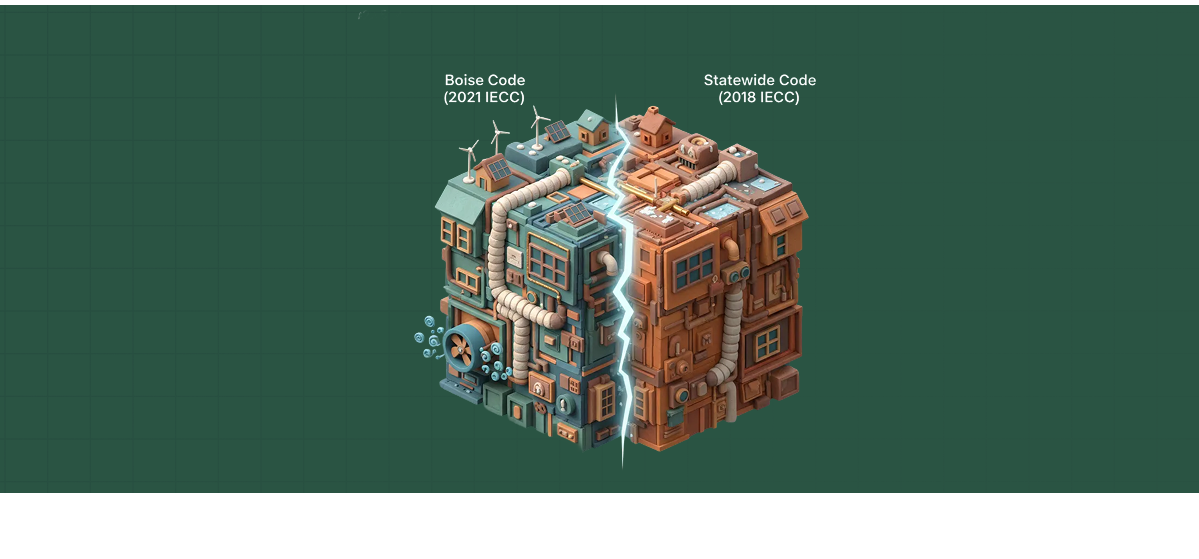
Idaho Building Codes: Finding Jurisdiction, Permits, and Current 2024 Code
Navigating construction codes in Idaho requires understanding a multi-layered system where state-adopted model codes are further modified by local city and coun..
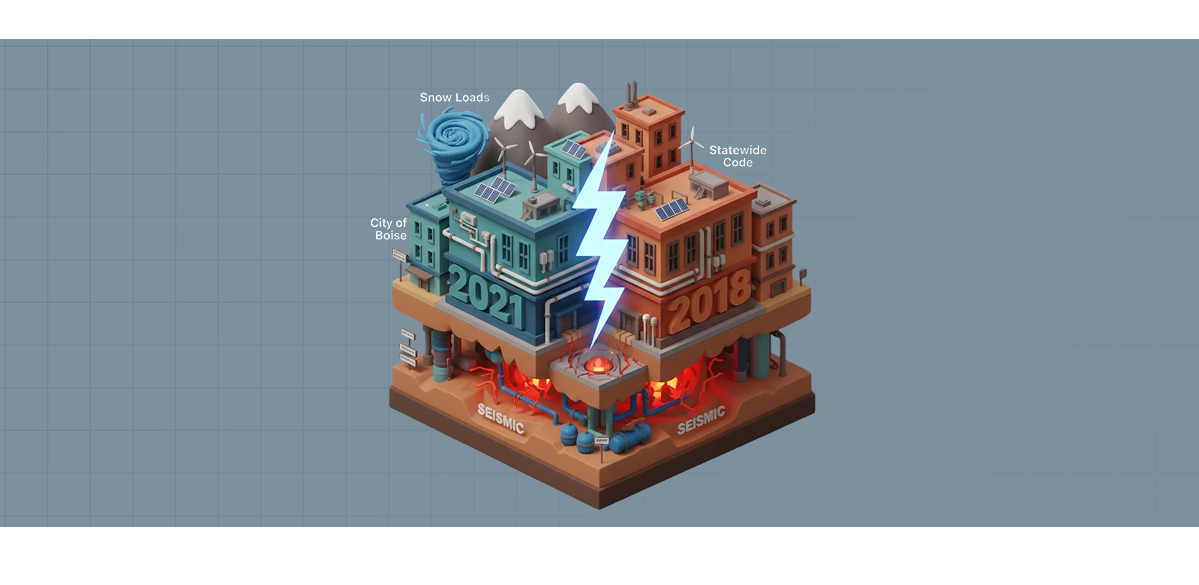
Idaho Building Codes Explained: A Guide for Architects, Engineers, and Contractors
Understanding the Idaho Building Code Landscape: A Direct Summary
Navigating construction codes in Idaho requires understanding a multi-layered system where state-adopted model codes are further modified by local city and county jurisdictions. As of 2024, Idaho has primarily adopted the 2018 suite of International Codes (I-Codes) with state-specific amendments. The authority for enforcement and interpretation lies with the local Authority Having Jurisdiction (AHJ)—typically the city building department for projects within city limits and the county building department for projects in unincorporated areas.
Here are the key takeaways for design and construction professionals:
- State Adopted Codes: Idaho's foundation is the 2018 International Building Code (IBC), International Residential Code (IRC), International Fire Code (IFC), International Mechanical Code (IMC), and International Energy Conservation Code (IECC), among others. The state also adopts the 2020 National Electrical Code (NEC) and a version of the Uniform Plumbing Code (UPC).
- Jurisdiction is Paramount: The specific rules for your project depend entirely on its physical location. An unincorporated parcel between two cities falls under the county's jurisdiction. Fire protection requirements are often enforced by a separate fire district, which may have its own set of amendments to the IFC.
- Local Amendments are Common: Major jurisdictions like Boise, Meridian, Nampa, and Ada County publish their own amendments that can be more restrictive than the state code. These often cover topics like energy efficiency, fire-life safety, and local administrative procedures.
- IRC vs. IBC: The Idaho Residential Code (based on the IRC) applies strictly to one- and two-family dwellings and their accessory structures. All other projects, including multi-family residential, commercial, and industrial buildings, fall under the Idaho Building Code (based on the IBC).
| Code Discipline | Base Model Code (State Adoption) | Key Application |
|---|---|---|
| Building (Commercial) | 2018 International Building Code (IBC) | All buildings except those covered by the IRC. |
| Building (Residential) | 2018 International Residential Code (IRC) | One- and two-family dwellings and townhouses. |
| Fire | 2018 International Fire Code (IFC) | Fire prevention, access, and life safety in new and existing buildings. |
| Energy | 2018 International Energy Conservation Code (IECC) | Commercial and residential energy efficiency. |
| Electrical | 2020 National Electrical Code (NEC) | All electrical systems and installations. |
| Plumbing | 2017 Idaho State Plumbing Code (based on UPC) | All plumbing systems and installations. |
| Mechanical | 2018 International Mechanical Code (IMC) | All mechanical and HVAC systems. |
Why Navigating Idaho's Code System Matters
Idaho's regulatory framework empowers local governments, creating a diverse and sometimes complex compliance landscape. Unlike states with a single, uniform statewide building code, Idaho operates on a "home rule" principle where cities and counties can, and frequently do, amend the state's baseline codes.
This system presents several challenges and opportunities for design professionals:
- Project Kick-Off: The first step of any project—before schematic design begins—is to confirm the precise AHJ. This involves verifying if the property is within an incorporated city limit or in an unincorporated county area, and also identifying the serving fire district, highway district, and health department.
- Coordination is Critical: An architect may find that the city's building code amendments conflict with the local fire district's access road requirements. An engineer designing an energy-efficient building in Boise must comply with the city's stricter energy ordinance, not just the state IECC.
- Common Pitfalls: A frequent mistake is assuming the state-adopted code is the final word. A design that meets the 2018 IRC perfectly may be rejected during plan review in Ada County for failing to meet a local amendment regarding setbacks or accessory structure size. Similarly, relying on experience from another state can lead to errors, especially concerning Idaho's specific snow load, seismic, and energy requirements.
Successfully delivering a project in Idaho means treating each jurisdiction as a unique regulatory environment, demanding thorough upfront research and direct communication with local plan reviewers and inspectors.
How do I determine the controlling jurisdiction and applicable local amendments for a project in an unincorporated area between Nampa and Caldwell? Specifically, what are the differing requirements for agricultural building exemptions and fire department access roads?
What can you ask? (Sample questions)
- How do local code amendments modify the base IBC requirements?
- What triggers the need for a building permit?
- What plan review documents are typically required?
- How do jurisdictional amendments affect fire and structural codes?
The controlling jurisdiction for an unincorporated area between Nampa and Caldwell is Canyon County. You must comply with the building codes adopted by Canyon County and any specific requirements from the local fire district serving that specific parcel.
To determine the exact requirements, you must consult the Canyon County Development Services Department and the applicable fire district (e.g., Nampa Fire District, Caldwell Fire District, or a rural fire protection district).
Deeper Explanation
1. Determining Jurisdiction:
- County Authority: In Idaho, land not within the incorporated limits of a city falls under the jurisdiction of the county. The area between Nampa and Caldwell is largely unincorporated Canyon County land. Therefore, Canyon County's adopted building codes, zoning ordinances, and development standards are the primary governing documents.
- Fire District Authority: Fire code enforcement, including fire department access roads and water supply, is typically handled by the fire district that serves the property. You can identify the correct district using Canyon County's online parcel maps or by contacting the county assessor's office. The fire district's requirements are based on the adopted International Fire Code (IFC), but they often have significant local amendments.
2. Agricultural Building Exemptions:
- State-Level Exemption: The Idaho Building Code Act (Idaho Code §39-4105) provides a broad exemption from building permits for "farm buildings" located on parcels of five acres or more that are used for "bona fide" agricultural purposes. However, this state exemption does not automatically apply everywhere.
- Canyon County Application: Canyon County addresses this in its local ordinances. You must verify with Canyon County Development Services if your specific structure qualifies. They will evaluate:
- Use: The building must be used exclusively for agricultural purposes (e.g., housing livestock, storing hay or equipment). A building with a residential component (like a "barndominium") would not be fully exempt.
- Zoning: The property must be in an agricultural zone.
- Setbacks: Even if exempt from a building permit, the structure must still meet all county zoning setback requirements from property lines, roads, and other structures.
- Limitations: The exemption is for the building permit itself. Electrical and plumbing work within an exempt agricultural building still requires separate permits and inspections under Idaho Code §39-4105(6).
3. Fire Department Access Roads: Fire department access road requirements are critically important and are enforced by the fire district with jurisdiction. While based on IFC Chapter 5 and Appendix D, local amendments are the norm.
Here is a comparison of typical requirements:
| Feature | International Fire Code (2018) §503 | Typical Local Fire District Amendment |
|---|---|---|
| Minimum Width | 20 feet of unobstructed width. | Often increased to 24 or 26 feet, especially for commercial or multi-family projects. |
| Vertical Clearance | 13 feet 6 inches. | Generally maintained, but may be increased. |
| Surface | "All-weather driving surface." | Specified as compacted gravel of a certain depth (e.g., 6-8 inches) or asphalt/concrete, capable of supporting the fire apparatus (e.g., 75,000 lbs). |
| Grade | Maximum 10% unless approved. | Often stricter, with maximum grades of 8% or less, and requiring paving on grades over a certain percentage (e.g., 6%). |
| Turnarounds | Required for dead-end roads over 150 feet. Specific dimensions for hammerhead or cul-de-sac turnarounds are provided in IFC Appendix D. | Dimensions and requirements are strictly enforced and may be modified based on the district's specific apparatus. |
To get a definitive answer for your project, you must submit a site plan to both Canyon County and the local fire district for review.
What is the current building code for Idaho in 2024?
As of 2024, the State of Idaho has adopted and enforces a suite of codes primarily based on the 2018 International Codes (I-Codes) and the 2020 National Electrical Code (NEC). These codes are adopted by the Idaho Building Code Board and established in state law through the Idaho Administrative Procedures Act (IDAPA).
The primary statewide codes currently in effect include:
- 2018 International Building Code (IBC) with Idaho amendments.
- 2018 International Residential Code (IRC) with Idaho amendments.
- 2018 International Energy Conservation Code (IECC) with Idaho amendments.
- 2018 International Mechanical Code (IMC).
- 2018 International Fire Code (IFC).
- 2018 International Existing Building Code (IEBC).
- 2020 National Electrical Code (NEC).
- 2017 Idaho State Plumbing Code (based on the Uniform Plumbing Code).
- 2018 International Fuel Gas Code (IFGC).
It is crucial to remember that local jurisdictions (cities and counties) can adopt these codes and add their own amendments, which may be more restrictive than the state's baseline.
Where can I find a free online version of the Idaho building codes?
You can access free, read-only versions of the Idaho building codes from several official sources. These versions typically do not allow for copying, pasting, or printing.
- International Code Council (ICC) Digital Codes: The ICC provides free online access to the base model codes that Idaho adopts (e.g., 2018 IBC, 2018 IRC). You can find them on the ICC's website at https://codes.iccsafe.org/codes/i-codes. This is the best source for the model code language before state amendments.
- Idaho State Legislature Website: Idaho-specific amendments are codified in the Idaho Administrative Code (IDAPA). The Division of Building Safety (DBS) rules are found under IDAPA 07. You can search and view these rules for free on the official Idaho Legislature website. This is where you find the specific changes, additions, and deletions Idaho has made to the model codes.
- Local Jurisdiction Websites: For local amendments, you must visit the website of the specific city or county. For example:
- The City of Boise publishes its code amendments in the Boise City Code, Title 9.
- Ada County includes its building code ordinances on its official website.
- Canyon County provides its development and building codes online as well.
For full functionality, including search features and copy/paste, purchasing digital or print versions of the codes is typically necessary.
Do I need a building permit for a shed in Ada County?
Yes, you likely need a building permit for a shed in Ada County if it is over 200 square feet in floor area. For sheds 200 square feet or less, a building permit is generally not required, but you must still comply with zoning regulations.
Deeper Explanation
The requirement is based on a combination of the International Residential Code (IRC) and Ada County's specific rules.
- IRC Exemption: IRC 2018 Section R105.2 ("Work exempt from permit") exempts "one-story detached accessory structures used as tool and storage sheds, playhouses and similar uses, provided the floor area does not exceed 200 square feet." This is the statewide baseline.
- Ada County Application: Ada County generally follows this 200-square-foot exemption for building permits in its unincorporated areas. However, even if a building permit is not required, the shed must still:
- Meet Zoning Setbacks: The structure must be placed according to the setback requirements for your specific zone (e.g., a certain distance from front, side, and rear property lines). You must verify these with Ada County Planning & Zoning.
- Comply with Height Limits: The shed cannot exceed accessory structure height limits.
- Avoid Easements: It cannot be built over any recorded utility or access easements on the property.
When a Permit is Always Required in Ada County: A permit is required regardless of size if the accessory structure:
- Contains electrical wiring, which requires a separate electrical permit and inspections.
- Includes plumbing fixtures, which requires a separate plumbing permit and inspections.
- Is used for habitable purposes.
- Is located in a designated floodplain or other hazardous area.
Always confirm the latest requirements with Ada County Development Services before beginning construction. The rules for sheds within incorporated cities inside Ada County (like Boise, Meridian, or Eagle) may differ and are set by the respective city building departments.
What's the difference between the Idaho Residential Code and the International Building Code?
The primary difference is their scope: the Idaho Residential Code (IRC) applies to residential construction, while the International Building Code (IBC) applies to commercial and all other types of construction. The IRC is a standalone, prescriptive code for common house construction, whereas the IBC is a more complex, performance-oriented code for a wide range of building types and uses.
Deeper Explanation
Here is a breakdown of the key differences as they apply in Idaho:
| Feature | Idaho Residential Code (IRC) | Idaho Building Code (IBC) |
|---|---|---|
| Scope | One- and two-family dwellings and their accessory structures. Townhouses not more than three stories high with separate means of egress. | All other buildings and structures, including multi-family (apartments, condos), commercial, industrial, institutional, and mixed-use. |
| Occupancy | Limited to residential Group R-3 and accessory Group U. | Covers all occupancy groups (A, B, E, F, H, I, M, R, S, U) and provides rules for mixed occupancies. |
| Egress | Simpler requirements. E.g., one main exit, emergency escape and rescue openings (EEROs) from sleeping rooms. | Complex egress system requirements, including number of exits, travel distance, exit separation, corridor ratings, and exit signage based on occupant load. |
| Fire Resistance | Prescriptive fire-resistance ratings for elements like dwelling separations (townhouse walls) and garage separations. | Detailed requirements for fire-rated construction based on construction type, occupancy, and building size. Requires fire walls, fire barriers, smoke barriers, etc. |
| Accessibility | Limited accessibility requirements, primarily for adaptable dwelling units. | Mandates full compliance with accessibility standards (IBC Chapter 11, ANSI A117.1) for public and common use areas. |
| Structural Design | Provides prescriptive tables and methods for conventional light-frame wood construction (e.g., joist and rafter spans). | Requires a structural analysis based on referenced standards like ASCE 7 for all loads (gravity, wind, seismic, snow). Engineered designs are standard. |
In practice, an architect designing a single-family home in Idaho will primarily use the IRC. An architect designing an office building, a restaurant, or an apartment complex will use the IBC, IFC, IMC, IECC, and NEC in conjunction.
Do I need an architect or engineer for my house plans in Idaho?
No, in most cases, you do not need a licensed architect or engineer to design a conventional single-family or two-family home in Idaho. State law provides specific exemptions for certain types of buildings, allowing individuals to prepare their own plans.
Deeper Explanation
The requirement for licensed design professionals is governed by Idaho Code, Title 54, which regulates architects and professional engineers.
- Architects (Idaho Code §54-309): The law exempts individuals from needing an architect's license for preparing plans and specifications for:
- Private residences.
- Farm buildings.
- Buildings that are intended to be used for a single commercial purpose that do not exceed two thousand (2,000) square feet of floor space.
- Engineers (Idaho Code §54-1223): Similarly, the engineering practice act does not prevent "the practice of architecture" or the "planning, drafting, and designing of buildings" as allowed under the architects' statute.
Practical Implications:
- Standard Homes: For a typical single-family house built using conventional light-frame construction as described in the Idaho Residential Code (IRC), a homeowner, builder, or designer can create the plans.
- When an Engineer is Needed: Even if an architect is not required, a licensed professional engineer's stamp will be required by the building department if the house includes non-prescriptive structural elements. This includes:
- Engineered components like trusses, I-joists, or laminated veneer lumber (LVL) beams (these come with their own engineering).
- Complex structural designs, such as large open floor plans with long-span beams.
- Foundations on poor soils or steep slopes.
- Homes located in high seismic or high wind zones that fall outside the IRC's prescriptive solutions.
While the law allows for self-design, the local building official always has the authority under IBC §107.3.4.1 to require plans to be prepared by a registered design professional if they determine the project involves complex design or code issues.
Who is the building code enforcement officer for my county in Idaho?
The primary building code enforcement officer for a county in Idaho is the County Building Official. This person leads the county's building department or a similar division, such as Development Services or Planning & Building.
Deeper Explanation
To find the correct official for your project, follow these steps:
- Identify the Jurisdiction: First, confirm your project is in an unincorporated area of the county. If it's inside the boundaries of an incorporated city (like Boise, Idaho Falls, or Coeur d'Alene), the city's building official is the enforcement officer, not the county's.
- Locate the County Department: Visit the official website for the county where your project is located. Look for departments with names like:
- "Building Department"
- "Development Services"
- "Planning and Zoning"
- "Community Development"
- Find the Building Official: The department's website will list its staff. The head of the building inspection and plan review division is the Building Official. This is the person legally charged with interpreting and enforcing the adopted building codes under IBC §104.1.
- Day-to-Day Contact: While the Building Official is the final authority, your primary points of contact for a project will be the Plan Reviewers (during the permitting phase) and the Building Inspectors (during the construction phase).
Example: For a project in an unincorporated part of Ada County, you would contact Ada County Development Services. For a project in rural Bonneville County, you would contact the Bonneville County Building & Zoning Department.
The Idaho Division of Building Safety (DBS) provides statewide licensing and oversight for trades like electrical and plumbing but does not act as the local code enforcement officer for general construction. That responsibility lies with the city or county AHJ.
How often does Idaho update its building codes?
Idaho generally updates its building codes on a three- to six-year cycle, typically lagging one or two cycles behind the publication of the model International Codes (I-Codes). The process is deliberate and involves review by a state board and the state legislature.
Deeper Explanation
The code adoption process in Idaho works as follows:
- I-Code Publication: The International Code Council (ICC) publishes new editions of the I-Codes every three years (e.g., 2018, 2021, 2024).
- Board Review: The Idaho Building Code Board, whose members are appointed by the governor, reviews the new I-Code editions. The board holds public meetings to discuss proposed changes and considers input from industry stakeholders like builders, architects, engineers, and fire officials.
- Rulemaking (IDAPA): The board proposes adoption of a new code edition, along with any Idaho-specific amendments, through the formal state rulemaking process (IDAPA). This includes drafting the rule, holding public hearings, and responding to public comment.
- Legislative Approval: The proposed rules containing the updated codes must be submitted to the Idaho Legislature for review during its annual session. A legislative committee must approve the rules for them to become effective.
- Effective Date: Once approved, a statewide effective date is set.
This multi-stage process means that by the time Idaho adopts a code (e.g., the 2018 I-Codes), the next edition (2021 I-Codes) has often already been published by the ICC. As of early 2024, Idaho is still primarily enforcing the 2018 I-Codes, while the 2024 I-Codes are being reviewed for a future adoption cycle.
Additional Supporting Sections
Navigating Jurisdictional Overlaps: The City, County, and Special Districts
A critical aspect of practicing in Idaho is managing the overlapping authority of different government bodies. A single project site is often subject to rules from a city or county, a fire district, a highway district, and a health district simultaneously.
- Building & Zoning (City/County): The city (if incorporated) or county (if unincorporated) is the primary AHJ for the building and energy codes (IBC, IRC, IECC) and all local zoning ordinances (setbacks, land use, height limits).
- Fire & Life Safety (Fire District): A separate fire protection district enforces the fire code (IFC). Their review is crucial for site access, fire hydrants/water supply, fire alarm systems, and sprinkler systems. Their requirements for fire apparatus access roads can be stricter than the building department's driveway standards.
- Roads & Access (Highway District): In many areas, like Ada County, an independent highway district (e.g., Ada County Highway District - ACHD) has jurisdiction over public rights-of-way, curb cuts, and sidewalk improvements. Your site plan must be approved by ACHD if it impacts any public roads.
- Water & Sewer (Health/Sewer District): The local health department (e.g., Central District Health) regulates septic systems, while a sewer district governs connections to the public sewer.
Coordination Best Practice: Hold a pre-application meeting with all relevant jurisdictions to identify conflicting requirements early in the design process.
Key Idaho-Specific Amendments and Considerations
While Idaho adopts the model I-Codes, several state-level amendments and regional conditions significantly impact design:
- Snow Loads: Idaho has some of the highest ground snow loads in the country, especially in mountainous regions. The state does not publish a statewide snow load map. Per IBC §1608, ground snow loads must be determined by the local building official, often based on studies by the Structural Engineers Association of Idaho (SEAI) or other historical data. This is a critical structural design parameter that varies dramatically across the state.
- Seismic Design: Much of Idaho is in a high seismic activity area. Projects must be designed according to their Seismic Design Category as determined by IBC Chapter 16 and ASCE 7. Parts of central and eastern Idaho fall into Category D, requiring significant seismic detailing.
- Energy Code: The Idaho IECC has been amended. For example, while the 2018 IECC requires mandatory blower door testing for residential construction (Section R402.4.1.2), Idaho's amendments have sometimes modified or provided alternative compliance paths for this requirement. Always check the current IDAPA rules.
- Plumbing Code: Idaho is a Uniform Plumbing Code (UPC) state, not an International Plumbing Code (IPC) state. The Idaho State Plumbing Code is based on the UPC, which differs from the IPC in areas like venting and fixture unit calculations.
The Permitting and Inspection Process in Idaho
The process for obtaining a building permit and certificate of occupancy is similar across most Idaho jurisdictions but can vary in detail and timeline.
- Pre-Application: Optional but highly recommended for complex projects. Meet with the city/county planners, plan reviewers, and fire marshal to discuss the project scope and identify major code issues.
- Plan Submittal: Submit a complete set of construction documents (architectural, structural, MEP, etc.), along with required forms, calculations (structural, energy), and fees. Most larger jurisdictions now use an online portal for submissions.
- Plan Review: City/county plan reviewers and the fire district will review the plans for code compliance. They will issue a comment letter or correction list detailing any deficiencies.
- Re-submittal: The design team addresses the comments and resubmits the revised plans. This cycle may repeat.
- Permit Issuance: Once all departments approve the plans, the building permit is issued.
- Inspections: The contractor schedules a series of inspections at key construction milestones (e.g., footing, foundation, framing, rough-in MEP, insulation, final).
- Certificate of Occupancy (CO): After the final inspection is passed and all other agency approvals (fire, health, public works) are complete, the building official issues a Certificate of Occupancy, legally allowing the building to be used.
Frequently Asked Questions (FAQ)
What is the state fire code in Idaho? Idaho has adopted the 2018 International Fire Code (IFC) as the statewide minimum standard. However, local fire districts and departments often adopt this code with amendments that address specific local conditions, such as stricter fire apparatus access road requirements or wildland-urban interface (WUI) regulations.
Are Accessory Dwelling Units (ADUs) allowed in Idaho? The Idaho Residential Code (IRC) provides the building standards for an ADU, but its legality is a local zoning issue. Many Idaho cities, including Boise and Moscow, have adopted zoning ordinances that permit ADUs, but the specific rules on size, height, and location vary significantly by jurisdiction.
What is the required foundation frost depth in Idaho? There is no single statewide frost depth. The requirement is determined by the local building official based on historical climate data and local conditions. Depths typically range from 24 inches in warmer areas like the Treasure Valley to 36 inches or more in colder, higher-elevation regions like McCall or Island Park.
Do I need a permit to finish my basement in Idaho? Yes, finishing a basement virtually always requires a building permit. This work involves creating habitable space, which requires compliance with IRC requirements for egress (EERO windows), ceiling height, ventilation, insulation, and smoke/carbon monoxide alarms. Electrical and plumbing work also require separate permits.
What are Idaho's requirements for smoke and carbon monoxide alarms? Idaho follows the 2018 IRC (Sections R314 and R315). Smoke alarms must be installed in each sleeping room, outside each sleeping area, and on each story of the dwelling. They must be interconnected so that when one alarm sounds, they all sound. Carbon monoxide alarms are required outside each separate sleeping area in homes with fuel-fired appliances or attached garages.
Is the National Electrical Code (NEC) enforced in Idaho? Yes. The Idaho Division of Building Safety has adopted the 2020 National Electrical Code (NEC) as the statewide standard for all electrical installations. Electrical permits and inspections are managed at the state level by DBS inspectors, not typically by local city or county building departments.
Are there specific seismic design requirements for Idaho? Absolutely. Idaho is one of the most seismically active states. The required level of seismic design is determined by the project's location on USGS seismic hazard maps, as referenced in IBC Chapter 16. Portions of the state are in high Seismic Design Categories (C and D), which mandate robust lateral force-resisting systems and detailing.
Can a city in Idaho adopt a stricter energy code than the state? Yes. This is a key example of Idaho's "home rule" authority. The City of Boise, for instance, has adopted its own energy ordinance that includes requirements exceeding the baseline 2018 IECC adopted by the state, pushing for higher energy efficiency in new construction.
Where can I find official snow load data for my project in Idaho? The local building official is the final authority for design snow loads. They often rely on data from the Structural Engineers Association of Idaho (SEAI), ASCE 7, or site-specific engineering studies. You must contact the building department for the specific ground snow load (Pg) for your project's location and elevation.
Does Idaho have a statewide plumbing code? Yes, Idaho has adopted the 2017 Idaho State Plumbing Code, which is based on the Uniform Plumbing Code (UPC), not the International Plumbing Code (IPC). All plumbing work must comply with this code, and permits are issued and inspected by state-licensed plumbing inspectors from the Idaho Division of Building Safety.
More Idaho Building Code Guides
- MEP CodesIdaho MEP Codes: Electrical Panel Clearance, Plumbing Vents, and GFCI/AFCI Rules
- Wildfire / WUI CodesIdaho Fire Code Explained: WUI, Sprinklers, Alarms, and High-Piled Storage
- Building CodesIdaho Building Rules for ADUs, Tiny Homes, and Agricultural Buildings (Pole Barns)
- Commercial Code (IBC)Idaho Commercial Design: IBC Rules for Height, Area, Occupancy, & Fire-Resistance
- Energy Code (IECC)Idaho Energy Code Compliance: R-Values, Blower Door Tests, and Performance Paths
MeltPlan
A curated stream of preconstruction intelligence, estimating innovation, takeoff breakthroughs, workflow advancements, and expert perspectives—powered by the AI and technology shaping the future of construction.
Visit SiteDon't miss what's shaping AEC
The latest on preconstruction, codes, AEC news & trends — so you're always in the know.